
Serves: 5
These guidelines offer advice for healthy Americans about food choices that promote health and help prevent disease.
1. Eat a variety of foods to get the energy, protein, vitamins, minerals and fiber you need for good health. No single food can provide everything you need.
2. Balance the foods you eat with physical activity to maintain or improve a healthy weight. Weight gain increases your risk of developing high blood pressure, heart disease, stroke, diabetes, certain cancers and other illnesses.
3. Choose a diet low in fat, saturated fat and cholesterol to reduce your risk of heart attack and certain types of cancer. Because fat contains more than twice the calories of an equal amount of carbohydrates or protein, a diet low in fat can help you maintain a healthy weight.
4. Choose a diet with plenty of vegetables, fruits and grain products. Most of the calories in your diet should come from these foods, which provide needed vitamins, minerals, fiber and complex carbohydrates and can help you lower your intake of fat.
5. Use sugars only in moderation. A diet with lots of sugars has too many calories and too few nutrients for most people and can contribute to tooth decay.
6. Use salt and sodium only in moderation to help reduce your risk of high blood pressure. While sodium occurs naturally in foods, the amount present in fruits and vegetables is usually very small. Read the Nutrition Facts label on prepared foods to identify those lower in sodium.
7. If you drink alcoholic beverages, do so in moderation, with meals and only when consumption does not put you and others at risk. Alcoholic beverages supply calories, but little or no nutrients. Moderate consumption has been associated with a lower risk for heart disease, but too much alcohol may cause many health problems and accidents and can lead to addiction.
Source: U.S. Department of Agriculture and the Department of Health and Human Services.
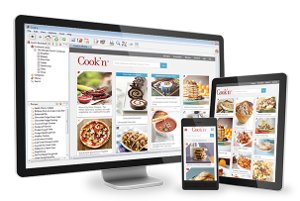
This Cook's Note: Seven Steps to a Healthy Diet recipe is from the Cook'n with Pillsbury Cookbook. Download this Cookbook today.
"I must say this is the best recipe software I have ever owned."
-Rob
"Your DVO cookbook software saves me time and money!"
-Mary Ann
"Call it nutrition software, meal planning software, cooking software, recipe manager, or whatever you want. It is the software I use to stay healthy!"
-David
"Your software is the best recipe organizer and menu planner out there!"
-Toni
"Thank you so very much for creating such a wonderful cooking recipe program. I think this is the best recipe program there is!"
-Sarah
"I saw lots of recipe software for PC computers but I was having a hard time finding really good mac recipe software. I'm so glad I discovered Cook'n! It's so nice to have all my recipes in a computer recipe organizer. Cook'n has saved me so much time with meal planning and the recipe nutrition calculator is amazing!!!
-Jill
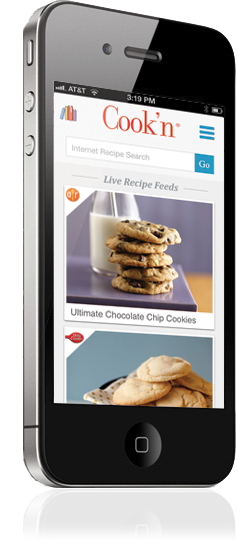
My favorite is the Cook'n Recipe App.
-Tom