
Fresh Herbs: How to Keep Them Alive for Weeks
Hey chefs,
Fresh herbs are one of those ingredients that can completely transform a meal. A handful of chopped basil can make a simple pasta taste like summer. Fresh dill wakes up potato salad. Cilantro brings brightness to tacos and noodle bowls. A little parsley at the end of a dish can make everything taste fresher.
The problem? They seem to wilt almost the second you get them home.
If you’ve ever spent $3 on a bunch of cilantro only to throw away a slimy green mess a few days later, you’re definitely not alone. The good news is that most herbs can stay fresh for one to three weeks—or even longer—if you store them the right way.
Here’s how professional kitchens keep herbs fresh.
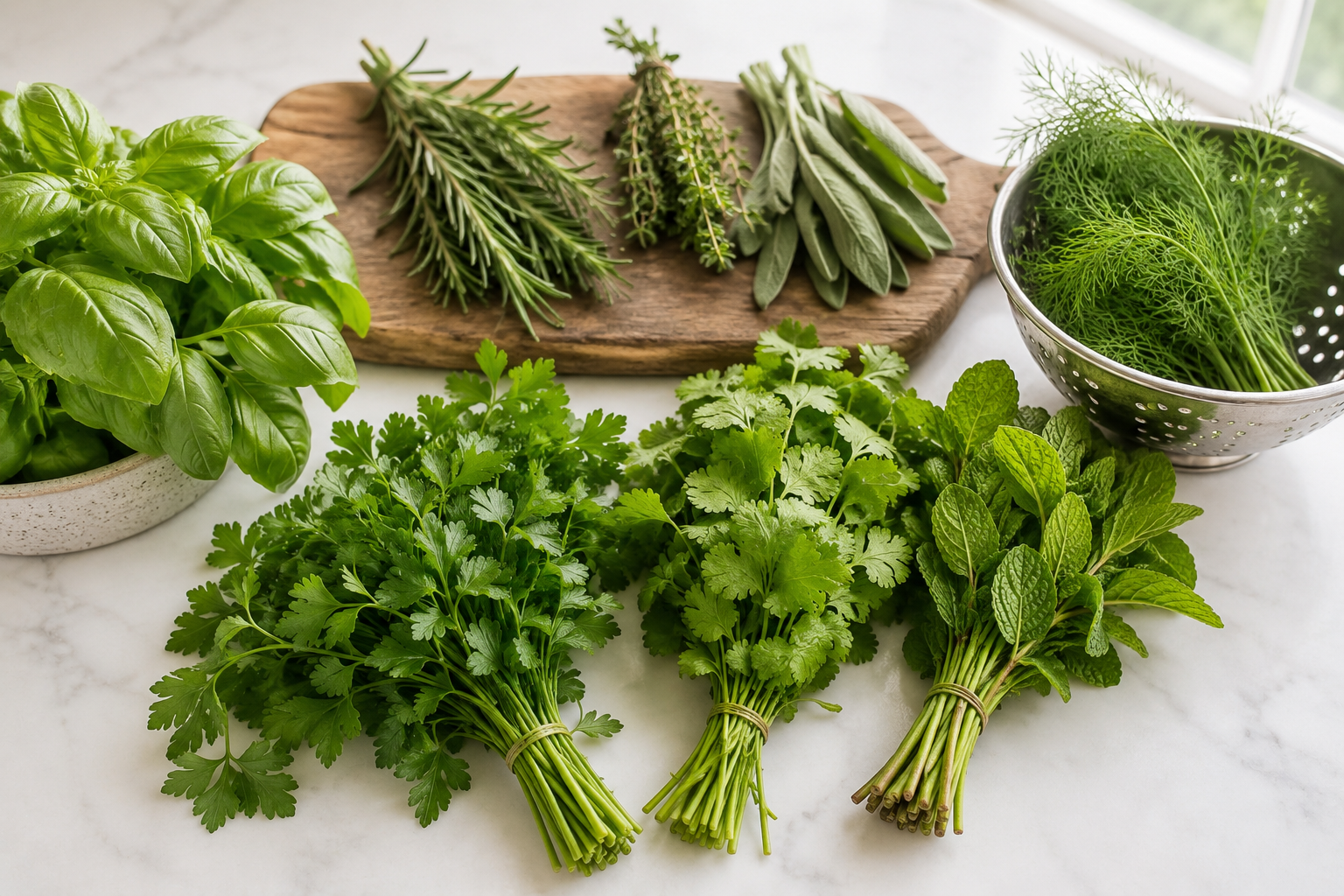
First Things First: Herbs Aren’t All the Same
The biggest mistake people make is treating every herb identically.
There are two basic groups.
Tender Herbs
These have soft stems and delicate leaves.
- Basil
- Cilantro
- Parsley
- Dill
- Mint
- Chervil
These lose moisture quickly and bruise easily.
Woody Herbs
These have sturdier stems and tougher leaves.
- Rosemary
- Thyme
- Oregano
- Sage
- Savory
These naturally hold up much longer because their leaves contain less water.
Each group likes to be stored a little differently.
Give Them a Drink
For most tender herbs—especially parsley, cilantro, dill, and mint—the best storage method is surprisingly simple.
Trim about ½ inch off the bottom of the stems, just like you would fresh flowers. Place the herbs upright in a jar with an inch or two of cold water.
Loosely cover the tops with a plastic bag and place the jar in the refrigerator.
Change the water every few days.
This method keeps the stems hydrated while preventing the leaves from drying out. Many herbs stored this way stay beautiful for one to three weeks.
Basil Is the Odd One Out
If you’ve ever refrigerated basil and watched it turn black overnight, there’s a reason.
Basil is a tropical plant. It actually dislikes cold temperatures.
Instead:
- Trim the stems.
- Place them in a glass of water.
- Leave the glass on your countertop out of direct sunlight.
- Change the water every couple of days.
Treat basil exactly like a bouquet of flowers, and it’ll reward you with much longer life and much better flavor.
Don’t Wash Everything Right Away
It seems like washing herbs immediately would make meal prep easier.
Usually, it shortens their life.
Extra moisture trapped on the leaves encourages rot and slime.
Unless they’re especially dirty, leave herbs unwashed until you’re ready to cook with them.
If you do wash them first, dry them extremely well. A salad spinner followed by paper towels works wonderfully.
Paper Towels Are Your Best Friend
If you don’t have room for jars of herbs, here’s another excellent method.
Lightly dampen a paper towel.
Wrap the herbs loosely.
Place them inside a zip-top bag or airtight container.
The towel maintains humidity without allowing excess water to pool around the leaves.
The key word is lightly damp—not soaking wet.
The Enemies of Fresh Herbs
Herbs spoil quickly when exposed to:
- Standing water on the leaves
- Too much moisture
- Ethylene gas from ripening fruit like apples, peaches, bananas, and avocados
- Crushing or overcrowding
- Warm temperatures (except basil)
Giving herbs a little breathing room goes a long way.
Freeze Herbs Before They Go Bad
Even with perfect storage, eventually you’ll have herbs left over.
Don’t throw them away.
Chop them and freeze them in ice cube trays with olive oil or melted butter.
They’re perfect for:
- Soups
- Sauces
- Pasta
- Roasted vegetables
- Sautéed meats
You can also freeze whole sprigs of rosemary or thyme in freezer bags and pull out exactly what you need.
Make Your Own Herb Butter
One of my favorite ways to use herbs before they expire is to make compound butter.
Mix softened butter with chopped herbs, garlic, lemon zest, or Parmesan.
Roll it into a log, refrigerate until firm, and slice off rounds whenever you need them.
A single pat can instantly elevate grilled steak, roasted vegetables, fresh bread, pasta, seafood, or baked potatoes.
It feels fancy, but it only takes a few minutes.
Buy Herbs With a Plan
Professional kitchens don’t buy herbs because they look pretty.
They buy them because they already know where every sprig is going.
If you’re buying parsley for a soup, think about using the rest later in the week for chimichurri, tabbouleh, garlic butter, or salad dressing.
Planning two or three meals around the same herb means you’ll waste less and enjoy fresher cooking all week long.
A Little Green Goes a Long Way
Fresh herbs are one of the easiest ways to make everyday cooking taste brighter, lighter, and more vibrant. Once you learn how to store them properly, you’ll waste less, save money, and always have fresh flavor waiting in your refrigerator.
The next time you bring home a bundle of herbs, don’t toss it into the crisper drawer and hope for the best. Give it a little care, and it will reward you with weeks of incredible meals.
 Brennah Van Wagoner
Weekly Newsletter Contributor since 2025
Email the author! brennah.oaks@gmail.com