
The Secret Sauce Playbook
Hey chefs,
A sandwich can have great bread, great meat, great cheese, and great vegetables—and still somehow taste flat.
Very often, the missing piece is the condiment.
Sauces and spreads do more than add moisture. They bring acidity, richness, sweetness, spice, freshness, and contrast. They can tie unrelated ingredients together, balance something fatty, wake up something bland, and make a familiar sandwich taste completely different without changing the filling much at all.
They also help with one of the least glamorous but most important parts of sandwich building:
Moisture control.
So if bread is the structure of a sandwich, the sauce is often what makes everything feel intentional.
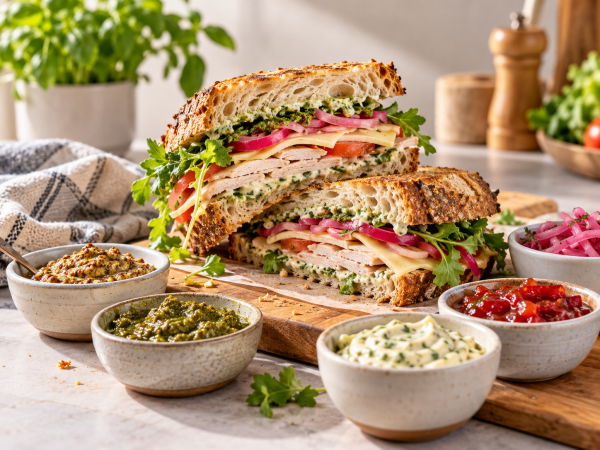
Start With the Job the Sauce Needs to Do
Before reaching for mayonnaise or mustard out of habit, ask what the sandwich is missing.
Is it too rich?
Add acidity.
Too dry?
Add fat or moisture.
Too salty?
Add something creamy, slightly sweet, or fresh.
Too mild?
Add heat, sharpness, herbs, or pickles.
Too heavy?
Add brightness.
The best condiments usually solve a problem rather than simply adding another flavor.
That is why a sharp Dijon works beautifully with ham and cheese. The mustard cuts through the richness.
It is why mayonnaise works so well on turkey sandwiches. It adds fat and moisture to otherwise lean ingredients.
And it is why something sweet-tart like apple butter, chutney, or pepper jelly can make salty cheese and cured meat suddenly taste much more interesting.
The Easiest Upgrade: Start With Mayo
Mayonnaise is one of the best sandwich foundations because it is already emulsified, rich, spreadable, and neutral enough to take on other flavors.
You do not need to make a completely separate sauce every time.
Start with mayo and add one or two ingredients.
Try:
- Lemon zest and black pepper
- Dijon and honey
- Garlic and herbs
- Pesto
- Hot sauce
- Chipotle
- Roasted garlic
- Harissa
- Curry powder
- Chopped pickles
- Capers and lemon
- Horseradish
- Parmesan
- Smoked paprika
The trick is not to add everything.
A good sandwich sauce should usually support the sandwich rather than become the loudest ingredient in it.
If the filling is already complicated, keep the sauce simple.
If the sandwich itself is simple, the sauce can do more.
Mustard Deserves More Attention
Mustard is one of the most useful ingredients in sandwich making because it brings acidity, spice, and sharpness without adding much heaviness.
Different mustards behave very differently.
Yellow mustard is bright, tangy, and straightforward. It works beautifully with burgers, hot dogs, deli sandwiches, and anything nostalgic.
Dijon is sharper and more refined. It pairs especially well with ham, chicken, roast beef, Gruyère, cheddar, and roasted vegetables.
Whole-grain mustard adds texture along with acidity. It is particularly good with sausages, pork, sharp cheeses, and hearty breads.
Honey mustard brings sweetness, which can help balance salty meats or bitter greens.
You can also blend mustard into mayonnaise, vinaigrettes, butter, or even softened cheese to spread the flavor more evenly.
Think in Contrasts
One of the easiest ways to make a sandwich feel more balanced is to pair opposites.
Rich filling + acidic sauce.
Spicy filling + creamy sauce.
Salty filling + sweet condiment.
Soft filling + sharp, punchy spread.
Smoky filling + something fresh.
A few examples:
Roast beef + horseradish cream.
Ham + Dijon or apple mustard.
Turkey + cranberry mayo.
Fried chicken + honey mustard or spicy mayo.
Roasted vegetables + pesto or lemony herb sauce.
Pork + apple butter, mustard, or chutney.
Sharp cheddar + onion jam.
Mozzarella + pesto or balsamic spread.
Tuna salad + caper-lemon mayo.
None of these combinations is particularly complicated. They simply give the sandwich contrast.
Acid Is Often the Missing Ingredient
If a sandwich tastes heavy or dull, the answer is very often acidity.
That does not always mean adding vinegar directly.
Acidity can come from:
Pickles.
Mustard.
Lemon juice.
Vinegar-based slaws.
Pickled onions.
Pepperoncini.
Relish.
Sauerkraut.
Chutney.
Even a tart fruit spread.
Acid wakes up rich ingredients and gives the palate a break between bites.
This matters especially with sandwiches containing cheese, cured meats, fried foods, or fatty cuts of meat.
Without acidity, those sandwiches can become tiring halfway through.
With it, you keep wanting another bite.
Fresh Herbs Can Completely Change a Basic Sauce
One of the fastest ways to make a store-bought condiment taste more deliberate is to add fresh herbs.
Parsley, basil, dill, cilantro, chives, tarragon, mint, and green onion can all work depending on the filling.
A simple herb mayo can turn plain chicken into something that feels much more composed.
Dill works beautifully with salmon, cucumber, chicken, and eggs.
Basil belongs naturally with tomatoes, mozzarella, chicken, and roasted vegetables.
Tarragon is excellent with chicken, turkey, eggs, and mustard.
Cilantro works well with spicy meats, avocado, grilled chicken, and Latin-inspired fillings.
Chives are especially good when you want onion flavor without overwhelming everything else.
Finely chop the herbs so they distribute evenly instead of creating large leafy bites.
Sweet Condiments Are Not Just for Breakfast
Jam, preserves, chutney, fruit butter, and honey can be excellent sandwich ingredients when used carefully.
The goal is usually contrast—not turning the sandwich into dessert.
Apple butter with ham and cheddar.
Fig jam with prosciutto and goat cheese.
Apricot preserves with turkey and Brie.
Pepper jelly with cream cheese and chicken.
Cranberry sauce with turkey.
Honey with fried chicken.
Pear chutney with pork.
A thin layer is often enough.
Sweet condiments work best when there is salt, acidity, spice, or bitterness elsewhere to keep the sandwich balanced.
Pesto Is More Versatile Than It Gets Credit For
Pesto is basically a ready-made sandwich sauce: herbs, fat, salt, cheese, and acidity all in one place.
Traditional basil pesto is wonderful, but the same concept can go much further.
Try pesto made with:
Arugula.
Parsley.
Cilantro.
Sun-dried tomatoes.
Roasted red peppers.
Spinach.
Kale.
Pistachios.
Walnuts.
Almonds.
You can also mix pesto with mayonnaise if straight pesto feels too oily or intense.
That makes it easier to spread and gives you a softer, creamier sauce.
Sauce Placement Matters
Where you put the sauce changes the sandwich.
A thin layer of mayonnaise against the bread can act as a moisture barrier and help protect it from tomato juice, pickles, or wet fillings.
Mustard can go directly against meat or cheese where its flavor is most useful.
Thicker sauces can sometimes work better in the center of the sandwich so they do not immediately soak into the bread.
If you are packing a sandwich for later, be especially strategic.
Keep very wet ingredients away from the bread.
Use spreads like mayo, butter, cheese, or pesto as barriers.
And if necessary, pack especially wet sauces separately and add them right before eating.
Do Not Drown the Sandwich
More sauce is not always better.
A good sandwich should still taste like its filling.
Too much sauce makes everything slippery, masks texture, and can overwhelm the bread.
It can also create structural problems.
If the sandwich slides apart when you pick it up, you probably have either too much sauce or too many wet layers stacked together.
Use enough to season and moisten the sandwich, but not so much that it becomes the filling.
Do Not Forget Texture
Sauces can contribute texture too.
Whole-grain mustard adds little pops of mustard seed.
Relish brings crunch and acidity.
Pesto adds texture from nuts and herbs.
Chimichurri adds chopped herbs and garlic.
Chutneys can bring fruit, spice, and chew.
Even a simple mayo can be improved with finely chopped pickles, crispy shallots, capers, or grated Parmesan.
This is particularly helpful when the sandwich filling itself is soft.
A sandwich with eggs, avocado, cheese, and mayo can become one-dimensional very quickly.
Add pickled onions or crunchy relish and suddenly there is contrast.
Match the Sauce to the Bread Too
Bread and sauce should work together.
Very soft bread does best with smoother, lighter spreads.
Rustic bread can handle thicker, more assertive sauces.
Ciabatta and focaccia love olive oil-based sauces like pesto.
Rye pairs naturally with mustard and horseradish.
Brioche works beautifully with sweet-spicy condiments, especially on fried chicken or breakfast sandwiches.
Crusty country bread can handle aioli, sharp mustard, tomato spreads, roasted garlic, and chunky relishes without disappearing under them.
If the bread already has a lot of flavor, the sauce does not always need to be complicated.
Sometimes butter and mustard are enough.
Soup Changes the Sauce Equation Too
If the sandwich is going beside soup, you can usually simplify the sauce a little.
Soup already contributes moisture and flavor.
A grilled cheese with tomato soup does not need a complicated aioli inside it.
A roast beef sandwich next to a rich mushroom soup may benefit more from sharp mustard than from another creamy sauce.
A turkey sandwich beside a brothy vegetable soup might welcome something richer, like herb mayo.
Think of the sandwich and soup as one meal rather than two unrelated dishes.
If the soup is rich, let the sandwich sauce be acidic or fresh.
If the soup is light, the sandwich can handle something creamier.
If the soup is spicy, a cooling sauce on the sandwich can create contrast.
And if the sandwich is destined for dipping, avoid sauces so thin that they make the bread soggy before it ever reaches the bowl.
A Few Good Formulas to Remember
Once you understand the building blocks, you really do not need a recipe for every sandwich sauce.
Start with one of these:
Creamy + acid + flavor
Mayonnaise + lemon + herbs
Mayonnaise + mustard + honey
Greek yogurt + lemon + garlic
Fat + herbs + salt
Olive oil + herbs + garlic
Pesto
Chimichurri
Sweet + sharp
Jam + mustard
Honey + hot sauce
Chutney + vinegar
Rich + spicy
Mayonnaise + chipotle
Mayonnaise + harissa
Mayonnaise + hot sauce
These formulas make it easy to build a sauce around whatever is already in the refrigerator.
The Best Condiment Is the One That Fixes the Sandwich
You do not need twelve sauces.
You need the right one.
Before adding a condiment, taste the sandwich in your head.
Is it fatty?
Dry?
Salty?
Sweet?
Soft?
Spicy?
Heavy?
Then choose the condiment that adds what is missing.
That might be lemon mayo.
It might be Dijon.
It might be pepper jelly.
It might be pesto.
It might be nothing more than good butter.
The goal is not to make the sauce impressive.
The goal is to make the sandwich better.
And once you start thinking that way, even a very simple sandwich can feel far more intentional.
 Brennah Van Wagoner
Weekly Newsletter Contributor since 2025
Email the author! brennah.oaks@gmail.com