
How to Make the Perfect Poached Egg
I’ve had a lot of newsletter articles show up lately on the benefits of eating eggs, with advice on how to cook them so you can maximize their benefits. The research concurs that poached and hard cooked are the best ways to cook your eggs.
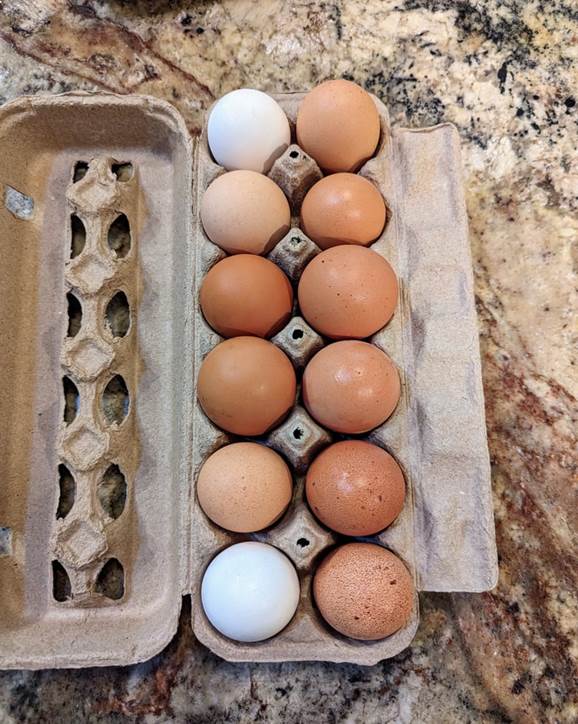
With that said, I wondered if there was one way better than another to poach an egg. Turns out, there’s a lot of advice on making the perfect poached egg. Here’s what I found out:
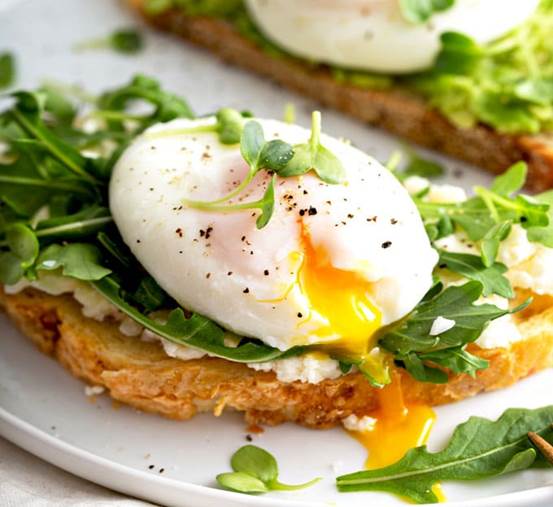
A perfectly poached egg — glossy white, no ragged edges, and a yolk that spills like silk when cut — looks like restaurant magic. In truth, it comes down to a few reliable techniques anyone can master at home.
Start With Fresh Eggs. When poaching, freshness matters more than almost any other factor. Fresh eggs have tighter, thicker whites that cling to the yolk instead of dispersing into wispy strands. If possible, use eggs that are no more than a week old. You can test freshness by placing an egg in water — fresh eggs sink and lie flat, while older eggs stand upright or float.
Then, Prep the Water. Fill a wide, deep pot with about 3–4 inches of water and bring it to a gentle simmer — small bubbles breaking the surface, not a rolling boil. A vigorous boil will tear the egg apart. Adding a tablespoon of white vinegar helps the proteins in the egg white coagulate faster, keeping the shape tighter. Skip the salt, which can toughen the outer white.
Crack With Care. Crack each egg into a small bowl or ramekin first, rather than directly into the pot. This lets you check for shell fragments and gives you control over how gently the egg enters the water.
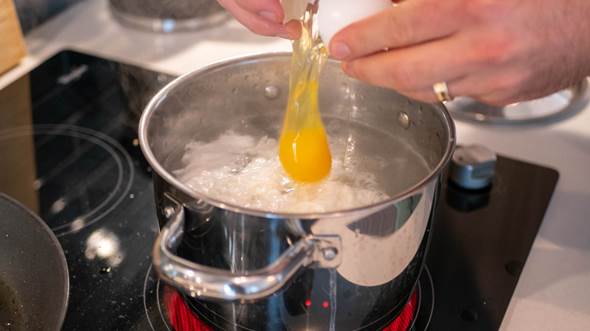
Create a Gentle Whirlpool. Stir the simmering water in one direction to create a slow whirlpool, then slide the egg in at the center. The swirling motion helps the white wrap around the yolk instead of spreading out. This trick works best one egg at a time.
Time It Precisely. Let the egg cook undisturbed for 2.5 to 3 minutes for a soft, runny yolk, or up to 4 minutes for a firmer center. Use a timer — a few seconds can make the difference between silky and overcooked.
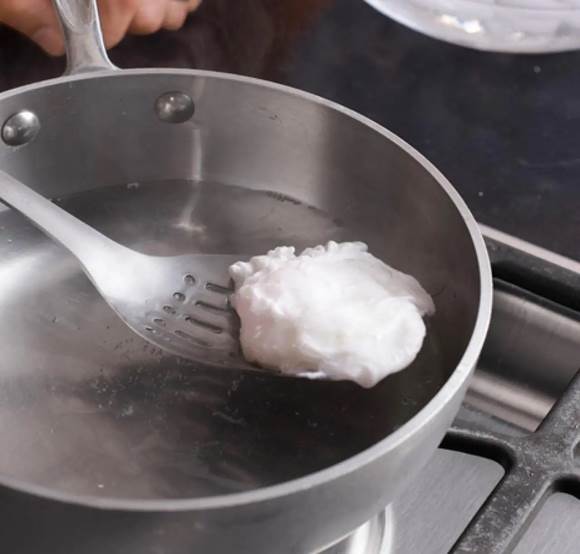
Lift, Drain, and Trim. Remove the egg with a slotted spoon and rest it briefly on a paper towel to absorb excess water. If you want a restaurant-clean look, trim any loose, wispy strands of white with kitchen scissors.
Season and Serve Immediately. Poached eggs wait for no one — serve right away with a pinch of flaky salt and cracked pepper. They're perfect over toast, English muffins, or a bed of greens.
With fresh eggs, gentle heat, and a little patience, a perfect poach is well within reach — no special equipment required.
 Alice Osborne
Weekly Newsletter Contributor since 2006
Email the author! alice@dvo.com