|
Never miss another recipe... Sign up for our free monthly newsletter today!
Subscribing will not result in more spam! I guarantee it! NEWSLETTER
• Current Issue• Newsletter Archive • Sign Up Now 
Cook'n with Betty Crocker 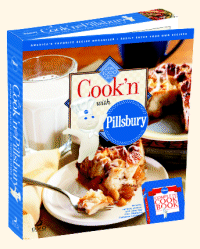
Cook'n with Pillsbury 
Cook'n with a Taste of Home 
Cook'n in Italy 
Cook'n in Mexico |
      |
|
 |
10-Here's How We Test the Recipes |
|
The recipe below is complete except for the ingredient amounts (_). Since the recipes offered at DVO.com are brand name recipes, our publisher partners require us to account for each recipe distributed. To get the entire recipe click Request Recipe below. This is the best 10-Here's How We Test the Recipes recipe on the web!! Each recipe has been carefully tested with a variety of bread machines. Bread flour was used for all our recipes and sometimes combined with other flour, such as whole wheat or rye. We used bread flour because it is high in protein, which is necessary for successful bread baking. Bread machine yeast was used for testing all the recipes. We found that quick active dry yeast should not require any adjustments. However, if you use regular active dry yeast, you may need to increase yeast by ¼ to ½ teaspoon per loaf. Many recipes include directions for making both 1 ½-pound and 2-pound loaves. There is also a special chapter for making 1-pound loaves, for those times when a smaller loaf is what you need. Loaf size is determined by the size of your bread machine pan. Check your bread machine's use-and-care book to find out what size loaf your bread machine makes, or use the following guidelines to determine what size recipe you should use. We found that yeast amounts vary among the different sizes of loaves and different types of bread. Some recipes for 2-pound loaves actually call for less yeast than the 1 ½-pound recipe. If you are uncertain about how the bread will perform in your machine, try the recipe as written. If you would like a 2-pound loaf with more height-and your bread machine pan can hold it-increase the yeast by ¼ teaspoon. We use table salt for our recipe testing because it is a staple in most homes. Coarse or kosher salt is not used in the recipes but sometimes is used for sprinkling on top of bread doughs before baking, since it adds both flavor and a nice appearance to baked breads. We don't recommend using reduced- or low-sodium salt because it results in a poorer quality baked product. We used low-fat milk for our testing, but you can use whole, skim or nonfat milk. We used large eggs when testing our recipes. We do not recommend making the bread machine loaves in glass-domed bread machines. Our results were inconsistent, and the loaves were not satisfactory. However, the dough recipes work nicely in the glass-domed bread machines. The height and shape of bread loaves may vary from one loaf to another depending on the humidity and room temperature. On a humid day, you may find you'll need to add a little more flour. Check the Proof Is in the Dough below to see if your dough is too moist during the kneading cycle. From "Betty Crocker's Best Bread Machine Cookbook." Text Copyright 1999 General Mills, Inc. Used with permission of the publisher, Wiley Publishing, Inc. All Rights Reserved. 02-Five Steps to Great Bread 03-Basic Cycle Features 04-Know Your Bread Ingredients 05-If You Don't Have Bread Machine Yeast... 06-Flour Power! 07-High Altitude 08-Measuring Your Bread Machine Pan Size 09-Let's Make a Great Bread Loaf 10-Here's How We Test the Recipes 11-The Proof Is in the Dough 12-Refrigerating Dough 13-Betty's Tips for Shaping Dough 14-Keeping Bread Fresh 15-Freezing Bread 16-Any Way You Want to Slice It 17-Some Like It Hot: Reheating Your Bread 18-Your Bread Machine Baking Questions |
|

|
Affiliate Program | Privacy Policy | Other Resources | Contact Us

© 2008 DVO Enterprises, Inc. All rights reserved. Sales: 1-888-462-6656 |
