
Sip the Season
Hey chefs,
My husband and I have some big news…
We got a juicer!
Getting a juicer is dangerous in the same way getting an ice cream maker is dangerous.
Suddenly you start looking at every ingredient in the refrigerator and wondering, Could I juice that?
Carrots? Obviously.
Pineapple? Absolutely.
Cucumber? Perfect.
Ginger? A little goes a very long way.
That half a fennel bulb sitting in the back of the produce drawer? Now things are getting interesting.
Fresh juice can be bright, refreshing, deeply flavorful, and a surprisingly fun way to play with produce. But good juice is not simply a collection of fruits and vegetables liquefied together.
Just like cooking, it works better when you think about balance.
Sweetness. Acidity. Aroma. Bitterness. Freshness. Texture.
Once you understand those pieces, you can start building juices instead of merely making them.
And if you do not own a juicer, you are not excluded. A blender and something to strain with can get you surprisingly close.
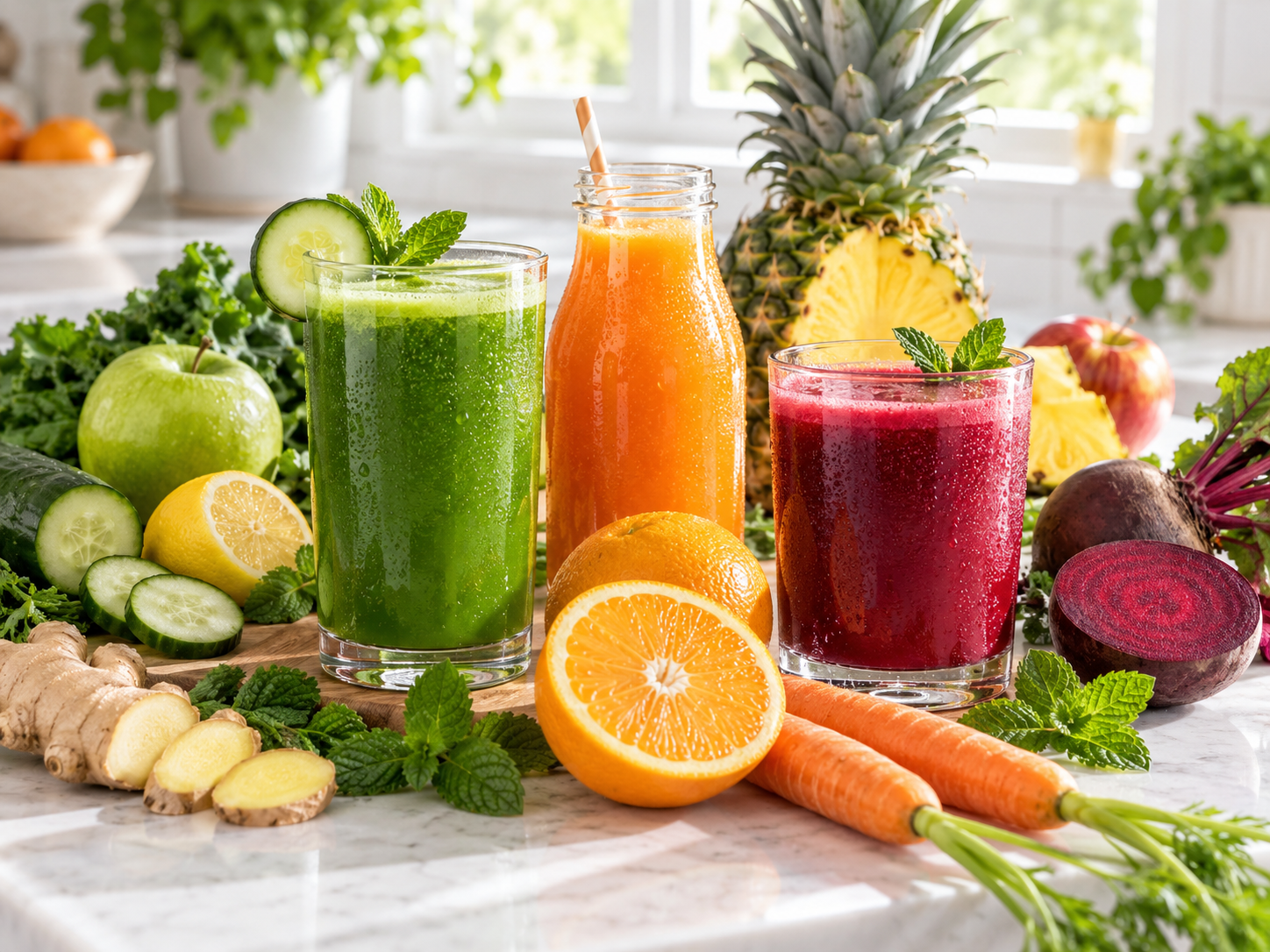
First: Juice Is Not a Smoothie
These two get lumped together, but they behave very differently.
A smoothie keeps nearly everything you put into the blender, including most of the pulp and fiber.
A juicer separates much of that fibrous material from the liquid.
That means juice is lighter, thinner, and usually much more concentrated in flavor.
It also means you need more produce than you might expect.
A handful of carrots does not make a giant glass of juice. It makes you realize exactly how much carrot exists inside one glass of carrot juice.
This is one reason I like thinking of juice as something you compose deliberately rather than simply trying to cram as many ingredients as possible into it.
The Easiest Formula for Building a Good Juice
Instead of starting with a recipe, think in categories.
A really good juice usually has:
A base + something sweet + something acidic + an aromatic or accent.
Your base provides most of the volume.
Good bases include:
- Apples
- Oranges
- Pineapple
- Cucumbers
- Carrots
- Watermelon
- Celery
- Pears
Then add something that gives the juice character.
Maybe that is ginger.
Maybe mint.
Maybe lime.
Maybe basil.
Maybe beet.
Maybe a little fennel.
You usually do not need five dramatic ingredients competing with each other.
One or two interesting flavors are often enough.
Sweetness Needs Balance
Fruit is delicious, but a juice made entirely from very sweet fruit can become surprisingly heavy.
Think pineapple + mango + apple + grapes.
That sounds wonderful until you drink an entire glass and realize it tastes more like liquid candy.
Acid fixes this beautifully.
Lemon, lime, grapefruit, or even tart green apple can sharpen a sweet juice and make individual flavors easier to taste.
The same principle applies in cooking.
Salt and acid make rich foods taste more alive. Acid does something similar for juice.
If your juice tastes vaguely sweet but boring, it probably does not need another fruit.
It probably needs acidity.
Ginger Is a Seasoning, Not a Vegetable
Fresh ginger is fantastic in juice.
It is also one of the easiest ingredients to overdo.
A small piece can give you warmth, spice, and aroma.
A large piece can make your juice taste like it is attempting to fight you.
Start small.
The same rule applies to strong ingredients like turmeric, fennel, parsley, cilantro, celery leaves, and some bitter greens.
These are excellent supporting flavors.
They do not always need to be the main event.
Green Juice Does Not Have to Taste Like Lawn Clippings
There is nothing inherently virtuous about drinking something unpleasant.
A good green juice should still taste good.
Cucumber makes an excellent base because it is mild, fresh, and produces quite a bit of juice.
Apple or pear adds sweetness.
Lemon or lime adds acidity.
Then you can add spinach, kale, parsley, mint, celery, or other greens for character.
A simple combination like:
Cucumber + green apple + lime + mint
is refreshing and decidedly green without feeling like punishment.
From there, you can start experimenting.
Beets Need Friends
Beets are gorgeous in juice.
They are earthy, sweet, intensely colored, and extremely enthusiastic about staining everything you own.
They also benefit from brightness.
Pair them with apple, orange, carrot, lemon, ginger, or berries.
Beet + orange + ginger is dramatically different from beet juice on its own.
If you are new to beet juice, treat beet as an accent first rather than making it the entire base.
Unless you really, really love beets.
Citrus Takes a Little Extra Thought
For lemons, limes, oranges, and grapefruit, remove the thick outer peel before juicing.
A little of the white pith is fine, but lots of peel can contribute harsh bitterness because the aromatic oils are extremely concentrated.
If you love that fragrant citrus-peel flavor, grate a tiny amount of zest into the finished juice instead.
That gives you control.
You want bright orange aroma.
Not I accidentally juiced an entire candle.
Alternate Hard and Soft Ingredients
If your juicer allows it, alternating produce textures can help everything move through more efficiently.
For example:
apple
spinach
carrot
spinach
cucumber
rather than pushing a giant wad of spinach through by itself.
Firm produce can help move soft leafy ingredients through the machine.
Exact technique varies depending on whether you have a centrifugal, masticating, or other style of juicer, so your machine’s instructions should always win.
But as a general kitchen habit, avoid packing large masses of soft ingredients together unless your machine is designed for it.
Prep Produce With the Machine in Mind
You usually do not need to peel everything.
Carrots can often simply be scrubbed.
Apples can generally be cored if needed for your machine and cut into manageable pieces.
Cucumbers usually need very little preparation.
Pineapple should lose its tough outer rind.
Melons should be separated from thick rind.
Stone fruits need their pits removed.
The goal is not to make the produce beautiful.
It is to remove anything too tough, bitter, hard, or inappropriate for the juicer.
Cold Produce Makes Better Cold Juice
This sounds obvious, but it makes a noticeable difference.
If the ingredients begin cold, your finished juice is immediately refreshing without needing a mountain of ice to chill it.
Ice is not inherently bad, but as it melts it dilutes flavor.
If you know you want juice in the morning, refrigerate your produce overnight.
Drink It Fresh When You Can
Fresh juice changes as it sits.
Oxygen, light, and time gradually affect its flavor, aroma, and color.
That does not mean juice becomes terrible after twenty minutes.
It simply means the freshest version will usually taste the brightest.
If storing juice, transfer it promptly to a clean airtight container and refrigerate it. Filling the container relatively full reduces the amount of air sitting above the juice.
For the best flavor, I prefer treating homemade juice as a short-term refrigerator food rather than making a giant week’s worth at once.
Stir Before You Decide It Needs Something
Fresh juice naturally separates.
The lighter watery portion may rise while heavier particles settle.
Stir it.
Then taste.
Sometimes what appears to be an uneven batch is simply a juice that has not been mixed back together.
Taste Juice Like You Would Taste a Sauce
This is probably my favorite juicing habit.
Do not simply juice everything and declare it finished.
Taste it.
Ask:
Is it too sweet?
Add lemon.
Too acidic?
Add apple, pear, carrot, or pineapple.
Too earthy?
Add citrus or ginger.
Too intense?
Add cucumber.
Too mild?
Add ginger, herbs, citrus, or another assertive ingredient.
Too thick?
A little cold water can be completely appropriate.
Juice recipes are not sacred mathematical equations.
Produce changes.
One pineapple may be incredibly sweet while another is quite tart.
Taste as you go.
A Few Really Good Flavor Combinations
Once you understand the basic structure, this is where juicing gets fun.
The Bright Green
Cucumber + green apple + lime + mint
Very crisp and refreshing.
Carrot Sunrise
Carrot + orange + pineapple + ginger
Sweet, bright, and gently spicy.
Pink Grapefruit Garden
Grapefruit + strawberry + cucumber + basil
Fresh and slightly sophisticated without being strange.
Beet Berry
Beet + apple + strawberry + lemon
Fruity enough to soften the earthiness of the beet.
Watermelon Cooler
Watermelon + cucumber + lime + mint
Almost aggressively refreshing.
Golden Ginger
Pineapple + pear + lemon + ginger
Sweet, tart, and warm all at once.
Garden Juice
Tomato + cucumber + celery + lemon + parsley
More savory and far less sweet than typical fruit juice.
A pinch of salt in the finished glass makes this one especially good.
Apple Fennel
Green apple + fennel + cucumber + lemon
Crisp, aromatic, and a little more interesting than standard apple juice.
Pear Rosemary
Pear + apple + lemon + a very small amount of rosemary
Rosemary is powerful here. Think accent, not Christmas tree.
Tropical Green
Pineapple + cucumber + spinach + lime
An easy entry point if you are still suspicious of green juice.
Herbs Are One of the Best Ways to Make Juice More Interesting
Mint is the obvious one, but do not stop there.
Try:
Basil with strawberry or grapefruit.
Rosemary with pear or apple.
Parsley with cucumber and lemon.
Cilantro with pineapple, cucumber, and lime.
Fennel fronds with citrus.
The trick is restraint.
Juice concentrates flavor.
An herb that seems innocent in a salad can become enormous once juiced.
Don’t Forget Savory Juice
Fruit gets most of the attention, but savory juices can be excellent.
Tomato naturally makes sense.
Then consider:
Tomato + celery + lemon + cucumber
Carrot + tomato + ginger
Cucumber + celery + parsley + lemon
Tomato + red bell pepper + cucumber + basil
Season savory juices after juicing with a tiny pinch of salt.
Pepper can work too.
At that point, you are essentially treating the juice like a cold soup or very thin vegetable sauce, which opens up all kinds of possibilities.
What to Do With All That Pulp
Juicing creates pulp.
A lot of pulp.
Some of it is perfectly usable.
Carrot pulp can go into muffins, quick breads, pancakes, vegetable fritters, soups, or stocks.
Apple pulp can work in muffins or oatmeal.
Vegetable pulp can sometimes be added to soups, sauces, meatballs, veggie patties, or compost.
Just remember that juicing has already removed much of the moisture and flavor, so pulp is not necessarily interchangeable with freshly grated produce.
Think of it as an ingredient with a drier texture.
And if you do not want to cook with it?
Compost is a perfectly respectable answer.
You do not have to turn every ounce of carrot pulp into a project.
How to Make Fresh Juice Without a Juicer
You absolutely can make juice without owning a juicer.
The easiest method requires:
A blender
A fine-mesh strainer, nut-milk bag, or cheesecloth
A bowl
The Blender Method
Chop your fruit and vegetables into pieces small enough for your blender.
Add them to the blender with just enough cold water to get everything moving.
Blend until very smooth.
Pour the mixture through a nut-milk bag, several layers of cheesecloth, or a fine-mesh strainer set over a bowl.
Press or squeeze to extract the liquid.
If using cheesecloth or a nut-milk bag, squeeze gently but firmly until most of the liquid has been extracted.
That is your juice.
The texture may be slightly different from juice made in a dedicated machine, but the basic result is remarkably similar.
Use Water Sparingly
This is the biggest difference between blender juice and juicer juice.
A juicer extracts liquid directly from produce.
A blender often needs extra liquid to function.
Add only enough water to keep the blades moving.
You can always thin the juice later.
You cannot easily remove water once you have diluted everything into oblivion.
Start With Naturally Juicy Produce
If you are using the blender method, ingredients with lots of water make your life easier.
Try:
Cucumber
Watermelon
Orange
Pineapple
Grapefruit
Ripe pear
Blend these first, then add denser ingredients such as carrot or apple.
Their natural liquid helps the blender process everything else.
You Can Also Use a Grater
For small amounts of juice, especially ginger or apple, an old-fashioned grater works surprisingly well.
Finely grate the ingredient.
Wrap it in clean cheesecloth or a thin clean kitchen towel.
Squeeze.
It is not the method I would choose for making six glasses of juice.
But if you need a few tablespoons of fresh apple or ginger juice for a recipe, it works beautifully.
Don’t Get Too Precious About It
The fun of juicing is experimentation.
Use what is in season.
Use what needs to be eaten.
Taste combinations you would not normally think to pair.
Some will be fantastic.
Some will teach you that six inches of ginger was perhaps ambitious.
That is part of it.
The same instincts that make good cooking apply here too: balance sweetness with acidity, contrast earthy flavors with bright ones, use aromatics deliberately, and taste before deciding you are finished.
Once you start treating juice like a recipe instead of a pile of produce, it gets considerably more interesting.
And suddenly that slightly lonely fennel bulb in the refrigerator starts looking like an opportunity.
 Brennah Van Wagoner
Weekly Newsletter Contributor since 2025
Email the author! brennah.oaks@gmail.com