
4 Easy Upgrades for One of the BEST and Simplest Recipes!
Few sandwiches feel as timelessly American as the BLT — a stack of crisp bacon, fresh lettuce, ripe tomato, and mayonnaise between two slices of toasted bread. Simple, satisfying, and endlessly customizable, the BLT's roots trace back through Victorian tea culture, wartime ingredient shortages, and the rise of the modern supermarket.
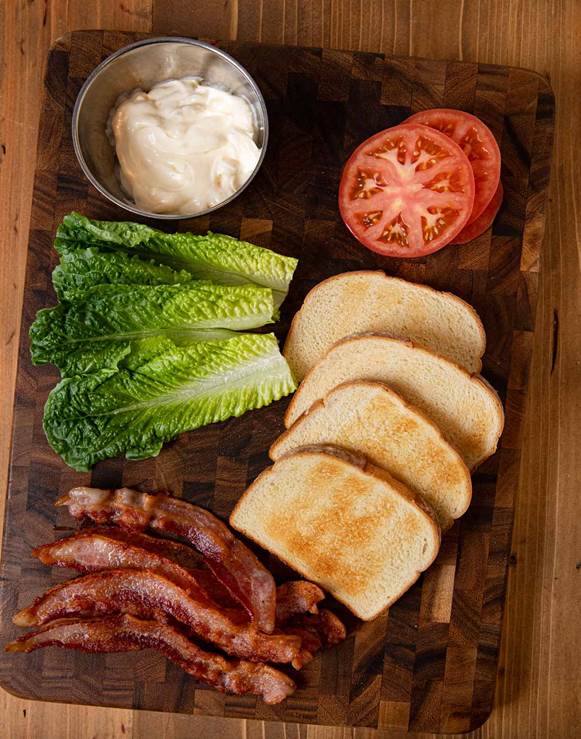
The BLT's closest ancestor is the club sandwich, which emerged in the United States in the late 1800s. Early club sandwiches typically featured toasted bread, cold meat, lettuce, tomato, and mayonnaise — but the meat wasn't always bacon, and the format wasn't yet standardized. Some food historians trace an even earlier influence to the Victorian-era combination of bacon and tomato on bread, popular in Britain, where afternoon tea sandwiches embraced simple, fresh flavor pairings.
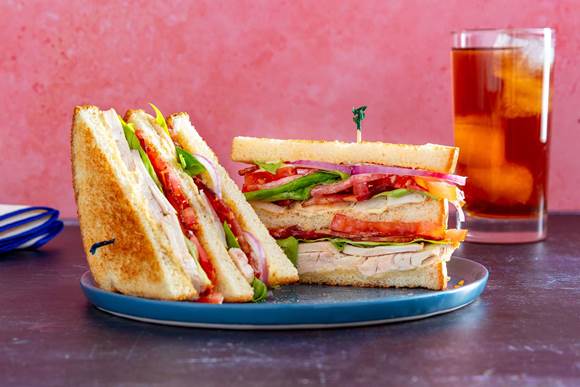
The BLT as we know it today didn't fully take shape until the early 20th century, when refrigeration and improved distribution made fresh lettuce and tomatoes reliably available year-round in most parts of the United States. Bacon, already a breakfast staple, was inexpensive and widely produced. As these three ingredients became common household staples simultaneously, home cooks and diners began combining them into a distinct sandwich of their own.
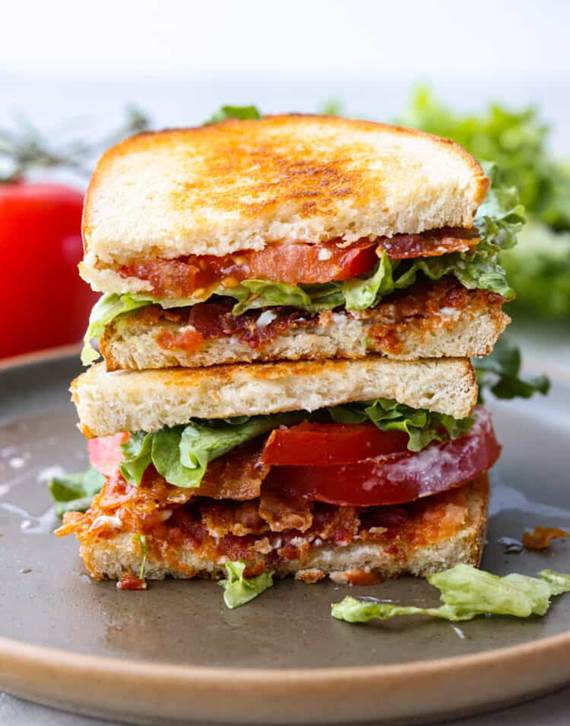
By the 1920s and 1930s, "bacon, lettuce, and tomato" sandwiches began appearing on diner menus and in cookbooks, often listed simply by their ingredients rather than an acronym. The rise of sliced bread in the 1920s made assembly even easier, and by mid-century, the BLT had cemented itself as a lunch counter classic across America. Its popularity grew alongside the diner culture of the 1950s, when quick, hearty sandwiches were in high demand.
Its appeal lies in its balance: smoky, salty bacon; crisp, cool lettuce; juicy, slightly acidic tomato; and creamy mayonnaise, all brought together by toasted bread. Countless variations have emerged — swapping in avocado, fried eggs, or different bread styles — but the classic combination remains largely unchanged.
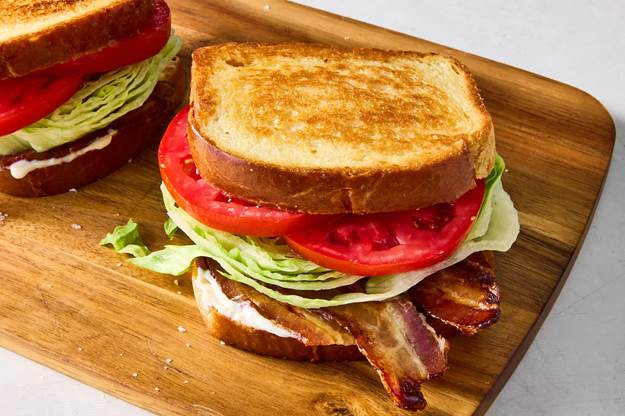
And don’t you love how the BLT works in any season? It doesn’t have to have the perfect tomato, nor bacon with pedigree, for that matter. BUT, if you want to take this sandwich to an even better level, take these 4 basic steps:
1. Slather your bread with mayo and griddle it; you’ll love the resulting crackling veneer, while the other side of the bread remains suitably soft and squishy.
2. Sprinkle the tomato slices with salt and letting them sit a while, to help the seasoning penetrate.
3. Bake the bacon; this will leave it stick-straight (so the sandwich is less likely to topple); pull it from the oven before it’s fully crisp so it stays a little fatty.
4. Slab your iceberg — cut crosswise from the whole head (preferably from the center); this is a game-changer (it ensures the sandwich's structural integrity and delivers exceptional crunch).
NOTE: If you’re avoiding Iceberg lettuce right now, then go with Romaine for similar texture and crunch.
Today, the BLT stands as one of the most recognizable sandwiches in American cuisine, a testament to how a handful of simple, well-paired ingredients can endure for over a century. Its history reflects broader shifts in food availability, technology, and dining culture — proof that sometimes the best recipes are also the simplest ones.
 Alice Osborne
Weekly Newsletter Contributor since 2006
Email the author! alice@dvo.com