
Breakfast, Simplified
Hey chefs,
There is a very specific kind of optimism involved in imagining weekday breakfast.
In the imaginary version, you wake up with plenty of time. Coffee is brewing. Eggs are sizzling gently in a skillet. Maybe there is fresh fruit, beautifully arranged toast, and somehow the kitchen is already clean.
Real breakfast is often eaten while finding someone’s shoes, packing lunches, checking the time, and wondering how it is already 8:17.
Fortunately, a fast breakfast does not have to mean a granola bar grabbed on the way out the door. The trick is not learning how to cook faster. It is learning which parts of breakfast actually need to be cooked in the morning.
Once you start treating breakfast like a small amount of meal prep combined with a few smart cooking techniques, a genuinely good breakfast can take five minutes—or less.
Build Breakfast From Components
One of the easiest ways to make breakfast faster is to stop thinking of breakfast as a recipe.
Think of it as a handful of components.
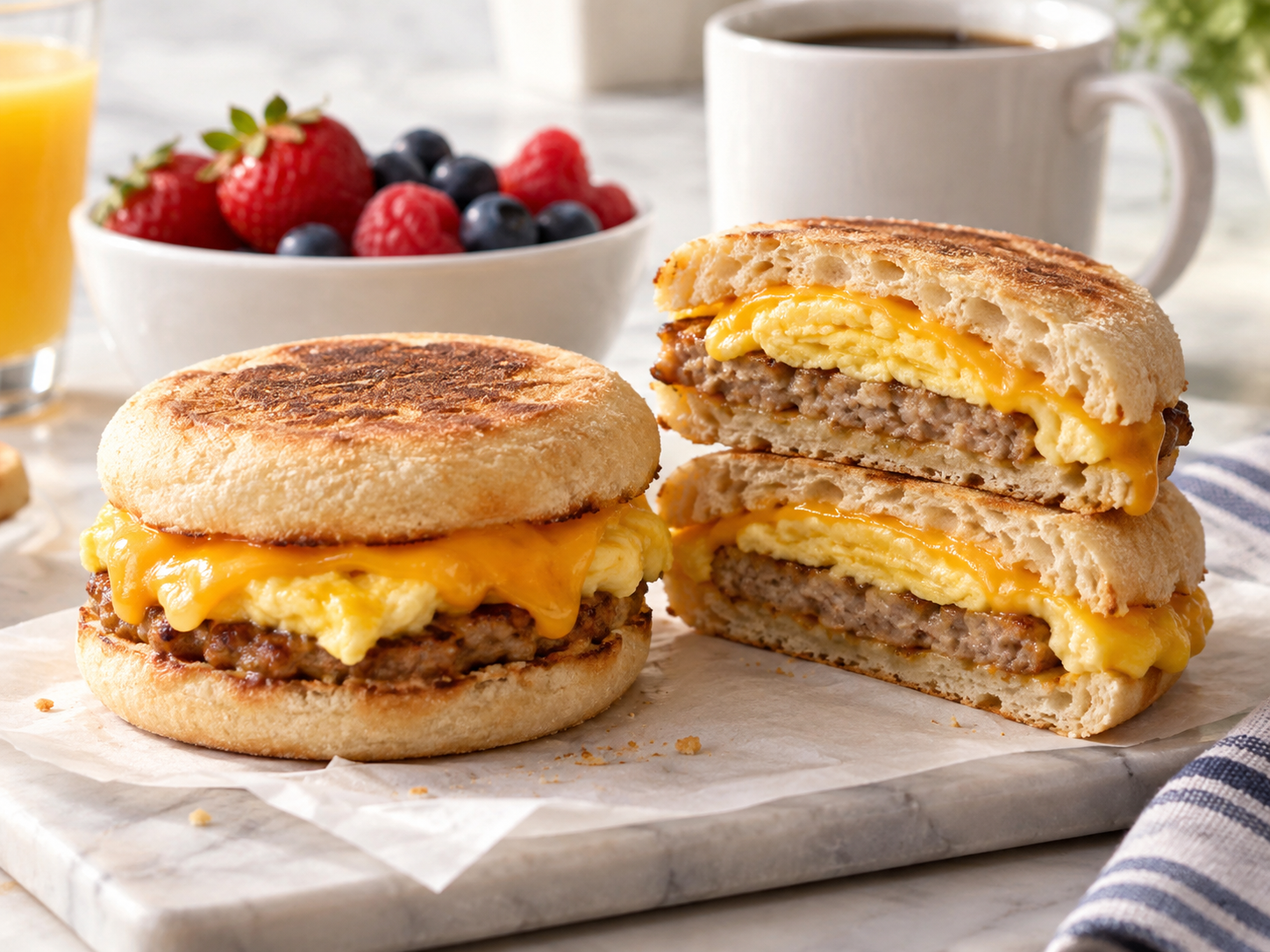
A satisfying breakfast usually benefits from some combination of protein, carbohydrates, fat, and something fresh or fiber-rich. That might look like eggs, toast, avocado, and fruit. Or Greek yogurt, oats, berries, and nuts. Or a breakfast sandwich with egg, sausage, cheese, and an English muffin.
The important part is that you do not necessarily have to prepare all of those components at the same time.
Cook sausage ahead. Wash fruit ahead. Make muffins ahead. Hard-boil eggs ahead. Portion yogurt or overnight oats the night before.
Then breakfast becomes assembly rather than cooking.
That is a much easier thing to accomplish at 7:30 in the morning.
Decide What Deserves to Be Fresh
Some breakfast foods are fantastic after reheating.
Others decidedly are not.
This distinction matters when you are meal prepping.
Cooked breakfast sausage, bacon, pancakes, waffles, muffins, breakfast burritos, baked oatmeal, and breakfast sandwiches all freeze surprisingly well.
Fresh scrambled eggs sitting in the refrigerator for four days? Less exciting.
Instead of trying to prepare every part of breakfast ahead, prepare the parts that tolerate storage well and leave one or two fast components for the morning.
For example, cook and freeze sausage patties, then fry an egg fresh in three minutes.
Or make complete breakfast sandwiches and freeze those for truly chaotic mornings.
You are not trying to eliminate cooking entirely. You are eliminating the parts that create unnecessary friction.
Your Freezer Is Probably the Best Breakfast Appliance You Own
Breakfast foods are especially well suited to freezing because so many of them are built from bread, eggs, cooked meats, and baked goods.
The important thing is freezing them correctly.
Cool food before wrapping it. Warm food releases steam, and that steam eventually becomes ice crystals. Ice crystals turn into water during reheating, which is one of the biggest reasons frozen breakfast sandwiches can become soggy.
Wrap individual portions tightly, then place them inside a freezer container or bag.
Whenever possible, freeze portions separately before stacking them together. Pancakes, waffles, biscuits, and baked breakfast bars can be frozen on a sheet pan first and transferred to a container once solid.
That lets you remove exactly what you need instead of defrosting breakfast for six people when you only wanted one waffle.
Texture Matters More Than You Think
One reason rushed breakfasts can feel disappointing is not necessarily the flavor.
It is the texture.
A breakfast sandwich containing soft bread, soft egg, melted cheese, and soft sausage can taste perfectly good but still feel heavy and monotonous.
Something crisp completely changes it.
Toast the English muffin. Crisp the edges of a tortilla. Add toasted nuts to yogurt. Sprinkle granola over fruit. Add a few thin apple slices to oatmeal.
Professional kitchens think about texture constantly because contrast makes food more interesting.
Breakfast deserves the same treatment.
Even when you only have five minutes.
Eggs Are Fast—If You Let Them Be
Eggs are one of the best hurried-breakfast ingredients because they cook incredibly quickly.
The problem is that people sometimes turn them into a fifteen-minute project.
For soft scrambled eggs, heat a skillet over medium-low heat, add a little butter, then cook beaten eggs while gently moving them through the pan. Pull them off the heat while they still look slightly glossy. Residual heat will finish the cooking.
For a breakfast sandwich, a folded egg is even faster. Beat one or two eggs, pour them into a small nonstick skillet, allow the bottom to set, then fold the edges toward the middle until you have roughly the size and shape of your bread.
For fried eggs, covering the skillet for the final minute traps steam and sets the whites without requiring you to flip the egg.
None of these techniques should take very long.
If breakfast eggs are consistently taking fifteen minutes, the problem is probably not the eggs.
Keep a Few Breakfast “Bases” Around
You do not need fifteen different breakfast recipes.
You need a few things that can become different breakfasts.
Plain Greek yogurt can become yogurt with berries and granola one morning and yogurt with bananas, peanut butter, cinnamon, and oats another.
English muffins can become egg sandwiches, peanut butter toast, avocado toast, or cottage-cheese toast.
Frozen waffles can be topped with yogurt and fruit instead of syrup.
Tortillas can become breakfast burritos, egg tacos, or crispy breakfast quesadillas.
Oats can become overnight oats, hot oatmeal, baked oatmeal, or homemade granola.
The more flexible an ingredient is, the more useful it becomes in a busy kitchen.
Make Breakfast Easy to See
There is an underrated enemy of quick breakfasts:
The refrigerator.
More specifically, the container hidden behind another container behind a bag of spinach underneath something you forgot existed.
If you want someone to eat the breakfast food you prepared, make it easy to find.
Keep boiled eggs together. Put washed fruit somewhere visible. Store freezer breakfasts in one labeled container. Keep yogurt, cheese, and other breakfast ingredients together when practical.
A refrigerator can function like mise en place.
Professional kitchens organize ingredients so cooks can grab them quickly because every unnecessary movement slows service down.
Your morning kitchen works the same way.
You Don’t Have to Meal Prep Seven Identical Breakfasts
Breakfast meal prep sometimes gets presented as cooking seven containers of exactly the same thing on Sunday.
That is completely unnecessary.
Instead, prep ingredients that create several different breakfasts.
Make one batch of sausage patties.
Freeze breakfast sandwiches.
Wash berries.
Make granola.
Boil a few eggs.
Mix overnight oats for tomorrow.
Now you have multiple breakfasts without committing yourself to eating the exact same thing every morning until Friday.
Efficiency should make food easier.
It should not make breakfast boring.
The Two-Minute Breakfast Formula
When there is truly no time, use this idea:
Grab one protein, one carbohydrate, and one fruit or vegetable.
Greek yogurt + granola + berries.
Boiled eggs + toast + apple slices.
Cottage cheese + fruit + a muffin.
Peanut butter toast + banana + yogurt.
Cheese + whole-grain crackers + fruit.
It may not look like a restaurant brunch.
That is fine.
Breakfast does not need hollandaise sauce to count.
Make One Really Good Thing Ahead
One of my favorite strategies is keeping one genuinely satisfying breakfast in the freezer.
Not an emergency protein bar.
Not something you tolerate because it is convenient.
Something you are actually happy to eat.
Breakfast sandwiches are ideal for this because almost every component freezes well, they reheat quickly, and they contain enough protein and fat to feel like an actual meal.
Make a batch when you have time, wrap them individually, and suddenly the difference between skipping breakfast and eating a hot sausage, egg, and cheese sandwich is about three minutes.
That is the kind of meal prep I can get behind.
Here is a recipe to help.
 Brennah Van Wagoner
Weekly Newsletter Contributor since 2025
Email the author! brennah.oaks@gmail.com