
A Chef’s Guide to Summer Grilling
Hey chefs,
There is something about June that makes dinner feel like it should happen outside. The evenings are warm, the produce is finally getting good, and suddenly every meal seems like it would be better with a little char, a little smoke, and a cold drink nearby.
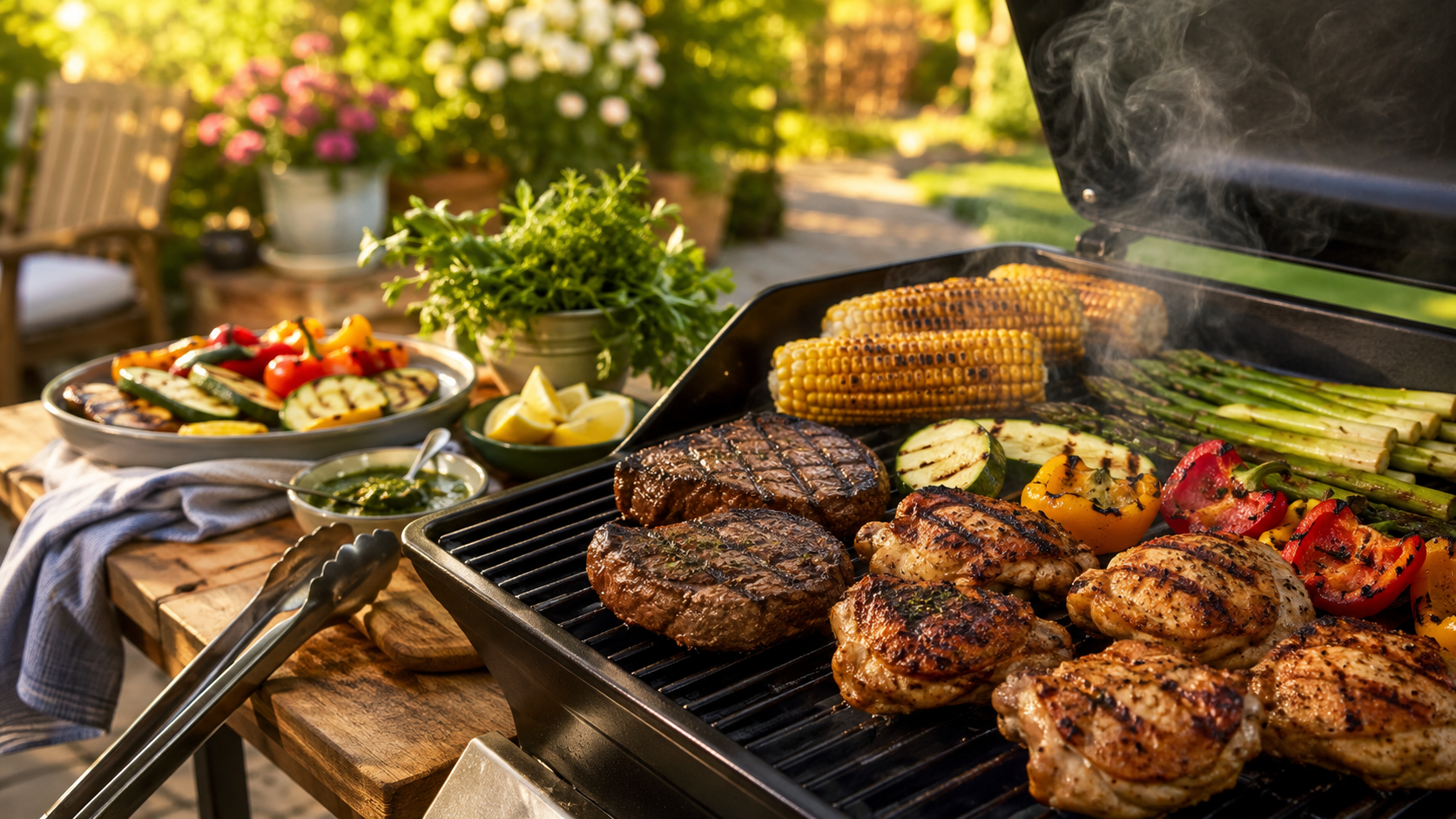
Grilling can look deceptively simple: fire, food, flip, done. But great grilling is a skill. The difference between dry chicken and juicy chicken, scorched vegetables and sweet smoky vegetables, or a steak that tastes flat versus one that tastes like summer itself often comes down to a few small decisions.
The good news? You do not need a professional outdoor kitchen or a competition barbecue setup to grill beautifully. You just need to understand heat, timing, seasoning, and how to let the grill do what it does best.
Here are my best tips and tricks for better summer grilling.
Start With a Clean, Hot Grill
A grill does not need to look brand new every time you cook, but the grates should be clean enough that old food is not sticking to your fresh food.
Preheat the grill first, then brush the grates while they are hot. Heat loosens stuck-on bits, and a clean grate gives you better contact with the food, which means better searing and easier flipping.
After brushing, lightly oil the grates if needed. The easiest way is to dip a folded paper towel in neutral oil, hold it with tongs, and wipe it over the hot grates. Do not pour oil directly onto the grill; that is how you get flare-ups instead of dinner.
Understand Direct Heat vs. Indirect Heat
This is one of the biggest grilling skills to learn.
Direct heat means the food is directly over the flame or hot coals. It is best for quick-cooking foods that benefit from browning and char, like burgers, steaks, shrimp, asparagus, zucchini, and thin chicken cutlets.
Indirect heat means the food is placed away from the main heat source. It is best for thicker or larger items that need time to cook through without burning on the outside, like bone-in chicken, pork tenderloin, ribs, sausages, thicker steaks, or whole vegetables.
Think of direct heat like a stovetop burner and indirect heat like an oven. Most of the best grilling uses both.
For example, you might sear chicken thighs over direct heat to get beautiful color, then move them to indirect heat to finish cooking gently. Or you might cook a thick steak over indirect heat first, then finish it over high direct heat for a final crust.
Create Heat Zones
A good grill setup gives you options. Instead of making the entire grill the same temperature, create a hot zone and a cooler zone.
On a gas grill, turn one burner higher and another lower, or leave one burner off for indirect cooking.
On a charcoal grill, pile the coals to one side so you have a hot side and a cooler side.
This gives you control. If something is browning too quickly, you can move it. If chicken skin is flaring up, you can slide it away from the flame. If vegetables are done before the meat, you can keep them warm on the cooler side.
A two-zone grill is the difference between feeling like the fire is bossing you around and feeling like you are actually cooking.
Season Earlier Than You Think
Salt needs time to do its best work. For steaks, chops, chicken, and other proteins, season at least 30 minutes before grilling if you can. For larger cuts, a few hours or even overnight is better.
Salt draws moisture to the surface at first, but given enough time, that moisture reabsorbs into the meat, seasoning it more deeply and helping it stay juicy. This is essentially a dry brine, and it is one of the easiest ways to improve grilled meat.
For quick foods like shrimp, delicate fish, or thin vegetables, you can season closer to cooking time. They do not need as long, and some delicate ingredients can get watery or firm if salted too far ahead.
Pat Food Dry Before It Hits the Grill
Moisture is the enemy of browning. If your steak, chicken, or vegetables are wet when they hit the grill, they steam before they sear.
Pat proteins dry with paper towels before seasoning or before grilling. If you marinated something, lift it out of the marinade and let excess liquid drip off. You want flavor, not a wet coating that prevents browning.
This is especially important for chicken, steak, pork chops, tofu, mushrooms, zucchini, and anything that has been sitting in a marinade.
Use Marinades Strategically
Marinades can be wonderful, but they are often misunderstood. They mostly flavor the surface of food. They do not magically penetrate deeply into large cuts of meat.
A good marinade usually has:
Acid, such as lemon juice, vinegar, yogurt, or buttermilk
Fat, such as olive oil or neutral oil
Salt or a salty ingredient, such as soy sauce, fish sauce, or miso
Aromatics, such as garlic, herbs, spices, ginger, citrus zest, or chiles
Be careful with very acidic marinades. Lemon juice, vinegar, and other acids can make the surface of meat mushy or chalky if left too long. For chicken pieces, a few hours is usually plenty. For seafood, 15 to 30 minutes may be enough.
One of my favorite tricks is to save the brightest flavors for after grilling. Grill with a simple seasoning or balanced marinade, then finish with fresh lemon, herbs, chili crisp, salsa verde, chimichurri, or a spoonful of garlicky yogurt sauce.
That way you get both char and freshness.
Do Not Move Food Too Soon
This is where a lot of grilling anxiety happens.
Food often sticks when it first hits the grill, then naturally releases once a crust forms. If you try to flip too early, you tear the surface and leave all that good browning behind.
Place the food down and give it a minute. Let the grill do its job. When the food is ready to turn, it usually releases more easily.
This is especially true for fish, chicken, burgers, and vegetables.
Flip With Intention
You do not need to flip everything constantly, but you also do not need to follow the old rule that meat should only be flipped once.
For steaks, burgers, and chops, flipping more than once can actually help them cook more evenly. The key is not to poke, smash, or fuss constantly.
Use tongs or a spatula, not a fork that punctures the meat. And please, do not press down on burgers unless you are intentionally making a smash burger on a flat top. Pressing squeezes out juices and encourages flare-ups.
Manage Flare-Ups Instead of Panicking
Flare-ups happen when fat drips onto the flame. A little flicker is normal. A big flame licking the food is not ideal.
If flames get aggressive, move the food to the cooler side of the grill until things calm down. Do not spray water onto a gas grill unless it is a true emergency; it can create steam, ash, and uneven heat, and it does not solve the fat-dripping problem.
Trimming excessive surface fat, using two heat zones, and keeping the lid closed when appropriate can all help keep flare-ups under control.
Use the Lid Like a Tool
The grill lid changes how the food cooks.
Lid open means more direct, intense heat from below. This is useful for quick foods, delicate items, or when you want to monitor flare-ups closely.
Lid closed traps heat and turns the grill into more of an oven. This is useful for thicker foods, indirect cooking, melting cheese, cooking bone-in chicken, or getting sausages cooked through without scorching the outside.
As a general rule, thin and fast foods can cook with the lid open. Thick foods usually benefit from the lid closed, at least for part of the cooking time.
Use a Thermometer
A thermometer is not cheating. It is how you stop guessing.
Grilled food can brown long before it is cooked through, especially over high heat. Chicken can look done and still need more time. Pork can go from juicy to dry quickly. Burgers can be hard to judge by color alone.
Use an instant-read thermometer and pull food at the right temperature. Remember that carryover cooking continues after the food comes off the grill, especially with larger cuts.
For food safety, chicken should reach 165 degrees Fahrenheit. For steak, pork, and fish, the ideal temperature depends on the cut and your preferred doneness, but using a thermometer gives you control instead of relying on vibes and grill marks.
Rest Meat Before Slicing
Resting is not optional if you want juicy meat.
When meat cooks, its juices are driven toward the center. If you slice immediately, those juices run out onto the cutting board. Resting gives them time to redistribute.
Small items like chicken cutlets or pork chops may only need 5 minutes. Larger cuts like tri-tip, pork tenderloin, or a thick steak may need 10 to 15 minutes.
Resting also gives you time to finish the rest of the meal, toss the salad, warm the buns, or pretend you had the timing under control the whole time.
Think Beyond Meat
Some of the best grilled food is not meat at all.
Vegetables love the grill because high heat concentrates their sweetness and adds smoke and char. Try grilling zucchini, eggplant, peppers, onions, corn, asparagus, mushrooms, cabbage wedges, romaine hearts, tomatoes, or sweet potatoes.
The trick is to cut vegetables large enough that they do not fall through the grates and to season them generously. Oil helps with browning and prevents sticking, but do not drown them. Too much oil can drip and flare.
Finish grilled vegetables with something bright: lemon juice, vinegar, fresh herbs, feta, toasted nuts, chile oil, tahini sauce, or a shower of Parmesan.
Fruit is also incredible on the grill. Peaches, pineapple, watermelon, plums, and bananas all take on a caramelized, smoky edge. Serve grilled fruit with ice cream, whipped cream, yogurt, pound cake, or a drizzle of honey.
Use Sauces at the Right Time
Sweet sauces burn easily. Barbecue sauce, glazes, honey, maple syrup, and fruit-based sauces can go from glossy to scorched very quickly over direct heat.
If you are using a sweet sauce, brush it on toward the end of cooking. Let it set and caramelize for the last few minutes, then move the food away from intense heat if needed.
For longer-cooking foods, build flavor in layers: season first, cook mostly through, then glaze at the end.
Do Not Forget Texture
Great grilled food is not just about smoky flavor. It is also about contrast.
A rich grilled steak is better with a sharp herb sauce. Smoky chicken is better with crunchy slaw. Grilled vegetables are better with creamy yogurt or crisp toasted breadcrumbs. Burgers are better with cold lettuce, tangy pickles, and a soft toasted bun.
When planning a grilled meal, think about what will make each bite more exciting:
Something smoky
Something bright
Something crunchy
Something creamy
Something fresh
That is how you turn “we grilled dinner” into a meal people remember.
Toast the Bread
This is a small thing that makes a big difference.
Burger buns, hot dog buns, flatbreads, sandwich rolls, and thick slices of bread all benefit from a quick toast on the grill. It adds flavor, improves texture, and helps the bread hold up to juicy fillings and sauces.
Brush lightly with butter or oil, place cut-side down, and toast just until golden. Watch carefully. Bread goes from perfect to tragic very quickly.
Keep a Finishing Station Nearby
Before you start grilling, set up the things you will need after the food comes off the grill.
That might include:
A clean platter
A thermometer
Tongs
Fresh herbs
Lemon wedges
Finishing salt
Sauce or glaze
Butter
A cutting board
Foil for resting, if needed
This keeps you from running inside while your perfectly cooked chicken sits unattended or your vegetables slide from charred to collapsed.
Also, always use a clean platter for cooked food. Do not put cooked meat back on the same plate that held raw meat unless it has been washed.
Let the Grill Inspire the Whole Meal
The grill does not have to be just for the main dish. Once it is hot, use it.
Grill the chicken, then throw on corn. Toast the buns. Char some scallions for a sauce. Grill peaches for dessert. Warm tortillas. Blister shishito peppers for an appetizer. Cook a foil packet of potatoes or green beans on the cooler side.
A hot grill is an opportunity. Make it work for you.
A Few Easy Grilling Upgrades
If your grilled food tastes fine but not amazing, try one of these simple upgrades:
Use more salt, and season earlier.
Add acid after grilling, not just before.
Finish with fresh herbs.
Use a thermometer instead of guessing.
Create a hot zone and a cooler zone.
Let meat rest before slicing.
Toast the bread.
Serve with a sauce.
Stop moving the food every five seconds.
Add grilled fruit to dessert.
None of these are complicated, but they make a noticeable difference.
Final Thoughts
Grilling is one of the best parts of summer cooking because it is a little wild in the best way. It is heat, smoke, timing, instinct, and a bit of theater. But underneath all that fire is the same foundation as any good cooking: control your heat, season properly, build flavor, and pay attention.
So this June, clean off the grill, grab the good produce, salt your meat a little earlier, and give yourself permission to cook outside as often as possible.
The grill is hot. Summer is short. Dinner should taste like it.
 Brennah Van Wagoner
Weekly Newsletter Contributor since 2025
Email the author! brennah.oaks@gmail.com