
The Ultimate Make Ahead Dessert
Hey chefs,
There is something deeply charming about a cake that does not need to be fussed over, especially when you are busy.
No fragile mousse. No whipped cream that slumps if it sits too long. No fresh fruit weeping into the crumb. No dramatic assembly right before serving. Just a beautiful, compact cake that can be baked ahead, wrapped well, carried somewhere, sliced neatly, and still taste wonderful the next day.
That is the spirit of a travel cake.
In French pastry, these cakes are often called gâteaux de voyage, which literally means “travel cakes.” The name is wonderfully practical. These are cakes designed to go places. They are sturdy enough to survive transportation, flavorful enough to improve as they rest, and elegant enough to feel like a proper pâtisserie treat instead of just a snack cake.
A good travel cake is the kind of thing you bring to a picnic, tuck into a lunch box, wrap as a gift, pack for a road trip, or leave on the counter for guests to slice from all weekend. It should be simple to serve, easy to hold, and even better after the flavors have had time to settle.
In other words: a travel cake is not just a cake you can travel with. It is a cake designed around keeping quality.
Why Are They Called Travel Cakes?
Before refrigeration was convenient, and long before every celebration cake was expected to be filled with cream, pastry had to be practical. Cakes made for travel needed to keep for several days, tolerate movement, and remain delicious without delicate fillings or toppings.
That meant using ingredients and techniques that supported structure, moisture, and preservation: butter, sugar, eggs, nuts, citrus, honey, candied fruit, syrup, and glazes. These ingredients do more than add flavor. They help protect the crumb, slow drying, and make the cake more resilient.
A classic travel cake should be:
- easy to transport
- not overly fragile
- safe at room temperature
- good for several days
- easy to slice
- flavorful without needing fresh cream or custard
- beautiful without needing elaborate decoration
This is why loaf cakes, pound cakes, financiers, madeleines, nut cakes, fruit cakes, honey cakes, and glazed tea cakes all live comfortably in the travel cake family. They may look different, but they share the same philosophy: make it delicious, make it sturdy, and make it last.
A Brief History of Travel Cakes
The idea of a cake for travel is much older than the modern bakery loaf. Across Europe, many traditional cakes were built for keeping: fruit-studded cakes, dense nut cakes, spice cakes, honey cakes, and cakes brushed or soaked with syrup. These were not necessarily humble. Many were rich, perfumed, and made with precious ingredients. But they were designed for real life.
In French pastry culture, the phrase gâteau de voyage became associated with cakes that could be packed and carried without refrigeration. Some stories connect the style to aristocratic travel in France, where cakes needed to survive journeys between estates. Whether or not every romantic origin story is perfectly traceable, the practical need is easy to understand: if a cake was going to travel by carriage, train, boat, or basket, it had to be more durable than a cream-filled gâteau.
Later, French pâtisserie helped refine the category into something elegant. Instead of thinking of long-keeping cakes as plain or old-fashioned, pastry chefs treated them as a technical and creative format. A travel cake could be simple, yes, but it could also be highly polished: glossy with glaze, flavored with citrus zest, scented with nuts, striped with marble batter, or soaked with a thin syrup.
Today, the travel cake has become especially beloved because it fits modern baking so well. It can be made ahead. It ships better than frosted layer cake. It works for cafés, bakeries, lunch boxes, holidays, hostess gifts, and everyday dessert. It is practical, but not boring.
That is the magic.
What Makes a Cake a Travel Cake?
A travel cake is usually not defined by one exact recipe. It is more of a category. The common thread is that the cake is made to hold well and eat well without complicated finishing.
Most travel cakes have a few things in common.
They are usually butter-based, oil-based, nut-based, or egg-rich. They often have a close, fine crumb rather than an open, airy one. They are typically baked in a loaf pan, round pan, small mold, or individual mold. They do not rely on whipped cream, pastry cream, fresh berries, or anything that must stay cold. They often include a syrup, glaze, or coating that helps seal in moisture.
A travel cake should slice cleanly. It should not crumble apart when wrapped. It should not need a fork, although it can certainly be served on a plate if you want to be civilized about it.
The best versions are dense in the right way: not heavy, not dry, but plush, cohesive, and satisfying. The crumb should feel buttery and tender, with enough structure to hold its shape.
Different Types of Travel Cakes
The travel cake family is wonderfully broad. Here are some of the most common styles.
Pound Cakes and Loaf Cakes
This is probably what most people picture first: a buttery loaf cake with a tight crumb and a clean slice. Classic pound cake, lemon loaf, marble cake, yogurt cake, and almond loaf all fall into this category.
These cakes are especially good for travel because they are compact and sturdy. Their flavor also tends to improve overnight as the fat firms slightly, the crumb relaxes, and the aromatics distribute through the cake.
Citrus Cakes
Lemon, orange, grapefruit, and yuzu are natural travel cake flavors. Citrus zest brings essential oils, which perfume the batter beautifully. Citrus juice can be used in the batter, syrup, or glaze.
The best citrus travel cakes usually layer the flavor: zest in the sugar, juice in the batter or syrup, and a thin glaze on the outside. That gives brightness without making the crumb harsh or wet.
Nut Cakes
Almond flour, hazelnut flour, pistachio flour, and walnut flour are excellent in travel cakes. Nuts bring tenderness, richness, flavor, and moisture retention. They also make the crumb feel more luxurious.
A little nut flour can soften a loaf cake without making it fall apart. Too much, however, can make the cake fragile or oily, so balance matters.
Financiers
Financiers are small French cakes traditionally made with browned butter, egg whites, sugar, flour, and ground almonds. They are rich, compact, and beautifully suited to travel because they are moist, small, and easy to eat by hand.
They also show one of the great truths of travel cakes: small cakes can be just as serious as large ones.
Madeleines
Madeleines are more delicate than a loaf cake, but they still belong in the broader conversation. These small shell-shaped cakes are portable, buttery, and deeply associated with French tea-time baking. They are best fresh, but their format helped shape the idea of elegant small cakes made for serving, sharing, and carrying.
Fruit and Candied Fruit Cakes
Fruit cakes are some of the oldest long-keeping cakes. Modern versions do not need to be heavy or overly sweet. Candied citrus peel, dried cherries, apricots, figs, dates, raisins, and currants can all be used beautifully.
The key is balance. Dried and candied fruit should feel like concentrated flavor, not clutter.
Honey and Spice Cakes
Honey cakes, gingerbreads, pain d’épices, and spice loaves are classic keeping cakes. Honey is hygroscopic, meaning it attracts and holds moisture, which helps cakes stay soft longer. Spices also bloom and deepen over time, making these cakes especially good after a day or two.
Chocolate Travel Cakes
Chocolate travel cakes are often rich but unfussy: chocolate loaf cake, cocoa pound cake, chocolate almond cake, or chocolate marble cake. They can be glazed with a thin chocolate coating or ganache-style finish, but they should still be stable at room temperature.
The Technique Behind a Great Travel Cake
A travel cake may look simple, but the technique matters. Because there are no swirls of frosting or piles of berries to distract from the crumb, the cake itself has to be excellent.
Build Flavor Into the Sugar
For citrus cakes, rubbing zest into sugar is one of the most important steps. Citrus flavor lives mostly in the zest, specifically in the fragrant oils. When you rub zest into granulated sugar, the sugar crystals help draw those oils out and distribute them throughout the batter.
This is how you get a lemon cake that tastes like lemon, not just a yellow cake with lemon juice in it.
Use the Right Fat Balance
Butter gives flavor and structure. Oil gives lasting softness. Many excellent loaf cakes use both.
A cake made only with butter can taste beautiful but may firm up more as it sits. A little neutral oil keeps the crumb plush and moist, especially the next day. The trick is not to use so much oil that the cake feels greasy or loses its fine crumb.
Do Not Over-Aerate
For a travel cake, you usually want a fine, tight, sliceable crumb. Creaming butter and sugar is important, but this is not a towering layer cake. Too much air can cause tunneling, doming, or a fragile crumb.
Cream until lightened and fluffy, but do not beat endlessly.
Add Eggs Gradually
Eggs create structure, richness, and emulsification. Adding them one at a time helps the batter stay smooth and stable. If the batter breaks slightly after adding acidic ingredients like sour cream or lemon juice, that is usually fine. Once the flour is added, it will come together.
Respect the Flour
Once flour enters the bowl, mix only until smooth. Overmixing develops gluten, which can make a loaf cake rubbery or tough.
Travel cakes should be structured, not bouncy.
Bake Low and Steady
Many loaf-style travel cakes benefit from a moderate oven, around 325 degrees Fahrenheit. A slightly lower temperature gives the center time to bake through before the edges overbrown.
The goal is a deeply golden cake with a set center, not a pale loaf with a gummy middle or an overbaked crust hiding a dry crumb.
Use a Syrup Strategically
A thin syrup does several things at once. It adds flavor, moisture, and keeping quality. It also helps the cake taste more polished.
For citrus cakes, a simple lemon syrup brushed over the warm cake is ideal. The cake should absorb it gradually. You do not want to drench the loaf into sogginess; you want to season and preserve the crumb.
Glaze Only When Cool
A glaze should go onto a completely cooled cake. If the cake is warm, the glaze will melt, run off, or soak in unevenly.
For a classic travel cake finish, the glaze should be thin enough to pour but thick enough to set into a delicate shell. That little crackle is part of the pleasure.
Tips for a Perfect Travel Cake
Use room-temperature ingredients. Butter, eggs, sour cream, and yogurt emulsify better when they are not cold.
Weigh your ingredients. Travel cakes are simple enough that small measurement differences show.
Do not skip the zest-sugar step. It is the difference between mild lemon flavor and full lemon perfume.
Use fresh baking powder. A loaf cake needs reliable lift, especially when it contains almond flour or sour cream.
Line the pan with parchment. Travel cakes are meant to come out cleanly, and parchment makes that nearly guaranteed.
Create a clean center split. For a bakery-style loaf, drag or pipe a thin line of softened butter down the center of the batter before baking. This encourages the cake to open neatly instead of cracking randomly.
Bake to doneness, not just time. Loaf cakes vary by pan, oven, and batter temperature. Look for a golden crust, a springy center, and a skewer that comes out clean or with a few moist crumbs. For extra precision, the center should be about 200 to 205 degrees Fahrenheit.
Syrup the cake while warm. A warm cake absorbs syrup more readily and evenly.
Cool completely before glazing. This gives you the prettiest finish and the cleanest set.
Wrap it overnight. This is the great secret of travel cakes: many of them are better the next day. Once the glaze has set, wrap the cake well and let it rest at room temperature. The crumb softens, the flavor rounds out, and the cake slices beautifully.
How to Store and Serve a Travel Cake
Most loaf-style travel cakes keep well at room temperature for several days when wrapped tightly. Once the glaze is set, wrap the cake in plastic wrap or store it in an airtight container. If you are gifting it, wrap it in parchment first, then tie it with twine or tuck it into a box.
For the cleanest slices, use a sharp serrated knife and a gentle sawing motion. If the glaze is especially crackly, wipe the knife between slices.
Travel cakes are excellent with tea, herbal infusions, fruit, yogurt, or a spoonful of softly whipped cream if you are serving them at home. But they do not need accompaniment. A proper travel cake should be complete on its own.
Why Lemon Almond Makes Such a Good Travel Cake
Lemon almond is one of the best travel cake combinations because it checks every box.
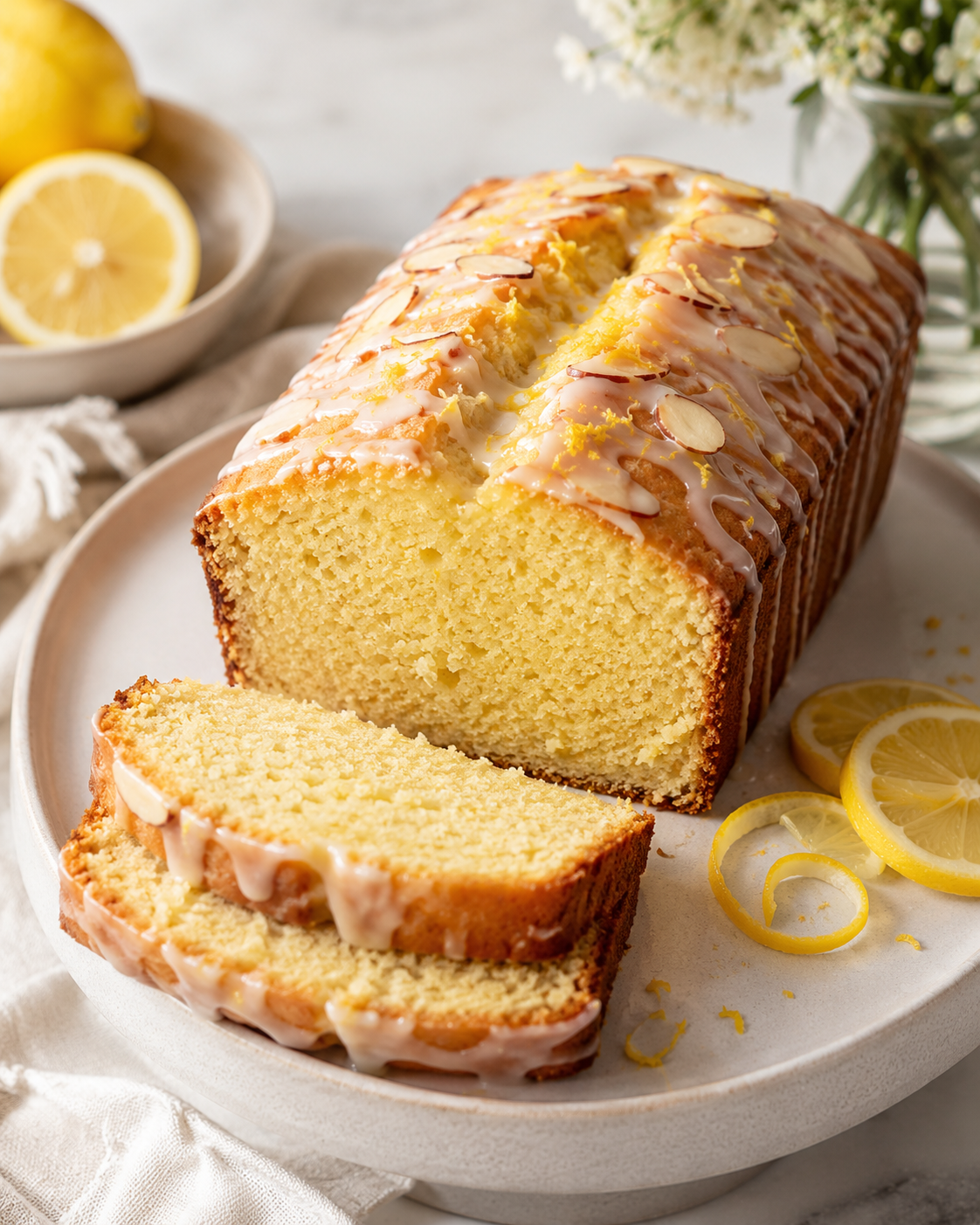
The lemon gives brightness and aroma. The almond flour adds tenderness and quiet richness. Butter gives classic flavor, while a little oil helps the crumb stay soft. Sour cream or Greek yogurt brings moisture and a slight tang. Lemon syrup reinforces the citrus and keeps the loaf plush. A thin lemon glaze seals the cake and gives it that beautiful crackly finish.
It is elegant, but not fussy. It is sturdy, but not dry. It is exactly the kind of cake that tastes good the day it is made and even better the next day.
That is the whole point of a travel cake.
If you want to make one at home, start with this Lemon Almond Travel Cake: a plush, buttery lemon loaf with a tight, sliceable crumb, bright lemon syrup, and a thin crackly glaze. It is sturdy enough to wrap, travel, and serve the next day, but still tender and moist like a proper pâtisserie-style loaf cake.
Click here for the recipe
Remember to keep calm and cake on.
 Brennah Van Wagoner
Weekly Newsletter Contributor since 2025
Email the author! brennah.oaks@gmail.com