
Warehouse Fire Update and Homemade Stock—the Foundation to Many Comfort Foods
Back in December, I wrote about the importance of “comfort foods” and how they can help us cope with life’s struggles. I shared about the warehouse fire that destroyed our vintage antiques John Deere tractors (as well as all the vintage cars) that my husband, Rich, had restored.
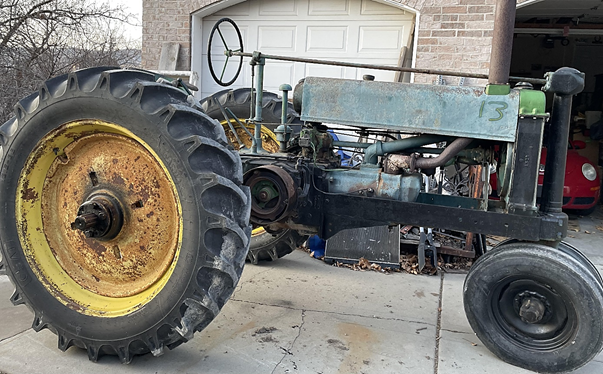
Well, since that article, Dan organized a Go Fund Me for us and as a result of the generosity of many people (some are actually Cook’n readers!), we’ve been able to get a new start. Alpine Days 2026 Parade here we come! This photo is of a 1930’s tractor Rich found in Monroe, UT, and he’ll spend the spring and summer restoring it.
ANYway, this is my report. And I’ll stand by what I said back in December: good food—comfort food—can soothe the soul! A lot of homemade bread, Grandma’s macaroni and cheese, Aunt Annie’s funeral potatoes, and my sister’s chocolate cake carried us through our mourning and got us to the “Shoot! We can DO this!” place. I’ve heard from many of you and I know you agree with this.
So let’s talk some more about comfort food. If you ask Google “What is one of the most important staples to have on hand for making comfort food?” it will respond with CHICKEN BROTH and STOCK. This is because it is typically the foundation for so many soups, stews, chowders, and sauces.
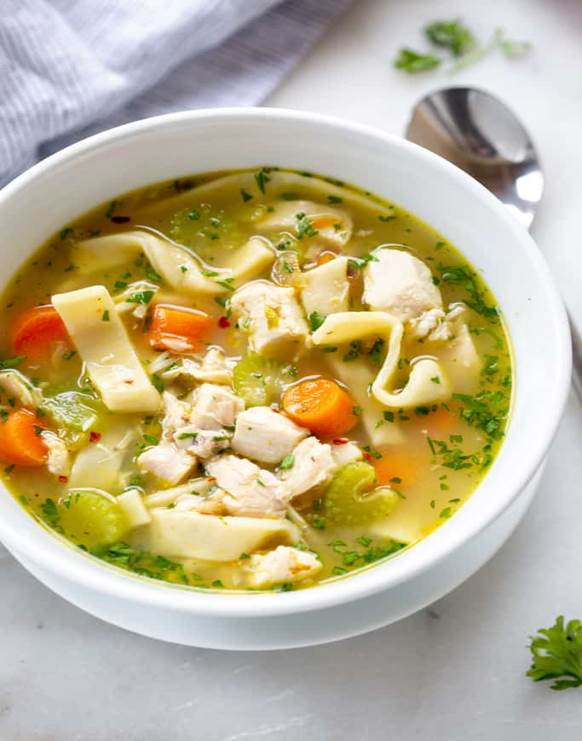
Do you know the difference between broth and stock? I didn’t. Here’s what I learned after some research: Stock is made by simmering animal bones (often roasted) and vegetables for several hours, resulting in a thicker, collagen-rich, unseasoned liquid ideal for sauces and gravies. Broth is made by simmering meat (and sometimes vegetables) for a shorter time, resulting in a thinner, seasoned liquid better for soups.
They’re definitely interchangeable in recipes, but some recipes do better with one than the other. For instance, creamy risottos, savory rice/grains, pan sauces/gravies, and braised meats turn out better when made with stock. It adds depth to soups, matzoh ball soup, tortilla soup, and bean dishes. It also improves mashed potatoes, stir-fries, and pot pies.
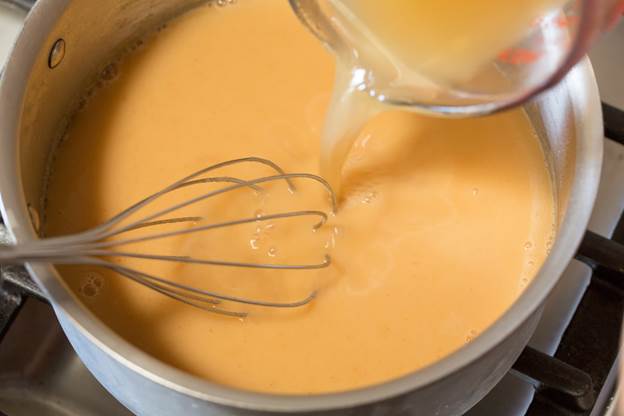
While it takes some time to make your own stock, it’s not hard to do. And I’m guessing many of our experienced Cook’n readers do this on a regular basis. Making stock used to be a weekly TO-DO for most mothers and grandmothers. Of course we can buy it pre-made, but it really doesn’t compare to the all-day simmering of your own batch, wouldn’t you agree?
The secret to a rich and deep stock is to roast the bones beforehand. Roasting brings out deeper flavor. Once the bones are roasted, simmer them with carrots, celery, onion, garlic, herbs (parsley, thyme, bay leaf), and peppercorns in water for 2–6 hours. Strain, cool, skim off fat, and store in the fridge or freezer. I like to freeze it in quart jars so I have it at the ready throughout the month.
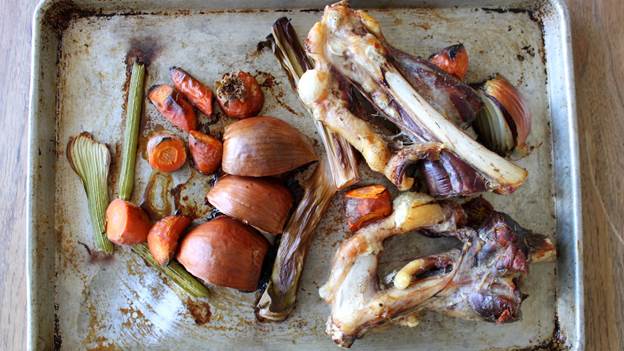
I’ll close with a few tips for success and a recipe Aunt Annie used for her stock that was the foundation for the majority of her cooking. Oh the memories!
FOR SUCCESS:
· Never Boil: A hard boil makes cloudy, greasy stock. Maintain a gentle simmer for the best results.
· Save Scraps: Store leftover carrot peelings, celery ends, and onion skins in the freezer to add to your stockpot.
· Optional Addition: Add a tablespoon of apple cider vinegar to help extract more minerals and collagen from the bones.
Aunt Annie's Chicken Stock
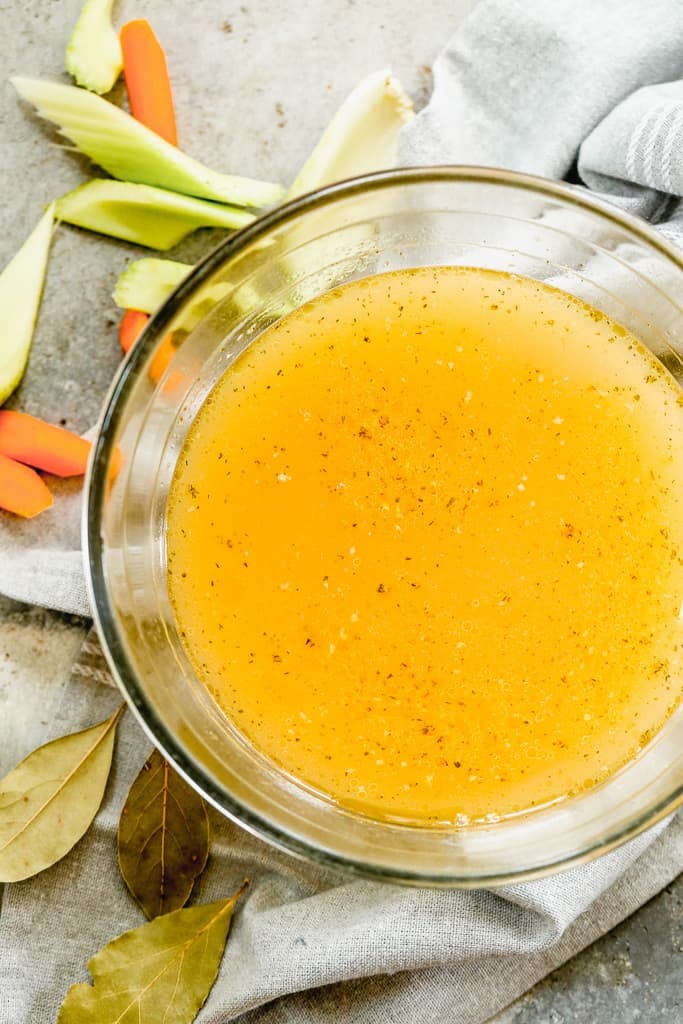
1 rotisserie chicken
3 ribs celery with leaves, cut into chunks
3 medium carrots cut into chunks
3 medium onions cut into chunks
2 bay leaves
3/4 teaspoon dried rosemary
3/4 teaspoon dried thyme
1/2 teaspoon garlic powder
10 whole peppercorns
8 cups cold water
3 tablespoons Better Than Bouillon Chicken Paste or 7 chicken bouillon cubes
Directions:
Slowly bring to a boil over medium heat. Skim off any foam that rises to the surface.
Reduce heat, cover and simmer on low heat for at least 2 hours or longer.
Remove from heat and allow to cool.
Strain stock through a fine sieve strainer, discarding all vegetables and seasonings so you are only left with the stock. Season with chicken bouillon paste, to taste.
Store in the fridge for up to 3-4 days. Skim off the fat that rises to the top. If not using within a few days, freeze for up to 3 months.
NOTES
Better than Bouillon Chicken*: I absolutely love this stuff and always use it to enhance the flavors of my stock. You can omit it, if you want.
Storing Instructions: Refrigerate the stock for use within 3-4 days. (Note that it will take on a gelatin-like texture in the fridge, but will liquidize once warmed again). After refrigerating, skim off any fat that rises to the surface.
Freezing Instructions: Measure out the stock in freezer safe bags in batches of two cups each. This way, when you pull one out, you know there is exactly 2 cups of homemade chicken stock!
Instant Pot Chicken Stock: Place chicken bones and skin, carrots, celery, onion, bay leaves, peppercorns, rosemary, thyme, and water into Instant Pot. Cook on high pressure for 30 minutes. Allow pressure to naturally release, then strain and discard bones and vegetables. Stir in chicken bouillon.
Slow Cooker Instructions: Place chicken bones, skin, vegetables, spices, and water in a slow cooker. Set to LOW and let cook for 10-12 hours. Let cool then strain through a fine sieve strainer, discarding all vegetables and seasonings so you just have the smooth stock. Season with chicken bouillon paste, to taste. Keep in the refrigerator for 3-4 days or freeze for up to 3 months. Skim off any fat that rises to the top.
Recipe formatted with the Cook'n Recipe Software from DVO Enterprises.
 Alice Osborne
Weekly Newsletter Contributor since 2006
Email the author! alice@dvo.com
www.brilliantliving.us
www.cookingclassy.com
www.meateater.com
www.tastesbettermadefromscratch.com