
Make a Few Dietary Changes and Kiss Depression Good-bye!
Current statistics show that depression is very common and increasing, with over 1 in 8 Americans aged 12+ (roughly 29% of adults) experiencing symptoms—nearly double the rate from a decade ago. It affects over 300 million people globally, acting as a leading cause of disability. Rates are highest among young adults and women. Have you experienced it, or do you know someone who’s dealing with it? If so, you might find this information very helpful.

I’m addressing it here because a change in diet is what finally gave me long term relief from my own depression. Yup—food was the key for me. The circumstances which acerbated it didn’t change much, but as my diet changed, my mental outlook changed, and that led to improved emotional health.
It’s no secret that what we eat affects our bodies. We’ve known for years that diets high in sugar, unhealthy fats and other ingredients found in ultra-processed foods (UPFs) can be linked to physical health issues like heart disease and diabetes. But recently, science has started to uncover a much more complex relationship between our diet and our minds.
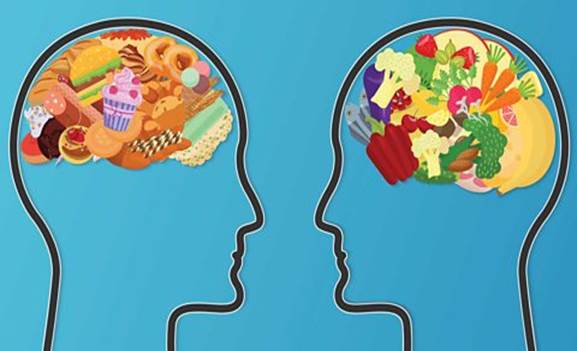
The research is strong enough to warrant attention to our daily eating habits. This isn’t about fear-mongering or striving for a “perfect” diet, but about making informed choices for protecting brain health (which in turn will protect emotional health).
With that said, here are a few practical steps nutritionists and researchers say we can take to better care for our brain—the thought center that can trigger depression:
FIRST, PRIORITIZE WHOLE FOODS. Focus on fruits, vegetables, whole grains, nuts and lean proteins. These foods are nutrient dense and, in some cases, provide the healthy fats the brain needs to function optimally.
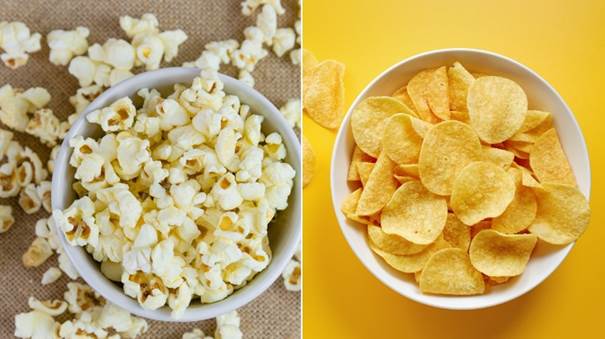
SECOND, SWAP, DON’T STOP. Researchers say trying to stop habits such as snacking, aren’t productive. Rather, they suggest that if you’re yearning for a snack, simply satisfy your hunger with a less-processed option. Swap packaged chips for air-popped popcorn or nuts. Small changes, for sure, but they add up and eventually make a big difference.
THIRD, SKIP THE SODA. This can be a tough one—sodas are addictive. But studies show attempting to give them up is worth the pain and effort. So, instead of a sugary soda, try sparkling water with lemon or a splash of another favorite juice.
With the professional advice on the table, here are my suggestions for making their advice doable. It’s a fact that if we make things easy to do, we’re more inclined to do them. So, here’s how I made all this easy to do:
I GOT ORGANIZED, FOOD-WISE as a way to prioritize eating more fresh, whole foods. Back in the day I tried to prioritize whole foods by filling our fridge with them. But the result was, for one reason or another, a lot of it spoiled. My good intentions didn’t match my energy level or ambition, until I started practicing FRIDGE LOVE, author Kristen Hong’s refrigerator management system.
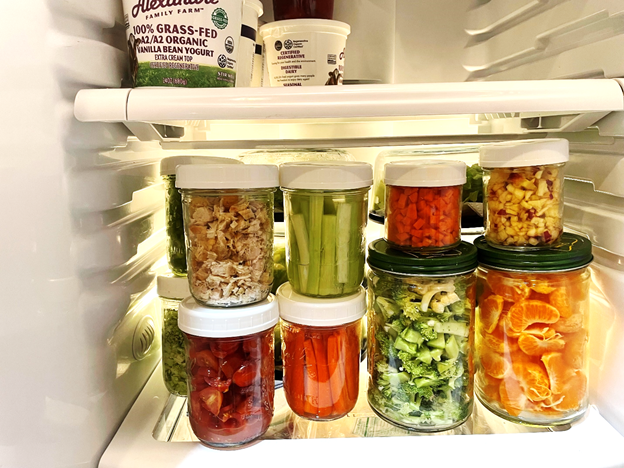
We have a very small side-by-side fridge, but I managed to claim the bottom shelf (atop the deli drawer) to hold prepped (pre-cooked, sliced, diced, chopped, etc) food. This photo shows:
· Cooked and shredded chicken breast
· Halved grape tomatoes
· Celery and carrot sticks
· Diced carrots
· Chopped apple
· Chopped broccoli
· Peeled mandarin orange pieces
Behind these foods are containers of:
· Diced bell pepper
· Sliced green onions
· Diced cucumber
· Bowls of washed and cut-up romaine lettuce
· Pre-baked potatoes, ready for shredding, slicing, and cubing.
Having these whole foods pre-prepped, means I can now make salads, soups, and other dishes in minutes. It’s easy to do, so now I’m absolutely inclined to do it.
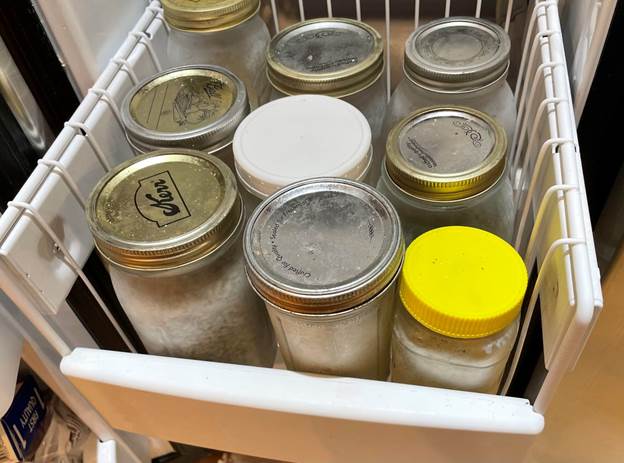
And in the freezer side of the fridge I keep a drawer of raw nuts and seeds. This is my answer to snacking. I’ll combine few nuts/seeds with some raisins and this satisfies. No more craving for chips!
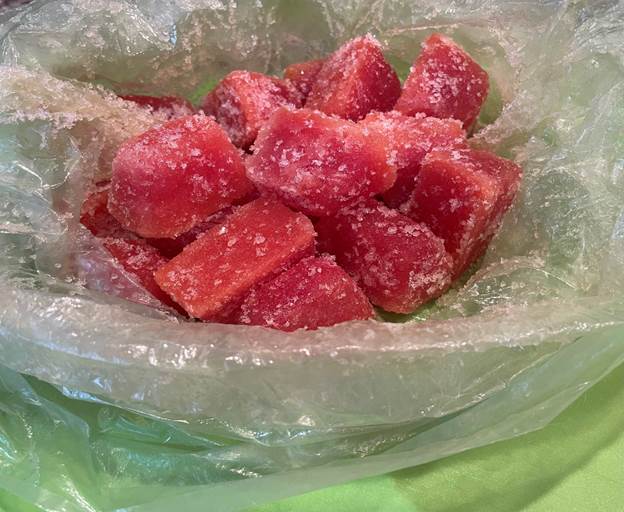
Finally, I now enjoy “LEGAL soda pop.” This is sparkling water poured over fresh fruit cubes. During the summer I puree fresh fruit (watermelon, peaches, apricots, berries, grapes, cherries, etc.) and freeze the puree in ice cube trays. Once frozen, I remove the cubes to plastic bags and return them to the freezer. I’m getting vitamins, minerals, antioxidants, and fiber along with a delicious drink. (The photo shows watermelon cubes; this is all I have left. Summer can’t come soon enough, right?)
The good news is, we can do significant things to protect that delicate relationship between our diet and our minds. My best advice: make it easy to do, and you’ll be inclined to do it! Meanwhile, let’s raise a glass of “LEGAL soda pop” to kissing depression good-bye!
 Alice Osborne
Weekly Newsletter Contributor since 2006
Email the author! alice@dvo.com