
This Is One Fishy Article!
Frozen fish, that is. How often have you intended to have fish for dinner and then come prep time, you realized you’d forgotten to thaw it out? Well, take heart, because according to those who know, including Jesse Scewcxyk (food researcher and writer), we can actually skip the thaw!
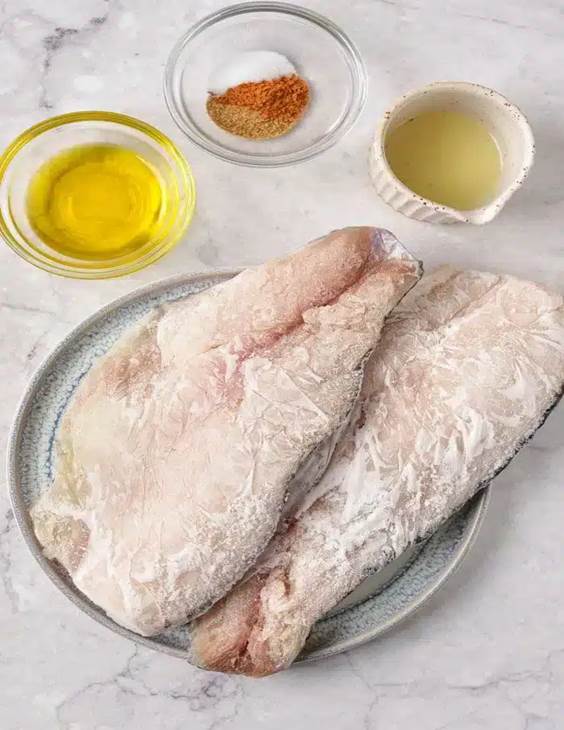
Turns out, cooking fish directly from the freezer is not only possible but also encouraged. Here’s what Jesse says you need to know:
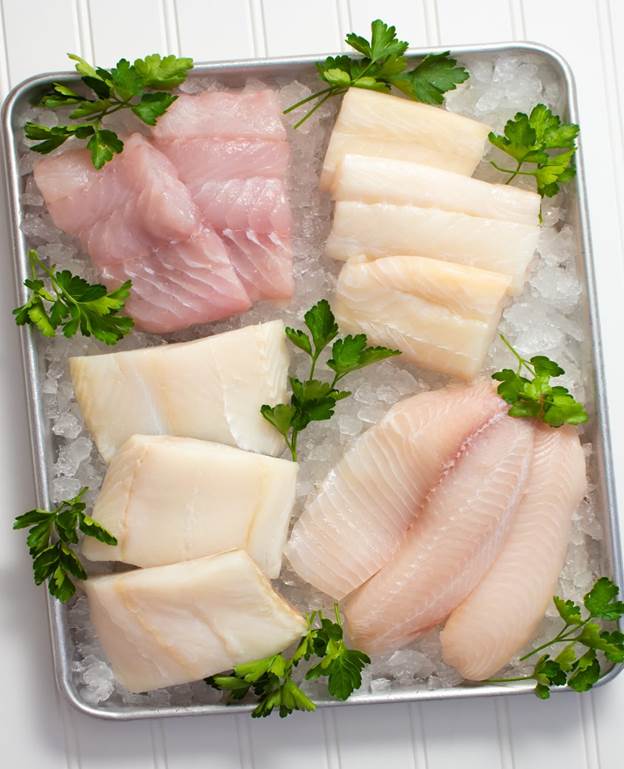
While you might assume that fattier fish (salmon or swordfish) would be best suited to cooking from frozen, lean fish (cod, tilapia, bass, halibut, and grouper) is actually a better choice. This is because lean fish often have less moisture content, so they are less likely to become soggy when cooked from frozen. (This isn't to say you can't cook salmon or other fatty fish from frozen; just make sure to follow the steps outlined below.)
Another thing to keep in mind is the size of the frozen filet. Stick to smaller filets and avoid any large pieces such as whole sides of salmon. The latter is too large and runs the risk of the center not cooking through.
And then, you want to be sure to use the right cooking method. Some methods are better suited to cooking fish from frozen than others. For instance, pan-searing isn’t recommended because frozen fish tends to release a lot of moisture while cooking. Instead of the fish browning in the pan and becoming crisp, the water released during cooking will steam the fish, preventing any browning.
Instead, stick to baking, broiling, steaming, or poaching. The latter two are among the easiest and most forgiving ways to cook fish from frozen, resulting in tender, delicate filets. Unlike pan-searing, baking and broiling help evaporate the moisture that’s released during cooking, so the fish has the chance to brown. (And browned fish equals flavorful fish!)
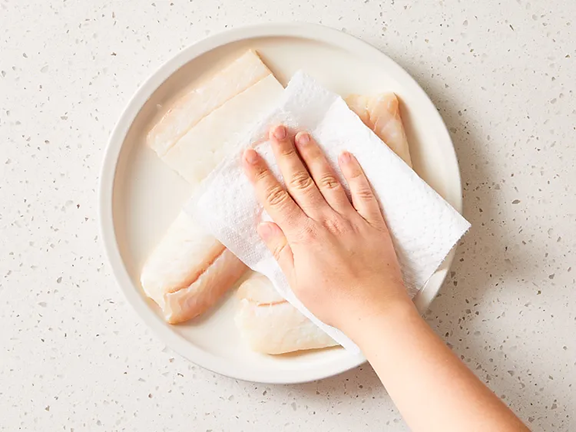
Jesse suggests that if you’re taking the baking or broiling route and want to further your chances of browning the fish, give your filets a quick rinse under cold water before cooking. This will remove the thin layer of ice crystals on the outside of the filet, which would otherwise prevent it from browning. Once you rinse them, thoroughly dry them with a paper towel to remove any excess moisture.
Also, if your recipe calls for fresh or defrosted filets but you're using frozen ones, expect to add a few minutes to the cooking time. This allows for the fish's frozen interior to come up to temperature. So, if your recipe says to bake a fresh filet for 15 minutes, expect to bake your frozen filet for at least 20 minutes. If you're unsure if your fish is fully cooked in the center, you can always insert an instant-read thermometer into its center. If it's 145 degrees F or higher, it's done.
Finally, one last thought: be prepared to sacrifice the skin. Because frozen fish releases so much moisture as it cooks, a perfectly crispy skin (like you’d get when cooking fresh or thawed fish) isn’t possible. No matter how you try, the skin will turn out soft and flimsy. Thus, if your frozen filet has skin, either remove it before cooking (if it's not too difficult) or simply cook it with the skin on and remove it once cooked. If you really want a crispy-skinned filet of fish, you're better off cooking it thawed.
I’ll close with a delicious fish recipe—whether you start with fresh fillets or frozen, it’s a winner!
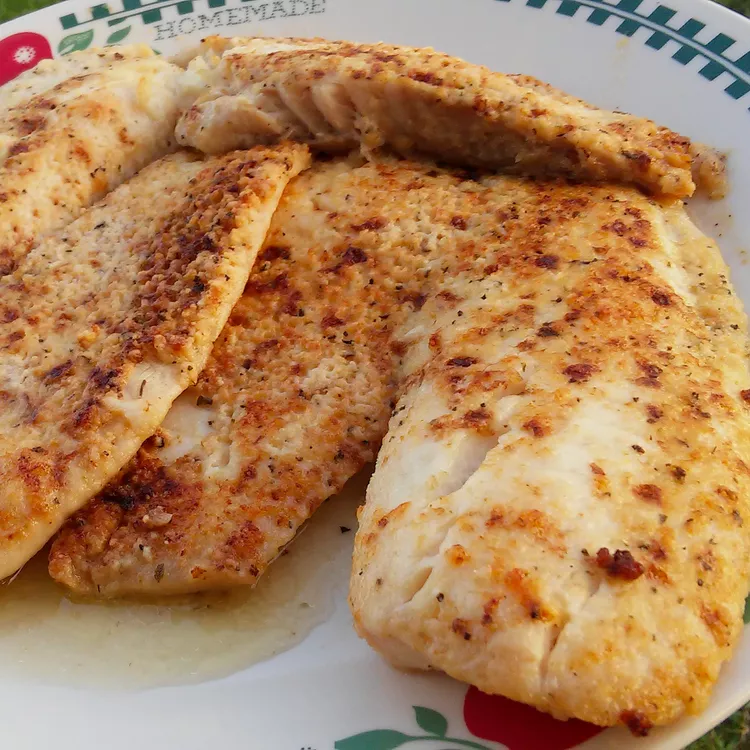
Broiled Tilapia Parmesan
1/2 cup shredded Parmesan cheese
1/4 cup butter softened
3 tablespoons mayonnaise
2 tablespoons fresh lemon juice
1/4 teaspoon dried basil
1/4 teaspoon ground black pepper
1/8 teaspoon onion powder
1/8 teaspoon celery salt
2 pounds tilapia fillets
Directions:
2. Mix Parmesan cheese, butter, mayonnaise, lemon juice, basil, pepper, onion powder, and celery salt together in a bowl until well combined.
3. Arrange tilapia fillets in a single layer on the prepared pan.
4. Broil in the preheated oven for 4 minutes, flipping halfway through. Remove from the oven and spread Parmesan mixture over fillets. Return to the oven and broil until topping is browned and fish flakes easily with a fork, about 2 more minutes; be careful not to overcook.
Recipe formatted with the Cook'n Recipe Software from DVO Enterprises.
 Alice Osborne
Weekly Newsletter Contributor since 2006
Email the author! alice@dvo.com