
Luck of the Roll: The St. Patrick’s Day Dessert You Have To Try
Hey chefs,
Happy Friday the 13th.
It feels oddly appropriate that today—traditionally the unluckiest day of the year—we’re talking about a dessert inspired by the luckiest one: St. Patrick’s Day. A little culinary irony never hurt anyone.
So for this week’s recipe, we’re leaning fully into the theme with something playful, festive, and honestly a little magical:
A Shamrock Shake Cake Roll.
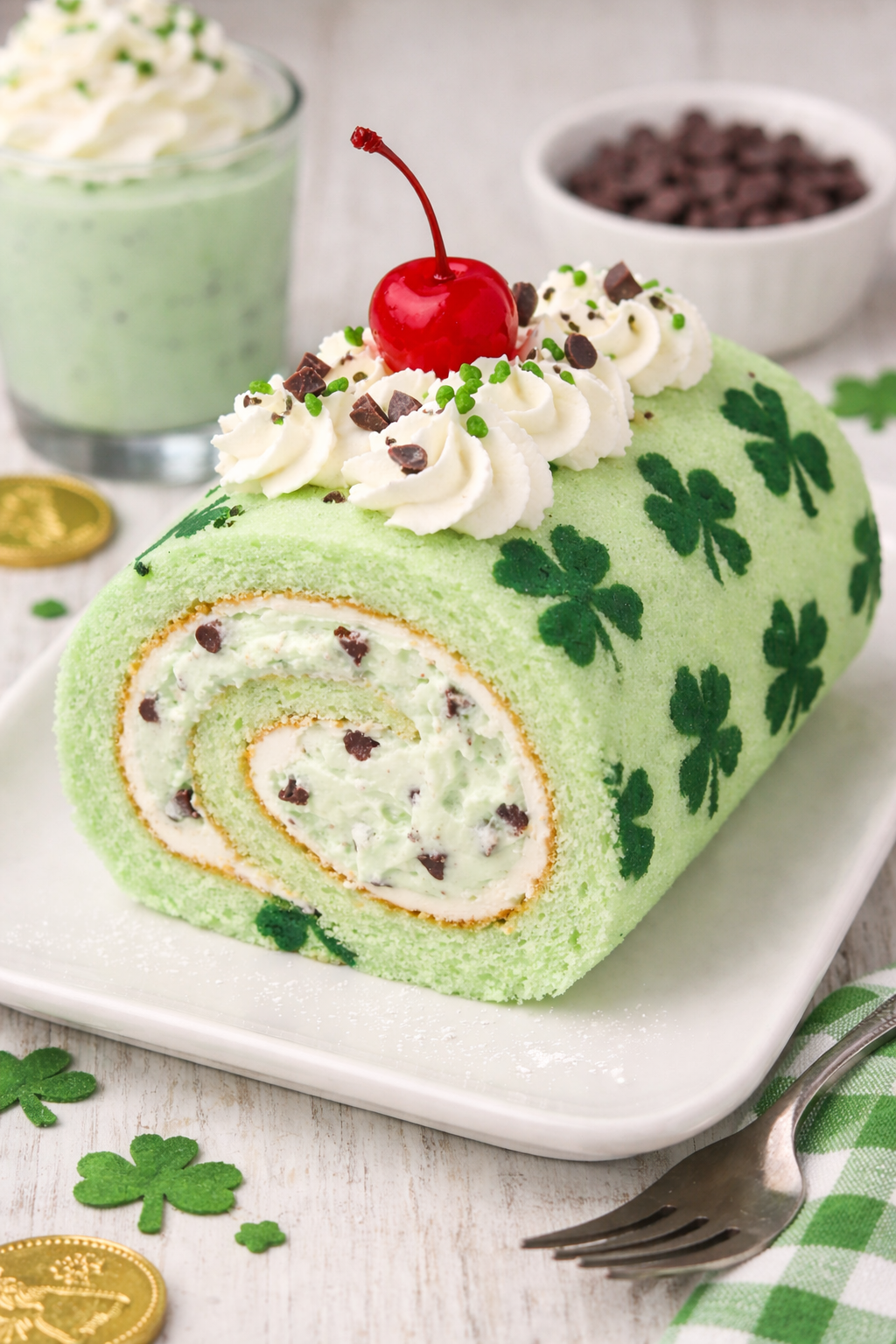
Cake rolls are one of my favorite desserts to make and serve. They’re feather-light, elegant, and deceptively impressive. The kind of dessert that makes people stop mid-conversation and say:
“Wait… you made that?”
And when you add a patterned sponge—like the shamrocks in this one—it becomes a full-on showstopper.
But here’s the secret: once you understand the technique, cake rolls are actually very approachable. In culinary school we made them often, because they’re an excellent exercise in egg foam structure, gentle folding, and moisture control—three skills that translate to dozens of other desserts.
Today I want to walk you through what makes cake rolls unique, where they come from, and the professional techniques that guarantee they roll beautifully every time.
Then at the end of the article, you’ll find the full Shamrock Shake Patterned Cake Roll recipe so you can try it yourself.
What Exactly Is a Cake Roll?
A cake roll—sometimes called a Swiss roll, roulade, or jelly roll—is a thin sponge cake baked in a sheet pan, filled with cream or frosting, and rolled into a spiral.
When sliced, it reveals those beautiful concentric rings of cake and filling.
What makes cake rolls special compared to most cakes is the structure of the sponge.
Instead of relying on chemical leaveners like baking powder for lift, most roll cakes depend heavily on whipped eggs or meringue. This creates a cake that is:
• light
• flexible
• moist
• strong enough to bend without breaking
That flexibility is what allows the cake to roll without cracking.
If the sponge is too dry, too dense, or overbaked, it simply won’t cooperate.
A Quick History of the Cake Roll
Cake rolls have been around since the 19th century, when European sponge cakes became popular for layered desserts.
The classic Swiss Roll likely originated in Central Europe despite the name. Early versions were filled with jam, which is why they were often called jelly rolls in the United States.
Over time, pastry chefs began experimenting with richer fillings:
• whipped cream
• buttercream
• mousse
• chocolate ganache
• fruit curds
Modern pastry kitchens also pushed the technique further by decorating the sponge itself—piping designs directly onto the pan before the batter goes in.
That’s the trick we’re using in this recipe to create the shamrock pattern baked right into the cake.
Why Cake Rolls Are a Culinary School Favorite
Cake rolls teach several core pastry skills at once.
1. Egg Foam Structure
The lift in this cake comes primarily from meringue—whipped egg whites stabilized with sugar.
When folded into the yolk batter, those tiny air bubbles expand in the oven and create the sponge’s light structure.
The key is medium peaks.
Too soft and the cake collapses.
Too stiff and the batter becomes difficult to fold without deflating.
2. Proper Folding Technique
One of the most important pastry skills is folding air into batter without losing it.
Professional bakers typically:
- Fold one third of the meringue into the base batter first to lighten it.
- Gently incorporate the remaining meringue in two additions.
Think lift and sweep, not stirring.
A rubber spatula works best here.
3. Moisture Control
A cake roll must walk a fine line.
It needs to be fully baked, but still soft and flexible.
That’s why roll cakes are baked at a slightly lower temperature than many sponge cakes.
If they bake too long, they dry out and crack when rolled.
The Trick to Rolling Without Cracking
This is the part that intimidates most people—but the technique is actually very simple.
You roll the cake while it’s still warm.
Right after baking, the sponge is at its most flexible.
So you:
- Flip the cake onto parchment dusted with powdered sugar.
- Peel off the baking parchment.
- Roll the cake up gently with the parchment.
Then you let it cool in the rolled shape.
When you later unroll it to add the filling, the sponge already “remembers” the spiral and rolls back easily.
It’s one of those pastry tricks that feels like magic the first time you do it.
How Patterned Cake Rolls Work
The decorative shamrocks in this cake are made with a pattern batter.
It’s a simple mixture of butter, sugar, egg white, and flour that holds its shape when piped.
Here’s the key step:
After piping the design onto parchment, you freeze it briefly.
This sets the pattern so when you spread the sponge batter over it, the design doesn’t smear.
During baking, the sponge and pattern batter fuse together—so when the cake is flipped out of the pan, the pattern appears perfectly embedded on the surface.
It’s one of those techniques that feels incredibly fancy but is actually quite approachable once you know the process.
The Flavor: Shamrock Shake, but Elevated
The filling for this cake is inspired by the iconic Shamrock Shake flavor—minty, creamy, and nostalgic.
But instead of a sugary frosting, we’re making a mint-chip mousse that’s light enough to complement the sponge.
A few key ingredients make it special:
Cream cheese gives the mousse body and a gentle tang.
Sweetened condensed milk adds that unmistakable Shamrock Shake flavor note.
And finely chopped dark chocolate creates delicate flecks throughout the filling—just like mint chip ice cream.
The result is fluffy, creamy, and perfectly balanced against the airy sponge.
A Few Professional Tips Before You Start
From years of baking these in professional kitchens, here are a few small things that make a big difference:
• Use parchment paper, not silicone mats. The pattern batter sticks better to parchment.
• Don’t overbake the sponge. Pale golden is perfect.
• Finely chop the chocolate. Large chunks can tear the sponge when rolling.
• Let the roll chill before slicing. This helps the mousse set and keeps the spiral clean.
• Use a serrated knife for neat slices.
If you’ve never made a patterned cake roll before, this is a fantastic one to start with. It’s festive, impressive, and surprisingly forgiving once you understand the technique.
And when you slice into it and see those little shamrocks spiraling through the cake?
That’s the moment everyone leans in.
Click here for the full Shamrock Shake Patterned Cake Roll recipe so you can give it a try.
Until next time, roll on and let luck do the rest.
 Brennah Van Wagoner
Weekly Newsletter Contributor since 2025
Email the author! brennah.oaks@gmail.com