
The Cake Pairing Guide No One Taught You
Hey chefs,
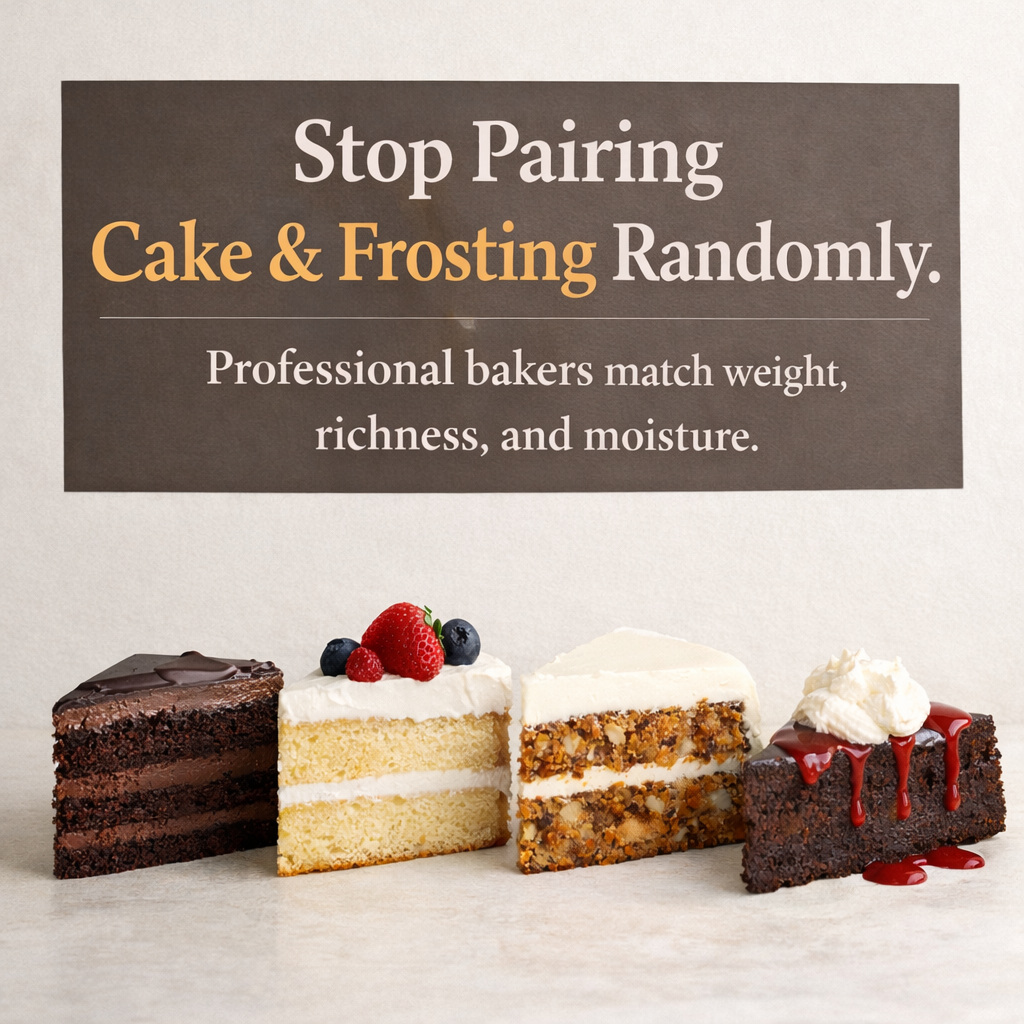
Last week we talked about frostings, this week let’s talk about cake and how to pair it with the perfect frosting.
If you want to feel like you actually understand cake — not just follow recipes — this is where that shift happens.
In culinary school, one of the biggest mindset changes is this:
Not all cakes are interchangeable.
They’re structured differently. They’re aerated differently. They hold moisture differently. And that means they pair differently.
Let’s break down the major cake families, what makes them distinct, and how to pair them like a professional.
1. Butter Cakes (Creaming Method)
What They Are
Butter cakes are what most people picture when they think “classic cake.” They rely on the creaming method — beating butter and sugar together to incorporate air before adding eggs and flour.
Examples:
- Vanilla cake
- Yellow cake
- Chocolate layer cake
- Pound cake
Structure & Texture
- Tender but sturdy crumb
- Moderate density
- Rich mouthfeel
- Good slicing integrity
The air comes from mechanical aeration (creaming), plus chemical leaveners like baking powder.
Best Frostings & Fillings (And Why)
✔ American buttercream
✔ Swiss or Italian meringue buttercream
✔ Chocolate ganache
✔ Caramel fillings
✔ Pastry cream layers
Why:
Butter cakes are sturdy enough to hold heavier frostings. Their fat content pairs beautifully with rich icings because the textures match in weight and mouthfeel. A dense buttercream on a delicate sponge? Overkill. On a butter cake? Perfect harmony.
2. Foam Cakes (Egg-Foamed Cakes)
What They Are
Foam cakes are leavened primarily by whipped eggs — either whole eggs or separated whites.
Examples:
- Angel food cake
- Génoise
- Classic sponge cake
- Chiffon cake
Structure & Texture
- Light
- Airy
- Elastic crumb
- Low fat (especially angel food)
The structure comes from egg proteins coagulating and trapping air bubbles.
Best Frostings & Fillings (And Why)
✔ Whipped cream
✔ Light mascarpone cream
✔ Fruit compote
✔ Simple syrup soaks
✔ Curds (lemon, passionfruit)
Why:
These cakes are delicate. Heavy frostings collapse their structure and overwhelm their texture. Light creams and fruit preserve their airy nature and provide moisture without crushing the crumb.
Professional tip: Génoise almost always benefits from a syrup soak because it’s naturally drier than butter cake.
3. Chiffon Cakes (The Hybrid)
What They Are
Chiffon cake is technically a foam cake, but with oil added. It’s the bridge between butter cake and sponge.
Structure & Texture
- Light like sponge
- Moist like butter cake
- Slightly springy
- Tender but flexible
Because oil stays liquid at room temperature, chiffon cakes stay soft even when chilled.
Best Frostings & Fillings
✔ Whipped cream frostings
✔ Stabilized whipped mascarpone
✔ Fruit curds
✔ Light buttercreams (thin layers)
Why:
Chiffon can handle a little more richness than sponge, but still shines with lighter finishes. It’s incredible for layered fruit cakes and citrus desserts.
4. Flourless Cakes
What They Are
No wheat flour. Structure comes from eggs, chocolate, nuts, or starch alternatives.
Examples:
- Flourless chocolate cake
- Chocolate torte
- Almond cake
Structure & Texture
- Dense
- Fudgy or creamy
- Intense flavor concentration
Best Frostings & Fillings
✔ Whipped cream
✔ Crème fraîche
✔ Raspberry coulis
✔ Salted caramel drizzle
✔ Ganache glaze
Why:
These cakes are already rich. They need acidity or lightness to balance them. Think contrast, not more density.
5. Oil-Based Cakes
What They Are
Instead of butter, these use oil for fat.
Examples:
- Carrot cake
- Red velvet
- Olive oil cake
- Zucchini cake
Structure & Texture
- Extremely moist
- Tender crumb
- Soft even when chilled
Oil doesn’t solidify, so these cakes stay plush for days.
Best Frostings & Fillings
✔ Cream cheese frosting
✔ Ermine frosting
✔ Light buttercream
✔ Citrus glaze
Why:
Oil cakes are moist and often slightly heavier. Tangy frostings (cream cheese especially) cut through the richness beautifully.
The Big Picture (What Professionals Think About)
When pairing cake and frosting, consider:
- Weight – Does the frosting overpower the crumb?
- Moisture – Does the cake need soaking?
- Fat balance – Are you doubling down on richness?
- Acidity – Is there contrast?
- Temperature behavior – Will it firm up in the fridge?
A dense butter cake + dense buttercream = structured celebration cake.
A sponge + whipped cream + berries = elegance.
A flourless chocolate cake + crème fraîche = balance.
It’s architecture. It’s chemistry. It’s texture layering.
And once you understand cake structure, you stop guessing — and start building.
Stay sweet, chefs.
 Brennah Van Wagoner
Weekly Newsletter Contributor since 2025
Email the author! brennah.oaks@gmail.com