
A Bright, Tangy Classic Worth Mastering
Hey chefs,
Lemon bars are one of those desserts that seem deceptively simple.
A buttery crust. A lemon filling. A dusting of powdered sugar.
How complicated could they be?
As it turns out, there’s quite a bit happening beneath that sunny yellow surface. Lemon bars are actually a fascinating example of culinary chemistry at work. Understanding why they work can help you troubleshoot common problems, customize recipes with confidence, and create your own unique variations.
Today we’re diving into the anatomy of a lemon bar, the science behind that silky filling, and the ingredient tweaks that can completely change the final result.
A Brief History of Lemon Bars
While lemons have been used in desserts for centuries, lemon bars are a relatively modern invention. Most food historians trace the dessert back to American community cookbooks and newspaper recipe columns from the mid-1900s.
It’s easy to see why they became popular. Lemon bars are inexpensive, travel well, feed a crowd, and can be made ahead of time. They’re equally at home on a holiday dessert table, at a summer picnic, or tucked into a lunchbox.
More importantly, they strike a balance that many desserts struggle to achieve: rich, buttery, sweet, and bright all at once.
The Anatomy of a Lemon Bar
At its core, a lemon bar consists of two primary components:
The Crust
Traditionally, lemon bars are built on a shortbread-style crust.
The high butter content creates a tender, crumbly texture while the relatively low moisture content helps the crust remain distinct from the filling.
A properly baked crust provides contrast. It should support the filling without becoming soggy and add richness without overwhelming the lemon flavor.
The Filling
The filling is where the magic happens.
Most classic lemon bars aren’t made with lemon curd. Instead, they’re made with a baked citrus custard.
That custard is typically built from just a handful of ingredients:
- Eggs
- Sugar
- Lemon juice
- Lemon zest
- A small amount of flour or starch
Simple ingredients, but each one plays an important role.
How Lemon Bars Actually Work
Eggs Create Structure
The primary thickener in lemon bars is eggs.
As the filling heats in the oven, the proteins within the eggs begin to unfold and connect to one another. This creates a network that transforms the liquid filling into a sliceable custard.
Too few eggs and the filling may never fully set.
Too many eggs and the bars can become rubbery or overly firm.
The goal is a filling that is silky and creamy while still holding a clean slice.
Sugar Does More Than Sweeten
Sugar’s job extends far beyond flavor.
In addition to balancing the tartness of the lemons, sugar also affects texture. It slows the rate at which egg proteins coagulate, helping create a smoother and more delicate custard.
Without enough sugar, lemon bars can become harshly acidic and unpleasantly firm.
Acid Is the Secret Ingredient
This is where lemon bars become particularly interesting.
Lemon juice provides more than flavor. It also contributes a significant amount of acid.
That acidity helps create the bright, refreshing character we associate with lemon bars, but it also influences how the proteins in the eggs behave during baking.
The balance between eggs, sugar, and acid is what determines whether your filling becomes silky and luxurious or runny and unstable.
Starch Provides Insurance
Most lemon bar recipes include either flour or cornstarch.
While eggs provide most of the structure, starch acts as a backup system.
It absorbs excess moisture, reinforces the custard structure, and helps create cleaner slices.
Think of it as insurance against weeping, cracking, and under-setting.
Why Some Lemon Bars Fail
Most lemon bar problems can be traced back to one of a few common issues.
Soggy Crust
Usually caused by underbaking the crust before adding the filling.
The crust should be lightly golden before the filling goes on top.
Runny Filling
Often caused by underbaking or an imbalance between liquid and thickening ingredients.
Rubbery Texture
Typically the result of overbaking.
The filling should still have a slight jiggle in the center when it comes out of the oven.
Cracks on Top
Usually caused by overbaking or rapid temperature changes.
Fortunately, a dusting of powdered sugar hides a multitude of sins.
Ingredient Variations and What They Do
One of the reasons lemon bars have remained so popular is their flexibility.
Small ingredient changes can dramatically alter the final texture.
Sweetened Condensed Milk
Sweetened condensed milk creates a filling that feels richer and creamier.
Because it contains concentrated milk solids and sugar, it softens the sharp acidity of the lemons and produces a smoother, more stable filling.
The result lands somewhere between a traditional lemon bar and a key lime pie.
Sour Cream
Sour cream adds richness while maintaining a pleasant tang.
It softens the edges of the lemon flavor and creates a slightly creamier texture without making the bars heavy.
Cream Cheese
Cream cheese pushes lemon bars closer to cheesecake territory.
The filling becomes denser, richer, and more stable while still retaining plenty of citrus flavor.
Additional Egg Yolks
Adding extra yolks creates a richer custard with a silkier mouthfeel.
This is a common technique in pastry kitchens when a more luxurious texture is desired.
Cornstarch vs. Flour
Both work, but they create slightly different results.
Cornstarch produces a cleaner flavor and silkier texture.
Flour tends to be slightly more forgiving and creates a sturdier filling.
Neither is wrong. It simply depends on the texture you’re after.
Adding Fruit Without Breaking the Recipe
One of the most common questions bakers ask is whether they can add other fruits to lemon bars.
The answer is yes—but understanding the science is important.
Lemon bars work because the recipe is carefully balanced.
When you introduce another fruit, you’re also introducing:
- Water
- Sugar
- Acid
- Fiber
- Pectin
Those additions can change the way the filling sets.
This is why many successful fruit lemon bar recipes still contain a significant amount of lemon juice. The lemon continues to provide the bright acidity and balance that help define both the flavor and structure of the filling.
Why Fruit Reductions Work So Well
One of my favorite ways to incorporate fruit is through a reduction.
By gently cooking down a fruit puree, you remove excess water while concentrating flavor, color, and natural sugars.
The result is a fruit component that adds intensity without dramatically altering the consistency of the filling.
Why Freeze-Dried Fruit Powder Is a Baker’s Secret Weapon
Freeze-dried fruit powder is one of the most useful ingredients in my kitchen.
Because nearly all of the water has been removed, it contributes concentrated fruit flavor and beautiful natural color without thinning the filling.
This makes it particularly valuable in delicate desserts like lemon bars, where moisture balance matters.
A Blackberry Twist
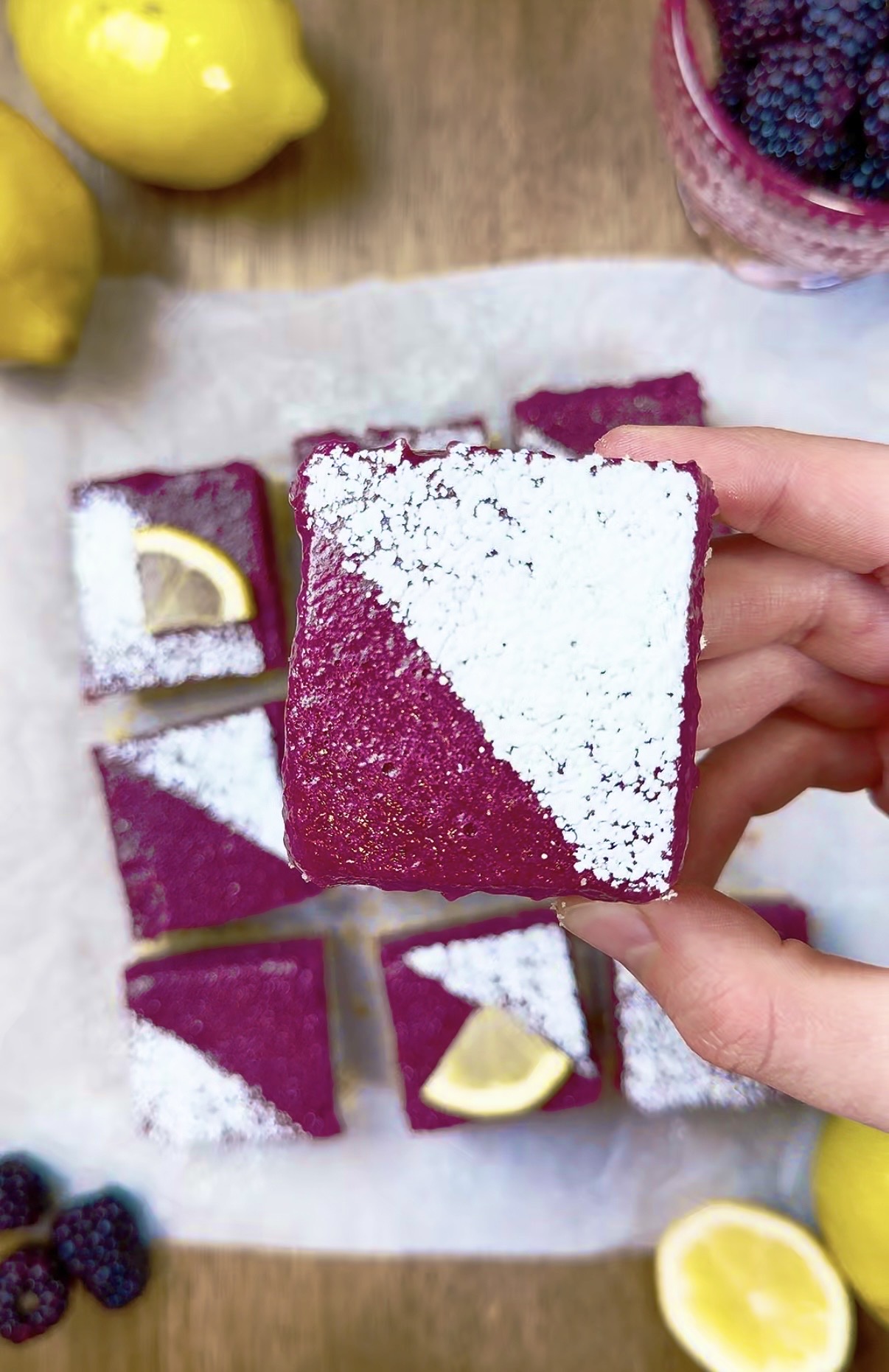
One of my favorite variations uses both a blackberry reduction and freeze-dried blackberry powder.
The reduction concentrates the blackberry flavor while the powder boosts both color and intensity without introducing additional moisture.
The result is everything I love about a classic lemon bar: a buttery crust, bright citrus flavor, and silky filling—but with an extra layer of blackberry complexity and a gorgeous jewel-toned color.
If you’d like to try it for yourself, click here to see my Blackberry Lemon Bars recipe.
Happy baking, chefs.
 Brennah Van Wagoner
Weekly Newsletter Contributor since 2025
Email the author! brennah.oaks@gmail.com