
The Summer Melon Guide
Hey chefs,
It is July, which means we are deep in the season of sunshine, sandals, barbecues, sticky fingers, and aggressively disappointing melons.
Few things feel more summery than cutting into a perfectly ripe melon. A cold wedge of watermelon after being outside. A bowl of cantaloupe with prosciutto. Honeydew that actually tastes like something instead of crunchy green sadness. But choosing a good melon can feel like some kind of farmer’s market witchcraft. Everyone is thumping watermelons, sniffing cantaloupes, pressing on stem ends, pretending they know what they are doing.
The good news is there are real cues you can look for. Melons do give us clues. You just need to know which ones matter, because not all melons ripen the same way, and not all the old tricks are equally useful.
So let’s talk about how to choose a good melon, how to store it, how to prep it, and what to actually do with it once you get it home.
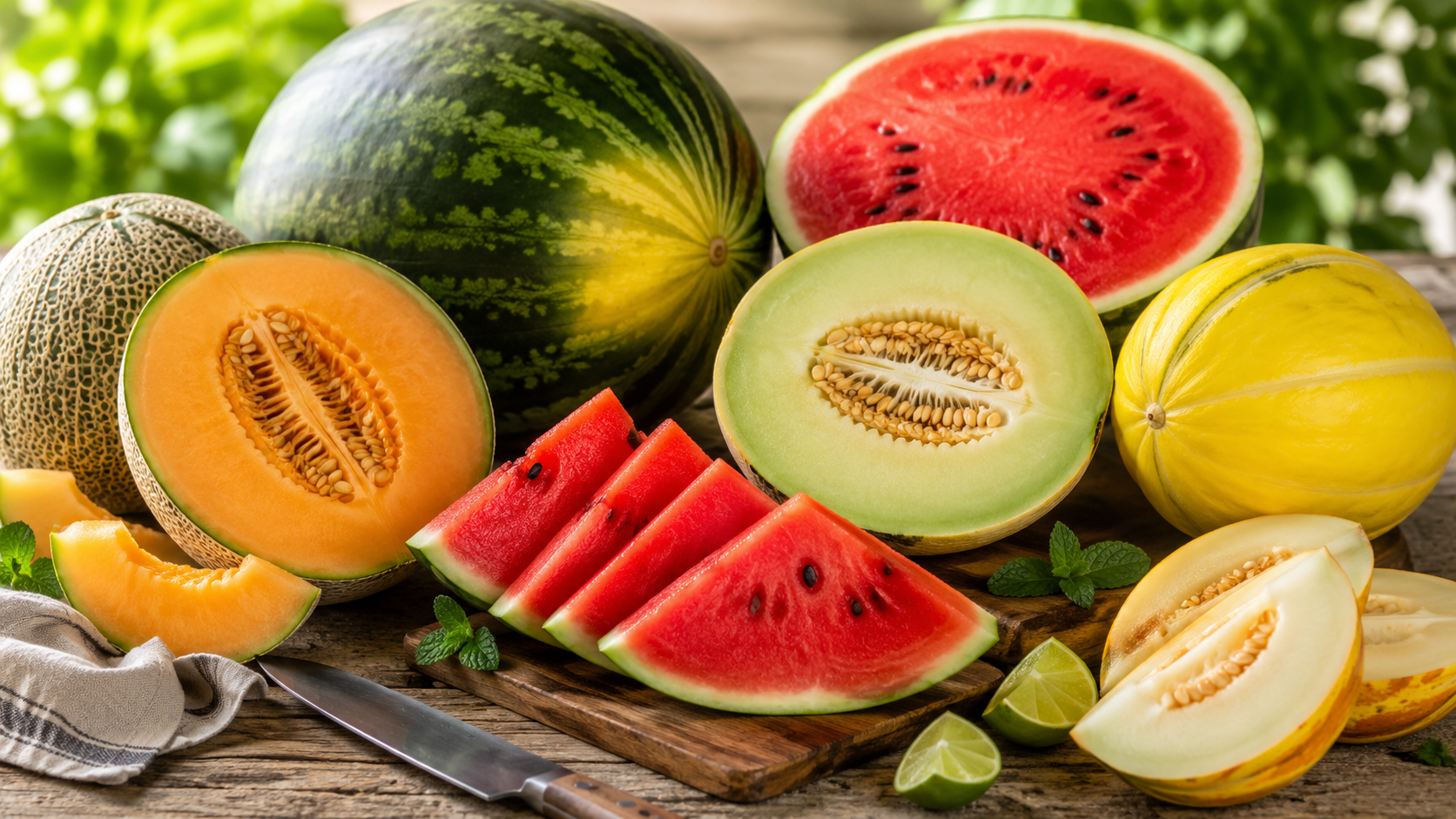
The Big Melon Rule
Melons fall into two general categories: melons that continue to soften and become more aromatic after harvest, and melons that are basically as sweet as they are ever going to be the moment they are picked.
This matters.
Cantaloupe-style muskmelons can become more fragrant and tender on your counter, but they do not significantly increase in sugar after harvest. Watermelons, honeydew, and many winter melons will not magically become sweeter if you leave them sitting around. They may soften a little, but if they were bland when picked, they are probably going to stay bland.
So the goal is not to “ripen” a bad melon at home. The goal is to choose a good one at the store or market.
How to Choose a Watermelon
Watermelon is the big summer prize. It is also the melon people get the weirdest about. Thumping, slapping, weighing, rolling, inspecting like they are choosing a racehorse.
Here is what actually helps.
Look for a creamy yellow field spot. This is the spot where the watermelon rested on the ground. If it is pale white or barely there, the melon may have been picked too early. A rich buttery yellow or deep cream color usually means it had time in the field.
Choose one that feels heavy for its size. Watermelon is mostly water, so a good one should feel dense and heavy. Pick up a few similar-sized melons and choose the one that feels heavier.
Look for a dull rind, not a super shiny one. A shiny watermelon can be underripe. A mature watermelon usually has a more matte finish.
Check the shape. Round or oval is fine, but it should be symmetrical without major flat sides, soft spots, bruises, or deep cuts.
The thump test can help, but it is not everything. A ripe watermelon often has a deep, hollow sound rather than a dull, flat one. But unless you have thumped a lot of watermelons, this can be hard to judge. Use it as one clue, not the whole decision.
A good watermelon should taste sweet, crisp, juicy, and almost floral when it is really excellent. If it is mealy, it is either overripe, old, or has been stored too long.
Watermelon Ideas
Watermelon is obviously good cold and simple, but it also loves salt, acid, herbs, and heat. Try it with lime juice, flaky salt, chile powder, mint, basil, feta, tajín, or pickled onions.
You can grill watermelon in thick slabs until it gets lightly charred and a little concentrated. It will not taste like steak, no matter what the internet says, but it is delicious in its own right. Think smoky, sweet, juicy, and savory.
Watermelon also makes an incredible salad with cucumber, feta, mint, and lime. Or blend it into agua fresca with lime and a pinch of salt. Or freeze it into cubes and use it in lemonade, sparkling water, or mocktails.
And do not throw away the rind. Watermelon rind can be pickled. Peel off the tough green outer skin, dice the pale rind, and quick-pickle it with vinegar, sugar, salt, and spices. It is crunchy, tangy, and so good with grilled meats.
How to Choose a Cantaloupe
Cantaloupe is one of the easier melons to judge because it gives off aroma when ripe.
First, smell the blossom end. That is the end opposite the stem. A ripe cantaloupe should smell sweet, floral, and very melon-y. If it smells like nothing, it probably will not taste like much. If it smells fermented, boozy, or overly musky, it may be overripe.
Look at the netting. The raised, rough webbing on the outside should be well-developed and beige. The background color should be more golden or tan than green.
Check the stem end. Many ripe cantaloupes naturally slip from the vine when ready, leaving a shallow, smooth, slightly indented spot. If there is still a chunk of stem attached, it may have been cut early.
Feel the melon. It should feel heavy for its size. The blossom end can have a tiny bit of give, but the melon should not be soft all over. Soft spots are bad news.
A perfect cantaloupe should be juicy, tender, deeply aromatic, and sweet with that almost orange-floral flavor. A bad cantaloupe tastes like wet cardboard wearing perfume.
Cantaloupe Ideas
Cantaloupe loves salty, creamy, and cured flavors. The classic pairing is prosciutto and melon for a reason: salt plus sweet plus fat is a perfect formula.
Try cantaloupe with burrata, basil, olive oil, black pepper, and flaky salt. Or make a melon salad with lime, mint, and a little chile. It is also great blended into a chilled soup with yogurt, lime, and ginger.
For dessert, cantaloupe is lovely with vanilla, honey, lime zest, coconut, almond, or berries. You can also purée it into popsicles, granita, sorbet, or a melon agua fresca.
If your cantaloupe is just okay, do not serve it plain and hope for the best. Add acid and salt. A squeeze of lime and a pinch of salt can wake up a mediocre melon surprisingly well.
How to Choose Honeydew
Honeydew has been slandered for years, and honestly, it deserves some of it. Bad honeydew is tragic. Good honeydew is juicy, perfumed, silky, and almost nectar-like.
The problem is that honeydew does not give you as many obvious clues as cantaloupe.
Look for a creamy, pale yellow rind rather than a greenish-white one. The best honeydew often has a slightly waxy or velvety feel on the rind. It should feel heavy for its size.
Smell the blossom end. Honeydew aroma is more subtle than cantaloupe, but there should be a light, sweet fragrance. If there is no smell at all, it may be bland.
Press very gently at the blossom end. It can have the slightest give, but it should not be soft or squishy.
Avoid honeydew with bruises, cracks, sticky spots, or overly soft areas.
A ripe honeydew should taste sweet, clean, and juicy, with a smooth texture. If it is crunchy and flavorless, it was probably picked too early.
Honeydew Ideas
Honeydew is beautiful with lime, mint, cucumber, ginger, coconut, green herbs, and a little salt.
It makes a gorgeous chilled soup with cucumber, lime, and yogurt. It is also excellent in fruit salads where you want something juicy but not too acidic.
For a more savory angle, pair honeydew with feta, lime, jalapeño, mint, and toasted pistachios. You can also blend it into agua fresca or freeze it into slushy cubes.
Honeydew is especially good with seafood flavors. Think honeydew, cucumber, lime, and shrimp. Or honeydew with crab, avocado, and herbs. It has that clean sweetness that works really well with briny ingredients.
How to Choose Canary Melon
Canary melon is the bright yellow one that looks like sunshine in melon form. It has a smooth rind and pale flesh, and when it is good, it is sweet, fragrant, and slightly tangy.
Choose one with a bright yellow rind. Avoid green patches, which can mean underripe. It should feel heavy for its size and have a slightly sweet aroma at the blossom end.
The rind should be firm, but not rock hard. Avoid soft spots or wrinkling.
Canary melon has a more delicate flavor than cantaloupe, so it is lovely in simple preparations where it does not have to compete too hard.
Canary Melon Ideas
Canary melon is beautiful with lime, mint, basil, ginger, yogurt, or coconut. It is excellent in fruit salads, chilled soups, smoothies, and sorbets.
Because it has a gentle flavor, I like pairing it with something bright: lime juice, a little honey, and a pinch of salt. It also works well with salty cheese, especially feta or ricotta salata.
How to Choose Galia Melon
Galia melon looks a little like a cantaloupe on the outside, but the flesh is usually pale green. It is aromatic, sweet, and often has a tropical, honeyed flavor.
Choose it similarly to cantaloupe. Look for pronounced netting, a golden-beige background color, a heavy feel, and a sweet aroma at the blossom end.
If the rind is very green, it may need more time. If it smells fermented or feels very soft, it is past its prime.
Galia Melon Ideas
Galia is great anywhere you would use cantaloupe or honeydew. It is especially good with mint, lime, ginger, coconut, yogurt, and berries.
Try it in a melon salad with cucumber, herbs, and a citrusy dressing. Or blend it with lime and a little sugar for a refreshing drink.
How to Choose Charentais Melon
Charentais is a small French melon with orange flesh and a big perfume. It is one of the best melons if you can find it. It tastes like cantaloupe went to finishing school.
Look for a strong, sweet aroma. The rind is usually smooth or lightly ribbed, with a pale green to creamy color. It should feel heavy for its size and have a little give at the blossom end.
Because Charentais melons are small and delicate, they can go from perfect to overripe quickly. If it smells boozy or feels soft, use it immediately or skip it.
Charentais Melon Ideas
This is a melon I would serve simply. Prosciutto, mint, lime, flaky salt, or a spoonful of crème fraîche would all be beautiful.
It also makes an elegant chilled soup or sorbet. But honestly, if you get a really good Charentais melon, eat it cold with a spoon and feel very French about it.
How to Choose Piel de Sapo or Santa Claus Melon
Piel de sapo means “toad skin,” which is not the most appetizing name, but stay with me. This melon has a mottled green rind and pale flesh. It is often sold as Santa Claus melon because it stores well and can last longer than many summer melons.
Look for a melon that feels very heavy for its size. The rind should be firm and mottled, with some yellowing between the green patches. Avoid any soft spots, cracks, or sunken areas.
The aroma may be subtle, so weight and rind color matter more here than scent.
The flavor is usually sweet, mild, and refreshing, similar to honeydew but sometimes a little more complex.
Piel de Sapo Ideas
Use it like honeydew. It is excellent with lime, mint, cucumber, chile, feta, or salty cured meats.
Because it has good keeping quality, it is also a nice melon to cube for weekday snacking, fruit salads, or chilled drinks.
How to Choose Casaba Melon
Casaba melon is a wrinkly, pale yellow melon with mild, sweet flesh. It is not as aromatic as cantaloupe, so do not expect a big perfume.
Choose one that is golden yellow rather than greenish. It should feel heavy and firm, with a slight give at the blossom end.
Casaba can be subtle, so it benefits from seasoning.
Casaba Melon Ideas
Casaba is great with citrus, ginger, mint, honey, and chile. It is also good in savory salads because it has a clean, mild sweetness.
Try it with lime juice, flaky salt, and tajín. Or cube it with cucumber, feta, and herbs.
How to Choose Crenshaw Melon
Crenshaw melons are large, slightly teardrop-shaped melons with a yellow-green rind and peachy-orange flesh. They are juicy, sweet, and fragrant when ripe.
Look for a strong sweet aroma, a heavy feel, and a rind that has turned more golden than green. The blossom end should yield slightly, but the melon should not be soft overall.
Crenshaw melons can be very perfumed, so if they smell fermented, they are probably overripe.
Crenshaw Melon Ideas
Crenshaw is beautiful with salty cheeses, cured meats, herbs, lime, and chile. It is also excellent in smoothies, sorbets, and chilled soups.
If you want a dramatic summer fruit platter, Crenshaw is a great choice because the flesh is gorgeous and the flavor is bold.
Melon Storage Tips
Whole melons can be stored at room temperature for a short time, especially if they need to soften slightly. Once they are ripe, move them to the refrigerator.
Cut melon should always be refrigerated. Store it in an airtight container and use it within about three to four days for the best flavor and texture.
Here is the food safety tip people forget: wash the outside of the melon before cutting it. Even though you are not eating the rind, your knife passes through the outside and into the flesh. Melons grow on the ground, get handled a lot, and can carry bacteria on the rind. Give them a good rinse and scrub before slicing.
Once cut, melon tastes best cold. If you are serving it for a party, keep it chilled until close to serving time.
How to Make Bland Melon Better
Sometimes you do everything right and still get a disappointing melon. It happens.
Do not just suffer through it plain. Treat bland melon like an under-seasoned ingredient.
Add salt. Salt makes sweet things taste sweeter.
Add acid. Lime juice, lemon juice, vinegar, or a splash of citrusy dressing can wake it up.
Add chile. Tajín, Aleppo pepper, chili crisp, or fresh jalapeño can make melon more interesting.
Add herbs. Mint, basil, cilantro, tarragon, and shiso are all great with melon.
Add fat or dairy. Feta, burrata, yogurt, whipped ricotta, coconut cream, or crème fraîche can make melon feel more complete.
Add texture. Toasted nuts, seeds, granola, cucumber, or crisp prosciutto can turn melon into an actual dish instead of just fruit on a plate.
My Favorite Melon Flavor Pairings
Watermelon loves lime, mint, feta, cucumber, chile, basil, tomato, and flaky salt.
Cantaloupe loves prosciutto, burrata, black pepper, basil, honey, yogurt, lime, and ginger.
Honeydew loves cucumber, mint, lime, coconut, ginger, feta, jalapeño, and seafood.
Canary melon loves lime, mint, honey, yogurt, coconut, and berries.
Galia loves mint, lime, ginger, coconut, berries, and creamy cheeses.
Charentais loves prosciutto, crème fraîche, mint, lime, vanilla, and almond.
Piel de sapo loves lime, chile, feta, cucumber, mint, and salty meats.
Crenshaw loves basil, feta, prosciutto, lime, honey, and chile.
Cooking with Melon
Melons are usually eaten raw, but they can absolutely be used more creatively.
Grill them. Watermelon, cantaloupe, and Crenshaw can all handle a little char. Cut them thick, brush lightly with oil if needed, and grill just long enough to mark and warm the surface. Finish with lime, salt, herbs, or cheese.
Blend them. Melons make incredible chilled soups, smoothies, aguas frescas, mocktails, popsicles, granitas, and sorbets.
Compress them. If you have a vacuum sealer, compressed melon is gorgeous. It becomes denser, juicier, and almost jewel-like. Watermelon is especially fun this way.
Pickle them. Watermelon rind is the classic, but firm underripe melon can also be quick-pickled for salads and cheese boards.
Salt them. This sounds too simple, but cold melon with flaky salt is one of the best summer snacks. Add lime and chile and you are basically done.
Pair them savory. Melon does not have to live only on the fruit tray. Use it in salads, salsas, gazpachos, grain bowls, seafood dishes, and barbecue sides.
Final Chef Tips
Do not buy cut melon unless you have to. Whole melons give you more control over freshness, texture, and food safety.
Buy melons that feel heavy. This is one of the most consistent clues across almost every variety.
Use aroma for muskmelons like cantaloupe, Galia, Charentais, and Crenshaw. If they smell sweet and floral, that is a good sign.
Use rind color and weight for watermelon, honeydew, canary, casaba, and piel de sapo.
Always chill melon before serving. Cold melon tastes sweeter, juicier, and more refreshing.
And please, season your melon. A perfect melon does not need much, but even a perfect melon can become something special with lime, salt, herbs, cheese, or chile.
Because when melon is good, it is not just fruit. It is summer in a bowl.
 Brennah Van Wagoner
Weekly Newsletter Contributor since 2025
Email the author! brennah.oaks@gmail.com