
The Chef’s Guide to Perfectly Juicy Chicken
Hey chefs,
Let’s talk about the most overcooked protein in America.
Chicken.
Not because it’s hard.
Not because it’s complicated.
But because we’ve all been taught to be a little afraid of it.
So we cook it… and then cook it a little more… and then just to be safe, we cook it again.
And that, my friends, is why it’s dry.
Today I’m giving you the exact 3-step fix we use in professional kitchens to get juicy chicken every single time.
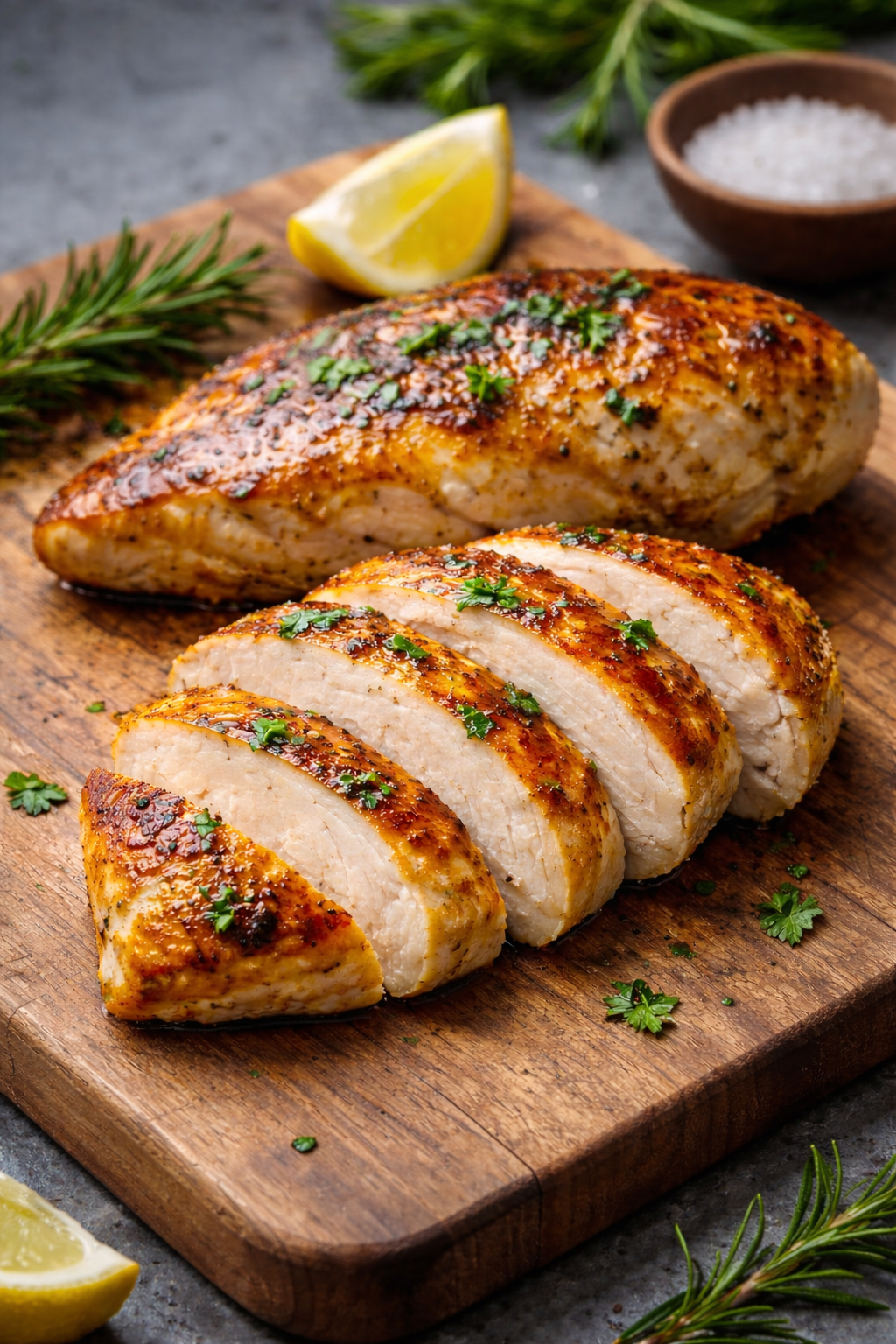
Stop Cooking by Time. Start Cooking by Temperature.
Time is a suggestion.
Temperature is truth.
Most recipes say:
“Cook 6–8 minutes per side.”
But chicken breasts aren’t identical. Some are thin, some are thick, some are plump, some are sad and lopsided.
Instead:
- Insert a thermometer into the thickest part.
- Pull chicken breast at 155–160°F.
- Let carryover cooking bring it to 165°F while it rests.
Here’s the science:
Chicken is considered safe at 165°F. But that’s the final temperature, not necessarily the temperature you need to hit while it’s still on the heat.
When you remove meat from a hot pan or oven, the residual heat continues cooking it. That rise — usually 5–10 degrees — is called carryover cooking. If you wait until it reads 165°F in the pan, you’re likely taking it to 170–175°F by the time you serve it.
That’s when muscle fibers tighten, moisture squeezes out, and you’re chewing instead of slicing.
Thermometer > clock. Always.
Let It Rest (Longer Than You Think)
This is the step almost everyone skips.
When chicken cooks, the muscle fibers contract and push moisture toward the center. If you slice immediately, those juices spill onto the cutting board instead of staying in the meat.
Let it rest:
- 5–10 minutes for boneless breasts
- 10–15 minutes for bone-in pieces
During rest, the muscle fibers relax and the juices redistribute.
It doesn’t just “stay juicy.” It actually becomes juicy again.
Professional kitchens don’t rush this step — and neither should you.
Salt Early (The Easiest Upgrade)
If you have even 30 minutes, this will change your chicken forever.
Lightly salt both sides and let it sit:
- At room temperature for 30 minutes, or
- Uncovered in the fridge for a few hours (even overnight)
This is a simple dry brine.
Salt first pulls moisture out, then dissolves into that moisture, and then reabsorbs into the meat — seasoning it more deeply and improving texture. It also helps the protein retain more water as it cooks.
Better seasoning.
Better browning.
Better texture.
No fancy ingredients required.
Bonus Chef Move (If You Want to Feel Fancy)
Sear your chicken in a hot pan to develop color, then finish it in a 375°F oven.
If you’re feeling extra: add a knob of butter, tilt the pan, and baste for the last minute. That gentle fat bath keeps the surface moist while building flavor.
It’s simple. But it feels like restaurant magic.
Here’s the truth:
Dry chicken isn’t a skill issue.
It’s a temperature issue.
Cook to 155–160°F.
Let it rest.
Salt ahead of time.
Do those three things and you’ll never fear chicken again.
 Brennah Van Wagoner
Weekly Newsletter Contributor since 2025
Email the author! brennah.oaks@gmail.com