
Tangzhong: The Technique That Makes Bread Impossibly Soft
Hey chefs,
Today I’m sharing a simple-to-do, yet elite baker technique I learned in culinary school that will immediately level up your baking.
It sounds fancy. It isn’t.
It feels professional. Because it is.
It’s called Tangzhong — and once you understand it, your cinnamon rolls, dinner rolls, and sweet breads will never be the same again.
What Is Tangzhong?
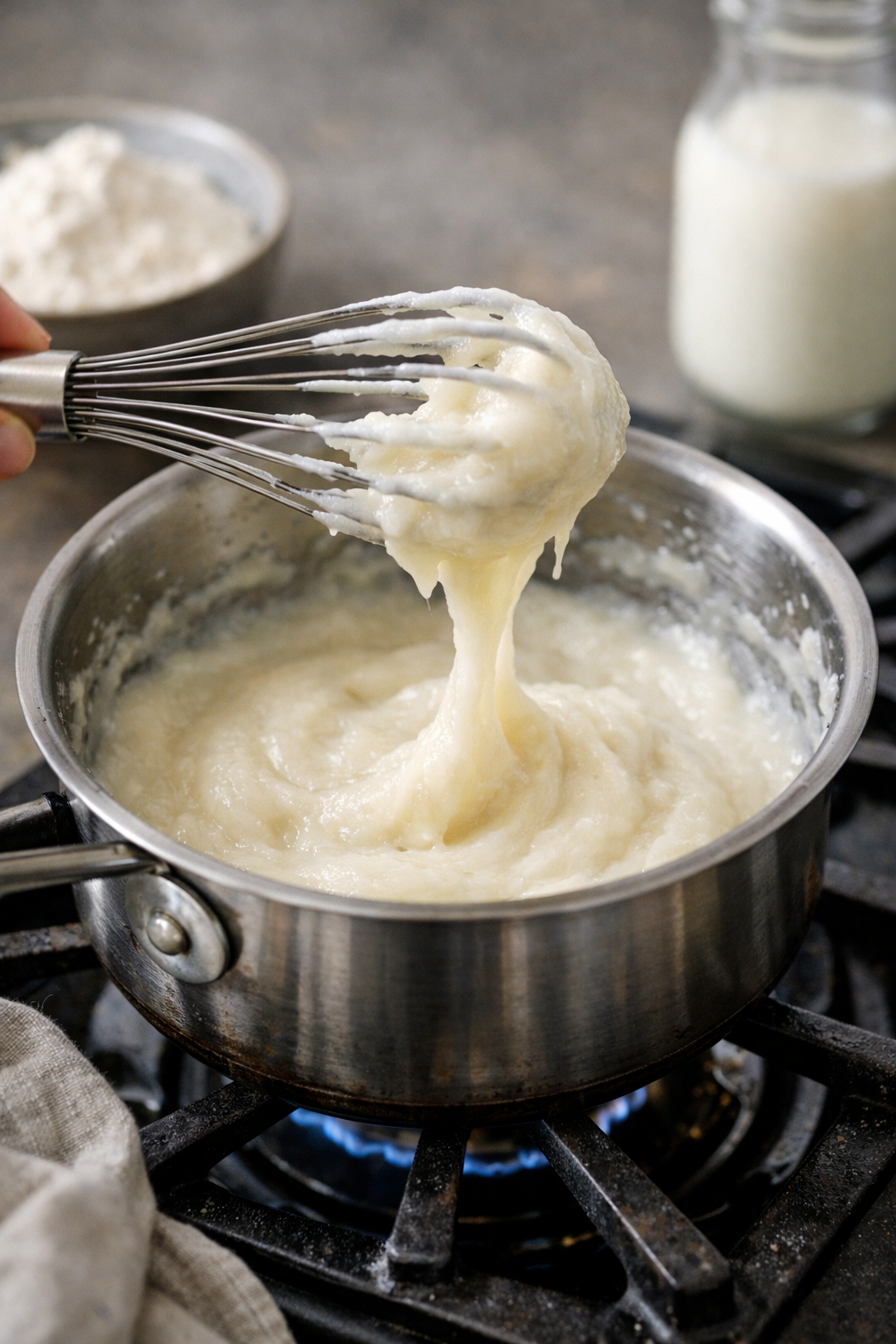
Tangzhong is a technique popularized in Asian milk breads like Japanese Shokupan. It involves cooking a small portion of flour with milk (or water) until it thickens into a pudding-like paste.
That’s it.
But what’s happening beneath the surface is where the magic lives.
When the mixture reaches about 150–155°F, the starches in the flour gelatinize. That means they absorb liquid, swell, and thicken — allowing the dough to hold significantly more moisture than it otherwise could.
And more controlled moisture means:
- Softer crumb
- Higher hydration without stickiness
- Longer shelf life
- That dreamy, shreddable, pull-apart texture
In professional baking, we’re constantly balancing hydration, gluten development, fat, and sugar. Tangzhong gives enriched doughs structural insurance — softness without collapse.
Why Not Just Add More Milk?
Because dough structure matters.
If you simply increase liquid in a dough, gluten struggles to form properly. The dough becomes slack, sticky, and hard to shape.
By pre-cooking a portion of the flour with liquid, you essentially lock in hydration safely before gluten development begins.
It’s strategic.
It’s controlled.
And it’s incredibly effective.
How to Use Tangzhong in Any Recipe (The Easy Formula)
Tangzhong isn’t a separate ingredient you “add on.” It’s just a way of pre-cooking a small portion of the flour and liquid that already belong in your dough.
Here’s the simple, reliable method:
1) Take 5% of the total flour in the recipe
2) Cook it with 5x its weight in liquid (milk or water)
So it looks like this:
- Tangzhong flour = total flour × 0.05
- Tangzhong liquid = tangzhong flour × 5
Then you subtract those amounts from the main dough ingredients (because they’re already accounted for).
Example (using my Strawberry Rolls)
Total flour = 525g (dough flour) + 25g (tangzhong flour) = 550g total flour
5% of 550g = 27.5g flour (rounded)
Liquid = 27.5 × 5 = 137.5g milk
This recipe’s tangzhong (25g flour + 120g milk) is right in the sweet spot — close enough to the classic formula to give you that soft, bakery crumb.
How to Make Tangzhong
This is the part that feels “chef-y,” but it’s genuinely simple.
- Start cold.
In a small saucepan, whisk your flour and milk together while the pan is still off the heat. (Cold mixing prevents clumps before thickening begins.) - Whisk until totally smooth.
Take an extra 20 seconds here. Any flour pockets you leave now will become little dumplings later. - Cook over medium heat, whisking constantly.
Don’t walk away — tangzhong thickens fast once it starts. - Watch for “loose pudding” texture.
You’re looking for a paste that holds trails from the whisk, like warm pastry cream that hasn’t fully set. - Optional pro move: temp it.
Pull it around 150–155°F. That’s prime starch gelatinization territory. - Cool until warm, not hot.
You want it around body-temp/warm to the touch before adding to dough — hot tangzhong can slow yeast and mess with dough texture.
What it should look like: glossy, pale, thick-but-spoonable… like the photo above.
Quick Troubleshooting
- It got super thick, like paste: you cooked off too much moisture (still usable, but your dough may feel slightly drier).
- It’s thin like sauce: keep cooking — it hasn’t gelatinized yet.
- It’s lumpy: you probably heated before fully whisking smooth. (You can press it through a fine sieve in a pinch.)
When Should You Use Tangzhong?
It shines in:
- Dinner rolls
- Cinnamon rolls
- Sweet buns
- Sandwich loaves
- Brioche-style doughs
And yes…
It absolutely transforms strawberry cinnamon rolls.
The Strawberry Roll That Proves the Point
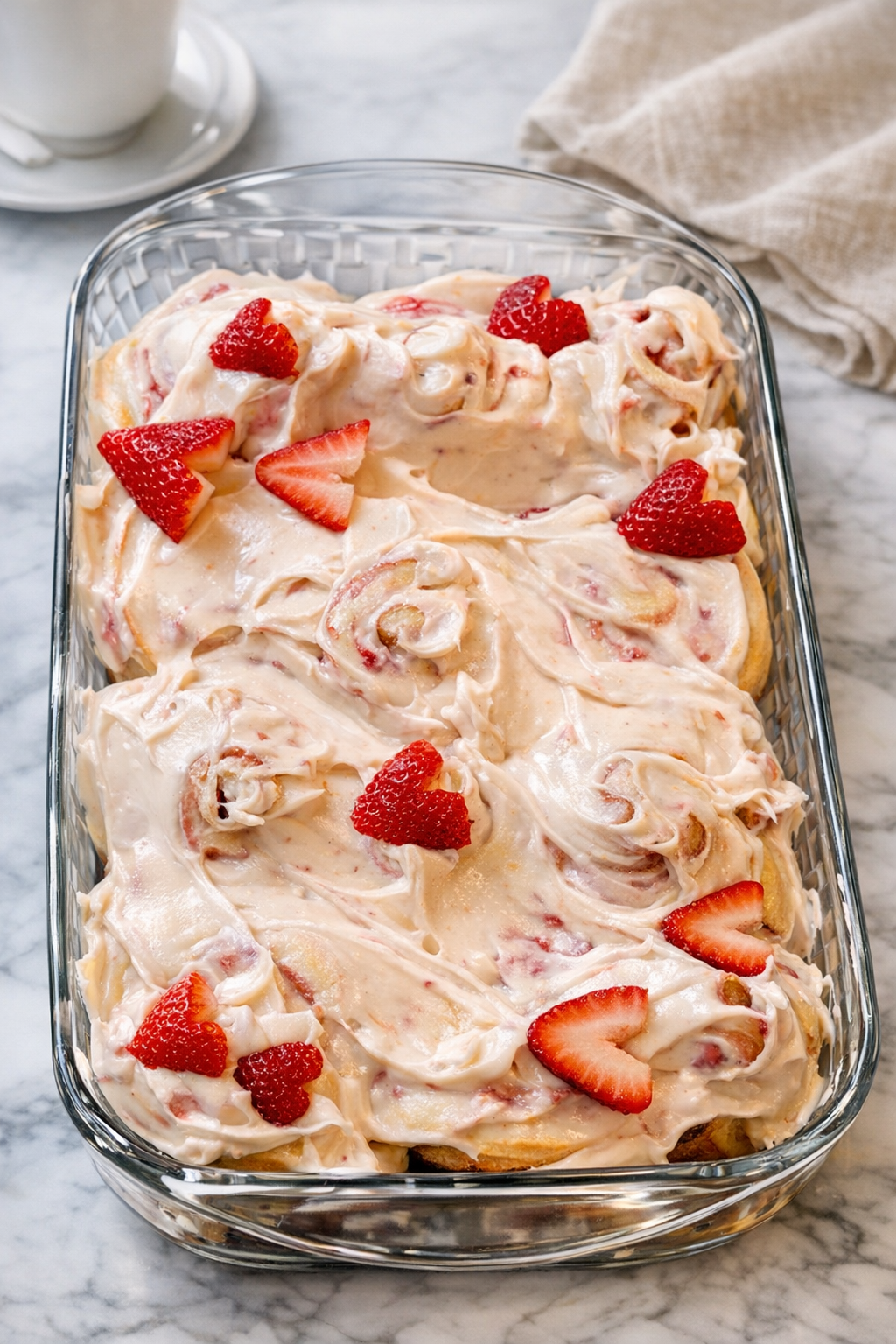
These Strawberry Sweet Rolls are the strawberry answer to classic cinnamon rolls — impossibly soft, pillowy, and rich, filled with a jammy fresh strawberry swirl and finished with a lightly pink strawberry cream cheese frosting.
Vanilla bean and a whisper of orange zest elevate the strawberries without overpowering them.
And the texture?
Cloud-like. Feathery. Almost melt-away soft.
That’s the Tangzhong at work.
(Full recipe linked below.)
Before you make them, though, let’s talk execution — because this is where technique separates good from bakery-level.
Pro Tips for Perfect Strawberry Tangzhong Rolls
Cook the Tangzhong Properly
It should look like loose pudding, not thick paste.
If it’s too stiff, you’ve cooked out too much moisture.
If it’s still thin, it hasn’t gelatinized.
Target: 150–155°F.
Let it cool until warm — not hot — before adding it to the dough. Too hot can weaken yeast and partially cook the egg.
Knead Until Glossy — Especially After Adding Butter
This is an enriched dough.
When you add butter, the dough will look like it’s breaking apart. That’s normal. Keep kneading.
You’re looking for:
- Smooth surface
- Elastic stretch
- Slight tackiness (not sticky)
- A soft windowpane
Patience here pays off in crumb structure.
Reduce the Strawberries Aggressively
Strawberries carry a lot of water.
Your reduction should be thick, jammy, and reduced to about ½ cup. If it’s loose, your rolls may bake up gummy or separate internally.
Cool completely before spreading.
Don’t Skip the Cornstarch Stabilizer
Mixing cornstarch with butter into the cooled reduction stabilizes the filling during baking.
It helps prevent:
- Filling leakage
- Watery pockets
- Broken swirl structure
It’s a small step that makes a professional difference.
Roll With Gentle Tension
Roll tightly enough to create beautiful spirals — but don’t squeeze the life out of the dough.
Dental floss gives the cleanest cuts and preserves your layers.
Fully Proof the Second Rise
Underproofed rolls bake dense.
They should be:
- Puffy
- Touching
- Slightly jiggly when nudged
If your kitchen is cool, expect closer to 90 minutes.
Bake to Temperature, Not Just Color
Strawberry filling can make visual cues deceptive.
Target 190°F internal temperature for fully set centers.
Optional Bakery Move: The Heavy Cream Pour
Halfway through baking, pour ¼ cup warm heavy cream over the rolls.
It creates:
- Extra steam
- Softer edges
- A gooey, luxurious bottom layer
Not necessary. Completely delightful.
Frost While Warm (But Not Scorching)
You want gentle melting into the swirls — not fully liquefied frosting.
Warm rolls = perfect melt.
Why This Technique Matters
Tangzhong isn’t complicated.
It’s controlled hydration.
It’s starch science.
It’s texture engineering.
And once you understand it, you’ll start seeing opportunities to use it everywhere.
It’s one of those quiet, professional techniques that elevates your baking from “good” to “how did you make these this soft?”
And now you know.
Click here to see the recipe.
Keep calm and Tangzhong.
 Brennah Van Wagoner
Weekly Newsletter Contributor since 2025
Email the author! brennah.oaks@gmail.com