
A Whole New Way to Taste Fall
Hey chefs!
There’s something wonderful about cooking in the fall. The markets are full of colorful squash, crisp apples, juicy pears, earthy root vegetables, beautiful greens, and all sorts of ingredients practically begging to be turned into something delicious.
But here’s what I think makes fall cooking especially exciting: autumn produce is so much more versatile than we tend to give it credit for.
Apples don’t have to become pie. Pumpkin doesn’t need cinnamon. Sweet potatoes don’t need marshmallows. And those beautiful beets? They deserve to be more than an obligatory addition to your salad.
Some of my favorite dishes come from taking a familiar seasonal ingredient and pairing it with something a little unexpected.
So today, let’s talk about how to pair fall produce, how to balance those wonderful autumn flavors, and how to have a little fun experimenting in the kitchen!
Understanding Fall’s Flavor Palette
Before we start throwing ingredients together, it helps to understand what we’re working with.
A lot of fall produce shares a few defining characteristics: natural sweetness, earthy undertones, nutty flavors, and rich, comforting textures.
Think about the sweetness of roasted butternut squash, the earthiness of beets, the mellow nuttiness of chestnuts, or the tart bite of a crisp apple.
These qualities are what make autumn food so cozy and satisfying. But they’re also why fall dishes can occasionally feel a little… one-note.
When everything on the plate is sweet, soft, earthy, and rich, those lovely flavors can start blending together rather than standing out.
The secret to great flavor pairing isn’t always finding ingredients that taste alike. Often, it’s finding ingredients that make each other taste better.
And that’s where a little culinary know-how comes in.
Complementary Flavors vs. Contrasting Flavors
There are two especially useful approaches to pairing ingredients: complementing and contrasting.
Complementary flavors share qualities that naturally fit together.
Think roasted squash with browned butter and sage. The nutty, toasted notes of the butter complement the squash’s sweetness, while the sage adds an aromatic, savory quality.
Or pears with honey and toasted walnuts. They’re all warm, mellow flavors that build on one another.
Contrasting flavors, on the other hand, create excitement by introducing something different.
Consider sweet roasted beets with tangy goat cheese. The acidity and saltiness of the cheese balance the beet’s sweetness, making both ingredients more interesting.
Or crisp, tart apples tucked into a rich grilled cheese sandwich. The apples cut through the richness while bringing an entirely new texture to the party.
Neither approach is better. In fact, some of the best dishes use both!
Imagine roasted pumpkin with browned butter, fresh sage, and a little lemon. The butter and sage complement the pumpkin, while the lemon brightens everything up.
That’s the kind of balance we’re looking for.
Think Beyond Sweet and Savory
When I was learning to cook professionally, one of the most valuable things I learned was to think about food in terms of balance rather than simply following flavor combinations.
Sweetness, acidity, saltiness, bitterness, richness, and umami all affect how we experience a dish.
And fall produce gives us a fantastic playground for experimenting with them.
Sweetness loves acidity.
Apples, pears, squash, and sweet potatoes all contain natural sugars. Pairing them with lemon, vinegar, tart cranberries, or pickled vegetables keeps that sweetness from becoming overwhelming.
Try roasting sweet potatoes and finishing them with lime juice, or pairing ripe pears with a sharp vinaigrette.
Earthiness loves brightness.
Beets, mushrooms, and many root vegetables have deep, earthy flavors. Fresh herbs, citrus, tangy cheeses, and even tart fruit can make them feel more vibrant.
Roasted beets with orange and dill? Gorgeous. Mushrooms with lemon and fresh parsley? Delicious.
Richness loves something sharp.
Fall is the season of buttery sauces, creamy soups, melted cheese, and hearty braises. They’re wonderful, but they often benefit from something acidic or crisp.
A splash of cider vinegar, a spoonful of tangy relish, or a few slices of fresh apple can completely transform a rich dish.
Bitterness loves a little sweetness and fat.
Brussels sprouts, radicchio, kale, and other fall greens can have pleasantly bitter qualities.
Pair them with roasted grapes, apples, maple, toasted nuts, cheese, or a rich dressing to create something beautifully balanced.
You don’t need to use every element in every dish. Just start paying attention to what’s already present and what’s missing.
Give Your Fall Produce Some Unexpected Friends
Now for the fun part!
Sometimes the easiest way to get creative is to take an ingredient you already love and introduce it to something new.
Apples: Not Just for Dessert
Apples are one of my favorite ingredients for savory fall cooking.
Their sweetness pairs beautifully with pork, ham, chicken, sharp cheddar, cabbage, caramelized onions, and mustard.
Try adding thin apple slices to a grilled ham and cheese sandwich, cooking apples into a savory pan sauce, or tossing crisp apple matchsticks into a cabbage slaw.
Different varieties behave differently, too. Firm, tart apples such as Granny Smith are great when you want acidity and structure, while sweeter varieties can be lovely roasted or caramelized.
Pears: The Elegant Overachievers
Pears have a softer, more floral sweetness than apples, making them particularly lovely with savory and aromatic ingredients.
Try pear with goat cheese, blue cheese, thyme, rosemary, black pepper, toasted hazelnuts, or caramelized onions.
One of my favorite pairing ideas is pear with black pepper and honey. The honey enhances the fruit’s natural sweetness, while the pepper introduces a subtle warmth that keeps things interesting.
And don’t overlook pears in savory applications! They’re lovely alongside roasted pork or incorporated into a warm grain salad.
Winter Squash: The Flavor Sponge
Butternut, delicata, acorn, kabocha, and other winter squash varieties all bring slightly different qualities to the table.
Some are dense and nutty, others soft and buttery, and some have a sweetness that becomes especially pronounced when roasted.
They pair beautifully with sage, mushrooms, browned butter, Parmesan, toasted nuts, miso, chili, and ginger.
For something unexpected, try squash with coconut milk and lime, or roasted delicata with spicy honey and a tangy cheese.
Beets: Earthy, Sweet, and Surprisingly Versatile
Beets have a distinctive earthy sweetness that can be absolutely delicious when paired thoughtfully.
Citrus, berries, goat cheese, dill, horseradish, walnuts, and balsamic vinegar are all wonderful partners.
And here’s a fun one: beets and chocolate! Their earthy qualities can complement dark chocolate, particularly in rich cakes or brownies where the beet flavor stays subtle.
Golden beets tend to have a somewhat milder, less earthy flavor than red beets, making them a great option if you’re still learning to love them.
Sweet Potatoes: So Much More Than a Casserole
Sweet potatoes come in a wonderful range of colors, flavors, and textures.
Orange-fleshed varieties tend to be moist and sweet, while many Japanese sweet potatoes have a denser, starchier texture and a chestnut-like flavor. Purple varieties bring gorgeous color and can range from mildly sweet and dry to more creamy, depending on the type.
Try orange sweet potatoes with smoky spices and lime, Japanese sweet potatoes with miso butter, or purple sweet potatoes with coconut and ginger.
The variety you choose can change the entire personality of your dish.
Cranberries: Autumn’s Little Flavor Bombs
Cranberries are intensely tart, which makes them incredibly useful for balancing rich or sweet ingredients.
Of course, they’re wonderful in desserts, but think beyond cranberry sauce.
Try cranberries with orange and rosemary in a glaze for roasted meats, combine them with apples in a savory chutney, or use a cranberry reduction to add acidity and color to a dish.
Their tartness can be a real asset, provided you balance it appropriately.
Don’t Forget About Texture!
Flavor is only half the story.
Imagine a plate of roasted squash, mashed sweet potatoes, and tender braised carrots. All delicious ingredients, but together? That’s a lot of soft food.
Now imagine adding toasted pumpkin seeds, a handful of crisp greens, or some quick-pickled red onions.
Suddenly, the whole dish feels more exciting.
One of the easiest ways to elevate seasonal cooking is to introduce contrasting textures.
Creamy soups love crunchy toppings. Soft roasted vegetables benefit from toasted nuts or crisp breadcrumbs. Tender braised meats are fantastic alongside bright, crunchy salads.
You can even create texture contrast with the same ingredient!
Try using apples two ways: cook some until soft and caramelized, then finish the dish with thin slices of fresh, crisp apple.
Or purée roasted squash into a creamy sauce while keeping a few pieces roasted and golden for texture.
It’s a simple trick, but it can make a dish feel so much more intentional.
Change the Cooking Method, Change the Flavor
Here’s another little culinary trick: you don’t necessarily need new ingredients to create new flavors.
Sometimes all you need is a different cooking method.
Take Brussels sprouts, for example. Boiling or steaming produces a very different result than roasting them at high heat.
When roasted, their surfaces brown through the Maillard reaction, creating deeper, more savory flavors. The same principle applies to mushrooms, cabbage, cauliflower, and many other vegetables.
Caramelization and other browning reactions help explain why a roasted vegetable can taste dramatically different from its steamed counterpart.
And not everything needs to be roasted!
Try shaving raw Brussels sprouts into a salad, quickly pickling radishes, braising red cabbage with apples, or searing pear wedges in a hot pan.
You can even roast radishes. Their sharp, peppery bite mellows considerably as they cook, giving them a completely different personality.
The ingredient might be the same, but the experience doesn’t have to be.
Play with Color, Too!
One of my favorite things about fall produce is how beautiful it is.
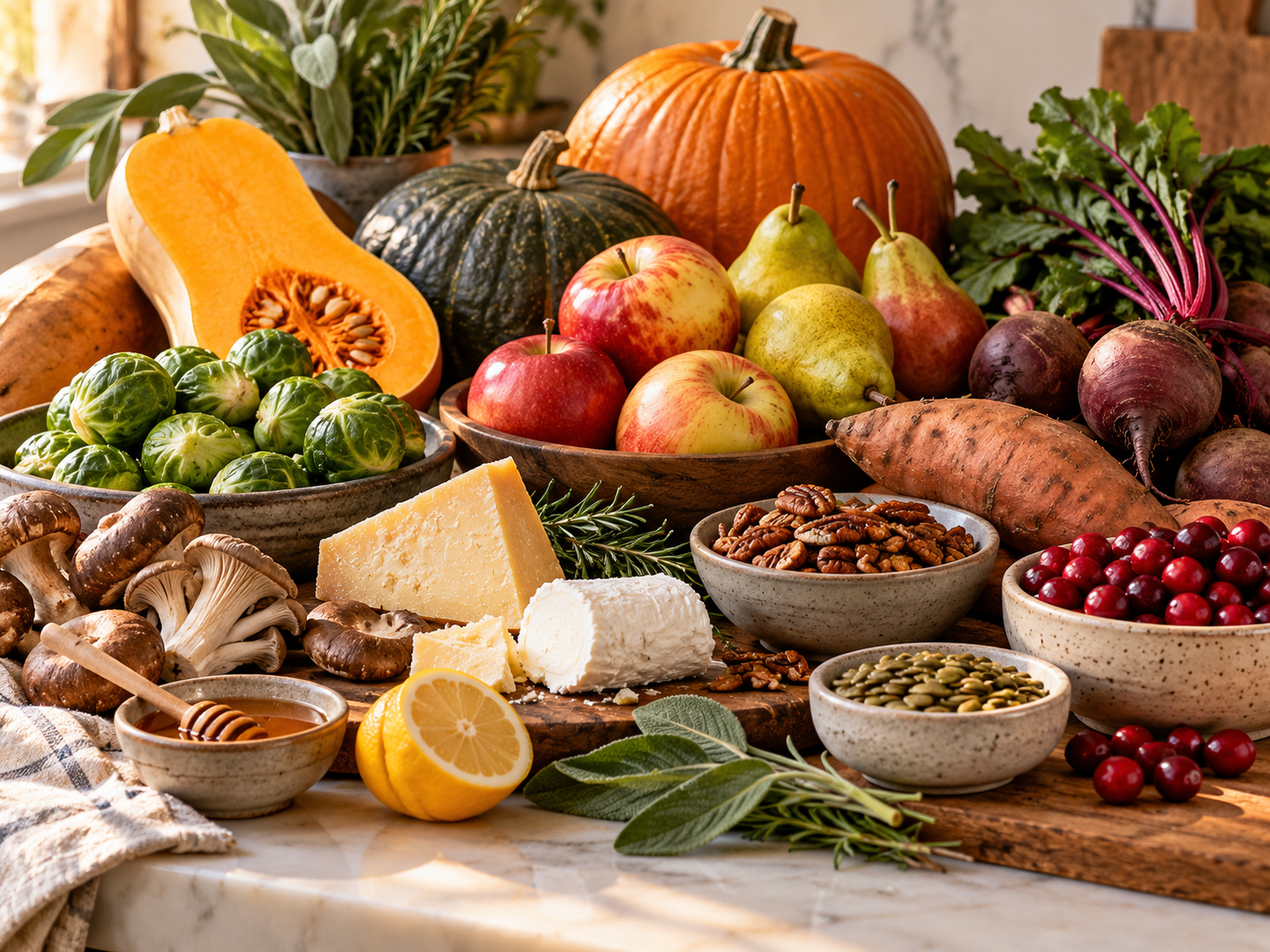
Deep purple cabbage, ruby-red beets, golden squash, green Brussels sprouts, rosy apples, and jewel-toned cranberries.
It’s practically an invitation to play with your food!
Color isn’t just about making things pretty, either. Choosing ingredients with different colors often introduces different flavors and textures as well.
Think golden roasted squash with deep green herbs and ruby pomegranate seeds. Or creamy white beans with rosy roasted beets and bright green parsley.
You don’t need complicated garnishes or restaurant-style plating to make beautiful food. Sometimes the ingredients do most of the work for you.
And when you’re choosing between two equally delicious ingredients, there’s nothing wrong with picking the one that makes the plate a little more exciting!
Start with One Ingredient and Build Around It
If experimenting with flavor combinations feels intimidating, here’s a simple approach I love.
Instead of starting with a recipe, start with an ingredient.
Maybe you brought home a beautiful acorn squash from the farmers market.
First, decide what you want to highlight. Its sweetness? Its nutty flavor? Its tender texture?
Next, choose something that complements it. Perhaps sage and browned butter.
Then ask yourself what the dish needs for balance. Maybe a little acidity from lemon or cider vinegar.
Finally, think about texture. Toasted hazelnuts or crispy breadcrumbs might be just the thing.
And just like that, you’ve created the foundation for a dish without ever opening a cookbook.
You can use the same method with practically anything.
A pear becomes the starting point for a salad with blue cheese and walnuts. A handful of mushrooms inspires a creamy pasta with thyme and lemon. A head of red cabbage becomes a bright, tangy side dish for rich roasted pork.
The possibilities are enormous once you start thinking this way.
Let the Season Surprise You
I think one of the best parts of being a cook is realizing that recipes aren’t the only way to discover something delicious.
Sometimes inspiration comes from a beautiful vegetable at the grocery store. Sometimes it’s an unexpected flavor combination at a restaurant. And sometimes it’s simply looking at what’s left in your refrigerator and wondering, What could I make with this?
Fall is the perfect season for that kind of curiosity.
Roast something you’ve only ever boiled. Add fruit to a savory dish. Pair something sweet with something sharp. Try a different variety of squash or sweet potato. Play with texture, color, and presentation.
Not every experiment will become your new favorite, and that’s okay! Part of becoming a better cook is learning what works, what doesn’t, and why.
So this fall, don’t feel confined to the usual pumpkin spice, apple pie, and roasted squash routine.
There’s an entire season of flavors waiting to be explored.
And who knows? Your next favorite fall dish might come from a combination you’d never have thought to try.
Happy cooking, chefs!
 Brennah Van Wagoner
Weekly Newsletter Contributor since 2025
Email the author! brennah.oaks@gmail.com