What's Better for Roasting Vegetables?
If you roast vegetables often, you've probably reached for both parchment paper and aluminum foil without thinking too hard about which one actually serves you better. What I’ve learned recently is that they're not interchangeable — each changes the outcome of your roast in real ways. Perhaps you already knew this?
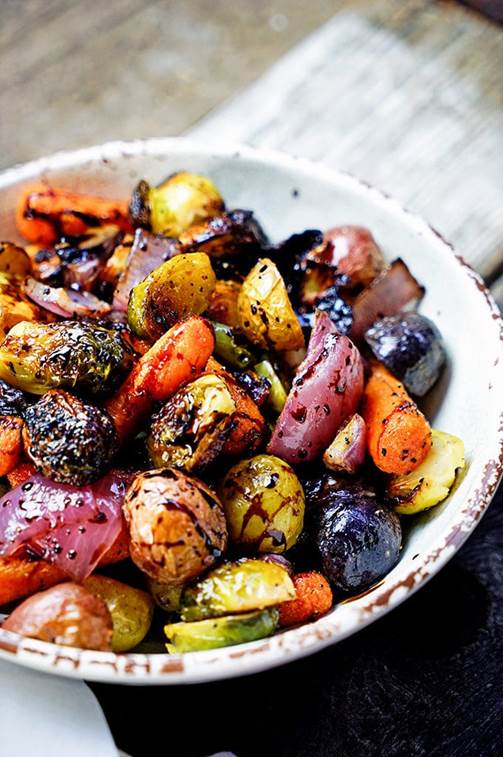
Roasting implies char, which is what you want for your end result. This is an area where foil shines (pun unintended). Also, since it’s a metal, it conducts heat efficiently and can create a tighter seal around food. This makes it excellent when you want to steam vegetables partially before browning, such as wrapping a whole head of garlic or a beet to keep moisture locked in while it softens. Foil also handles very high heat without any risk of scorching, so it's the safer choice if you're blasting vegetables at 450°F or higher, or finishing something under the broiler.
There’s a tradeoff between foil and parchment paper, though. Foil doesn't breathe. If you spread vegetables directly on a sheet of foil without enough space between pieces, released moisture has nowhere to go, and you end up steaming rather than roasting — the vegetables turn soft and pale instead of getting that caramelized, crispy edge. Foil can also react with acidic foods like tomatoes or anything with a lot of lemon or vinegar, sometimes imparting a faint metallic taste.
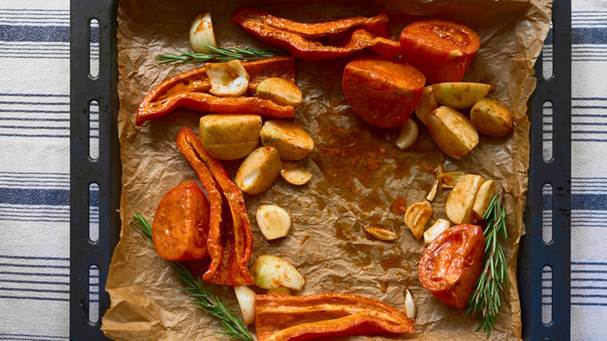
Parchment stands out in certain areas, too. As it’s coated with silicone, it’s naturally non-stick, so it handles moderate-to-high oven temperatures (typically up to about 420–450°F, depending on the brand) without steaming food the way foil can. Because it's more breathable than foil, vegetables roasted on parchment tend to brown more evenly and develop better texture, especially for things like Brussels sprouts, cauliflower, or thin-cut potatoes where crispiness matters. Cleanup is also easier since sticky, caramelized bits lift right off with the paper.
The downside, however, is a lower heat ceiling — parchment can scorch or smoke at very high temperatures, so it's not ideal for a hard sear or broiling. It's also not the right choice for wrapping vegetables tightly, since it doesn't hold a seal the way foil does.
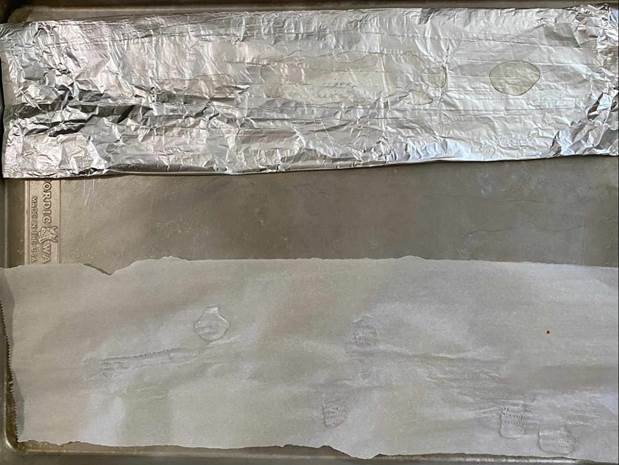
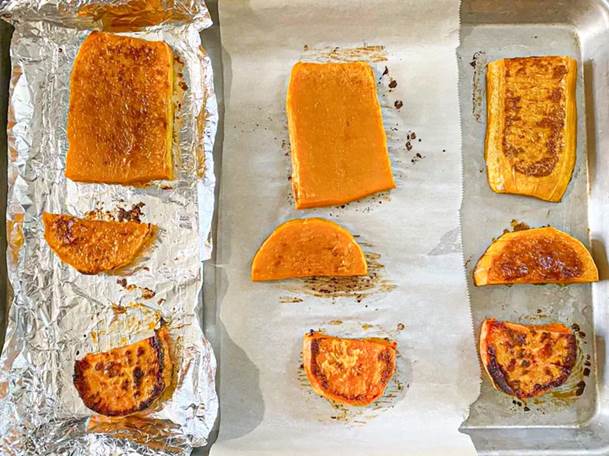
Here’s a picture of an experiment the chefs at Serious Eats (www.seriouseats.com) did on a roasting of butternut squash. The test included how things would turn out if you lined your pan with nothing. You can see that the char was negligible when using the parchment paper. The test also revealed how the char was very similar when using foil or not. The conclusion here is that we may as well go ahead and use foil, since it makes for easy clean-up.
So to sum up: It’s smart to use parchment when you want maximum crispiness, easy cleanup, and you're roasting at standard oven temperatures. Use foil when you need higher heat, want to trap steam for foods that benefit from softening first, or you're wrapping something tightly. Many home cooks end up using both in the same meal — foil for a packet of root vegetables that need steaming, parchment underneath quicker-roasting vegetables on another tray.
 Alice Osborne
Weekly Newsletter Contributor since 2006
Email the author! alice@dvo.com