
A Little Kitchen Witchcraft
Hey chefs!
There’s something wonderfully fitting about Halloween and cooking. After all, what happens in a kitchen is already a little bit magical. We turn liquid into fluffy meringue, transform sugar into golden caramel, and somehow convince flour, butter, and eggs to become cake.
And with Halloween just around the corner, there’s no better time to embrace a little culinary witchcraft!
But here’s the secret: You don’t need elaborate decorations, specialty molds, or a cauldron full of food coloring to make something magical. A few clever techniques, some basic food science, and a little creativity can turn ordinary dishes into something extraordinary.
So grab your apron (or your witch’s hat), because we’re exploring some tricks of the trade that are almost too good to be true.
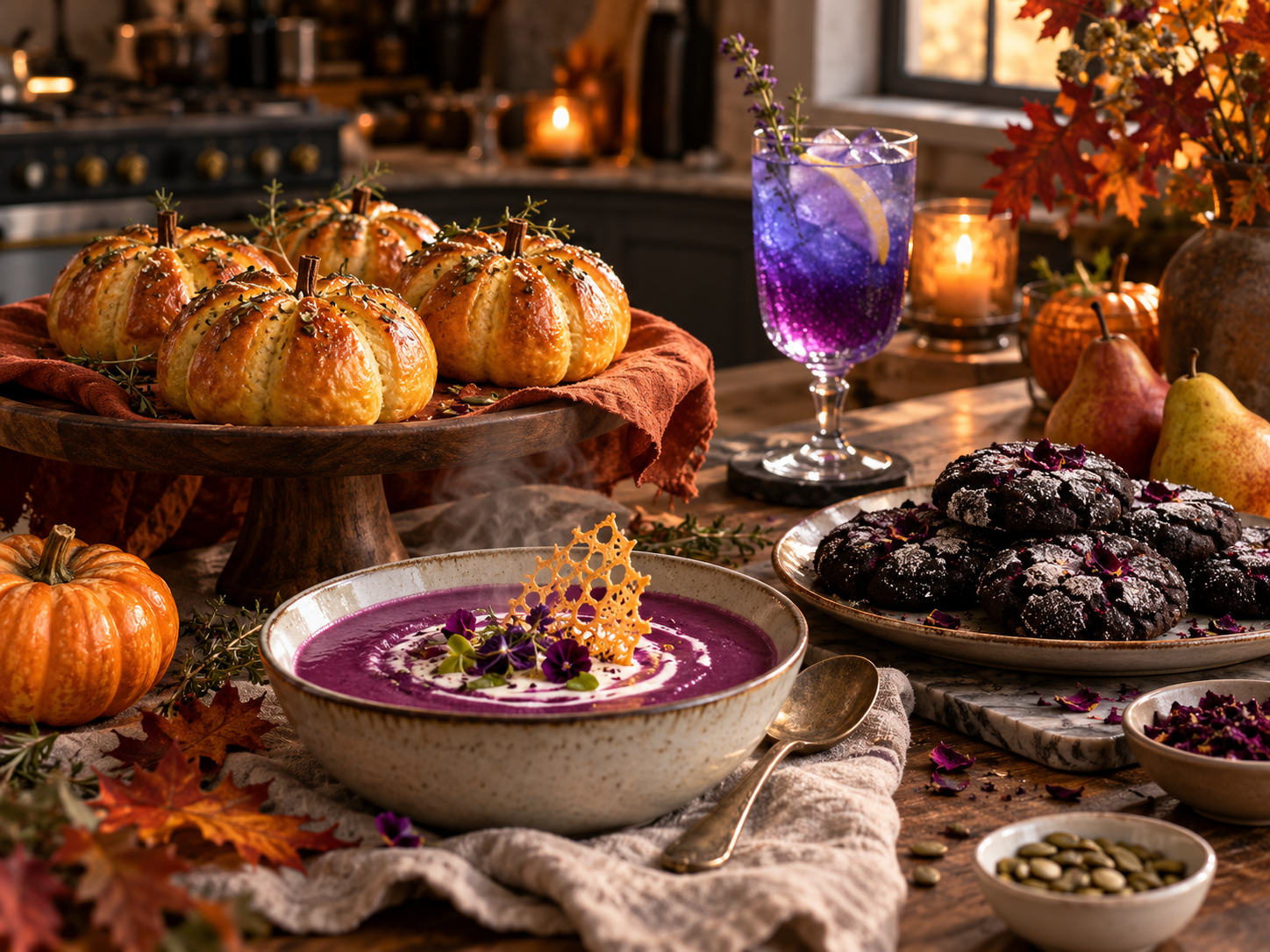
1. Conjure Up Some Color
One of the easiest ways to make food feel magical is to play with unexpected colors. And nature has already done much of the work for us!
- Beets bring gorgeous reds and pinks to doughs, sauces, purées, and frostings.
- Butterfly pea flowers create stunning blues and purples, particularly in drinks and lightly colored preparations.
- Black cocoa gives cookies, cakes, and frostings a dramatic, nearly black appearance.
- Turmeric adds brilliant golden-yellow color to savory dishes, doughs, and even some sweets.
- Freeze-dried berries bring concentrated pinks and purples to buttercreams, glazes, and other low-moisture preparations.
But here’s where the real magic happens: some natural pigments actually change color depending on their environment.
Butterfly pea flowers contain anthocyanins, pigments that respond to changes in pH. Add something acidic, like lemon juice, to a blue butterfly pea infusion, and you can watch it shift toward purple or pink right before your eyes!
A little chef’s wisdom: Natural colors aren’t always heat-stable. Some fade, brown, or change during baking, so consider adding your brightest colors after cooking or using them in fillings, frostings, and garnishes.
2. Master the Art of the Dramatic Reveal
Sometimes the most magical part of a dish is what you can’t see.
Imagine slicing into an ordinary-looking cake to reveal beautiful layers of contrasting colors. Or breaking open a cookie to discover a molten chocolate center.
The secret is contrast and a little strategic planning.
Try hiding a colorful filling inside a pale pastry, layering contrasting batters in a cake, or adding a soft center to an otherwise crisp dessert.
You can even create an unexpected reveal by making the outside and inside of a dish two completely different colors.
The important thing is to consider how the components behave during cooking. A loose filling may leak, while an overly moist filling can create gummy pockets in baked goods.
For filled breads and pastries, keep fillings appropriately thick, seal seams carefully, and avoid overfilling.
The goal is for your guests to wonder how you did it, not for your oven to discover the surprise first.
3. Make Ordinary Food Take Shape
Who says bread has to look like bread?
A few intentional cuts, folds, and shapes can transform ordinary dough into something straight out of a storybook.
Think pumpkin-shaped dinner rolls, leaf-shaped pastries, braided bread wreaths, or cookies with intricate stamped patterns.
One of my favorite tricks is to use the natural behavior of dough to create the design.
For example, scoring bread isn’t just decorative. As bread bakes, expanding gases and steam push against the crust. A carefully placed score gives the dough somewhere to expand and can create beautiful raised patterns.
For cookies and pastry, temperature becomes particularly important. Cold dough holds sharp edges and intricate details better than warm, soft dough, which tends to spread and distort.
So if you’re making beautifully shaped pastries or cookies, a short trip to the refrigerator before baking can make a dramatic difference.
4. Create a Little Illusion with Texture
Color gets plenty of attention, but texture can be just as enchanting.
A glossy chocolate glaze against a velvety cocoa-dusted cake. A delicate sugar decoration rising from a creamy dessert. An impossibly thin, crisp tuile perched on something soft.
These combinations catch the eye because they create visual contrast.
And the best part? They usually improve the eating experience, too!
Try pairing:
- Smooth chocolate ganache with crunchy caramel shards.
- Silky soups with delicate vegetable crisps.
- Soft cakes with toasted nuts or crisp streusel.
- Creamy desserts with thin, delicate cookies.
For particularly dramatic decorations, consider making tuiles. These thin, crisp wafers can be spread into stencils or molds and shaped while they’re still warm and pliable.
Just remember that crisp decorations are vulnerable to moisture. Place them on wet or creamy foods shortly before serving to preserve their texture.
A little crunch can make something look impressive, but it can also make every bite more interesting.
5. Use Heat to Summon Deeper, Darker Flavors
Not all kitchen magic requires bright colors.
Sometimes the most dramatic transformations happen when ingredients turn deep brown, golden, or nearly black.
Think deeply caramelized onions, roasted squash with dark edges, golden-brown pastry, or a beautifully seared piece of meat.
Much of that complexity comes from the Maillard reaction, a series of chemical reactions involving amino compounds and reducing sugars that produces hundreds of new flavor and aroma compounds.
Caramelization is another process, involving the transformation of sugars through heat.
These reactions create flavors that simply don’t exist in the raw ingredients.
Want a little more magic from your oven? Give ingredients enough space to release moisture, dry their surfaces when appropriate, and use sufficient heat to encourage browning.
And remember, dark and delicious is not the same thing as burnt! The goal is complexity, not bitterness.
6. Make the Garnish Part of the Spell
One of the easiest ways to make a dish look extraordinary is to rethink the finishing touches.
Instead of adding a garnish simply because the plate looks empty, choose something that contributes to the overall experience.
A bright swirl of herb oil across a creamy soup. Thinly sliced radishes arranged like flower petals. A dusting of cocoa through a stencil. A delicate fried sage leaf perched on a roasted squash dish.
These details work best when they connect to ingredients already present in the food.
If there’s sage in the filling, a crisp sage leaf makes sense. If the dessert contains chocolate, a cocoa pattern reinforces its flavor.
And sometimes, restraint is your greatest trick.
You don’t need five garnishes when one beautiful, intentional detail will do.
The chef’s trick: Think about color, height, and contrast when finishing a dish. A garnish that adds all three can transform a simple plate without overwhelming it.
7. Remember That Timing Is Everything
Even the most beautiful culinary creations can lose their magic if they’re prepared too far in advance.
Crisp decorations absorb moisture. Bright herbs wilt. Frozen desserts melt. Delicate sauces lose their shine.
A little planning goes a long way.
Prepare stable components ahead of time, but save delicate finishing touches for the last moment.
For Halloween parties, that might mean baking shaped cookies a day early, preparing sauces and fillings in advance, and assembling your most dramatic decorations just before guests arrive.
After all, you want to enjoy the magic, not spend the entire evening frantically trying to keep it alive.
The Real Magic Is in the Making
Here’s what I love most about playful cooking: it reminds us that food can be more than just something delicious to eat.
It can surprise us. It can tell a story. It can make people smile before they’ve even taken their first bite.
And while these tricks might feel particularly appropriate for Halloween, they’re just as wonderful throughout the year.
So this fall, I encourage you to experiment a little. Play with color, try an unexpected shape, hide something delicious inside a pastry, or make a garnish that’s just a little more whimsical than usual.
Because the best kind of kitchen witchcraft isn’t about making food look impressive for the sake of it.
It’s about using a little creativity, a little science, and a whole lot of deliciousness to make something truly memorable.
Happy cooking, chefs! And may your kitchens be full of a little magic this Halloween! 🎃
 Brennah Van Wagoner
Weekly Newsletter Contributor since 2025
Email the author! brennah.oaks@gmail.com