
A Little Fruit, a Little Magic
Hey chefs!
There’s something wonderfully magical about taking an ordinary piece of fruit, slipping it into a pot of fragrant liquid, and watching it transform into something that looks like it belongs in a fancy restaurant.
I’m talking about poaching!
It’s one of those culinary techniques that sounds sophisticated, but is surprisingly simple. No complicated equipment, no elaborate pastry work, and sometimes you don’t even need to turn on the oven. Just a little liquid, some gentle heat, and a bit of patience.
And with fall bringing us beautiful apples, pears, and other seasonal treasures, it’s the perfect time to give this underrated technique a little attention.
What Exactly Is Poaching?
At its simplest, poaching means cooking food gently in liquid at a temperature below a simmer.
Unlike boiling, which uses vigorous bubbling and movement, poaching relies on gentle, controlled heat. The liquid stays relatively still, allowing delicate ingredients to cook without being battered around or falling apart.
In professional kitchens, poaching is often used for everything from eggs and fish to chicken and fruit. But when it comes to desserts, this technique can be particularly lovely.
Here’s why.
As fruit warms, its cell walls gradually soften, making the flesh tender. At the same time, the surrounding liquid introduces new flavors and aromas. Depending on what you use, you can transform a simple pear into something warmly spiced, citrusy, floral, or beautifully rich.
And because you’re cooking with moisture rather than dry heat, you can create a completely different texture than you’d get from roasting or baking.
The goal isn’t to cook the fruit until it falls apart. It’s to make it tender enough to melt in your mouth while still maintaining its beautiful shape.
Choosing the Right Fruit
Not all fruit behaves the same way when poached, and choosing the right variety makes a difference.
The best candidates are usually fruits with enough structure to withstand gentle cooking.
- Pears: One of my favorites! Bosc pears are particularly good at holding their shape, while Anjou pears are another excellent option.
- Apples: Firm varieties like Pink Lady, Braeburn, or Granny Smith work beautifully. They develop a tender, almost buttery texture.
- Quince: This firm, aromatic fall fruit is practically made for poaching. It requires a longer cooking time, but rewards you with a beautifully fragrant, tender result that can turn rosy pink.
- Stone fruit: Peaches, plums, and apricots are wonderful when in season. Just remember that delicate, ripe fruit needs significantly less cooking time.
Here’s a little chef’s tip: Choose fruit that’s ripe enough to have good flavor, but still firm enough to hold its shape.
Fruit that’s already very soft can turn mushy before it has much opportunity to develop additional flavor.
The Secret Is in the Liquid
Here’s where things get fun.
Your poaching liquid isn’t just there to cook the fruit. It’s an opportunity to build layers of flavor.
Think of it as creating a delicious little bath for your ingredients.
You can start with water, fruit juice, tea, wine, or some combination of liquids. From there, add ingredients that complement the fruit.
For example:
- Warm and cozy: Cinnamon sticks, cloves, star anise, vanilla, and orange peel.
- Bright and fresh: Lemon, ginger, cardamom, and a little honey.
- Floral and delicate: Chamomile tea, vanilla, and a touch of lavender.
- Deep and sophisticated: Red wine, cinnamon, orange, and warm baking spices.
- Sweet and autumnal: Apple cider, maple syrup, vanilla, and fresh ginger.
You don’t need to use every flavor at once. In fact, a thoughtfully chosen combination of just two or three aromatics is often more interesting than a pot full of competing flavors.
Don’t Forget the Sugar and Acid
Two ingredients play particularly important roles in fruit poaching: sugar and acid.
Sugar doesn’t just add sweetness. It changes the concentration of the cooking liquid, helping moderate how water and dissolved compounds move between the fruit and its surroundings. It also gives the finished liquid more body, especially when reduced into a sauce.
Acid, whether from citrus, wine, or fruit juice, balances sweetness and makes the flavors feel brighter. It can also help the fruit retain some of its structure by influencing how its pectin behaves during cooking.
The trick is balance.
You want enough sweetness to complement the fruit, enough acidity to keep everything lively, and enough aromatic flavor to make the finished dessert interesting.
Low and Slow Wins the Race
One of the biggest mistakes people make when poaching is turning the heat up too high.
Remember, poaching isn’t boiling!
For delicate fruit, a liquid temperature around 160–185°F (71–85°C) is a useful range, although some recipes use a very gentle simmer.
At this temperature, the fruit softens gradually without being subjected to the vigorous movement of boiling liquid.
A few things to remember:
Keep the fruit evenly submerged. If it floats, a small circle of parchment paper placed directly over the surface of the liquid can help keep the exposed portions moist. This is called a cartouche, and it’s a handy little professional kitchen trick.
Pay attention to tenderness, not just time. A ripe pear might be ready considerably sooner than a firmer one. Test the thickest part gently with a paring knife. It should slide in with little resistance, but the fruit shouldn’t be collapsing.
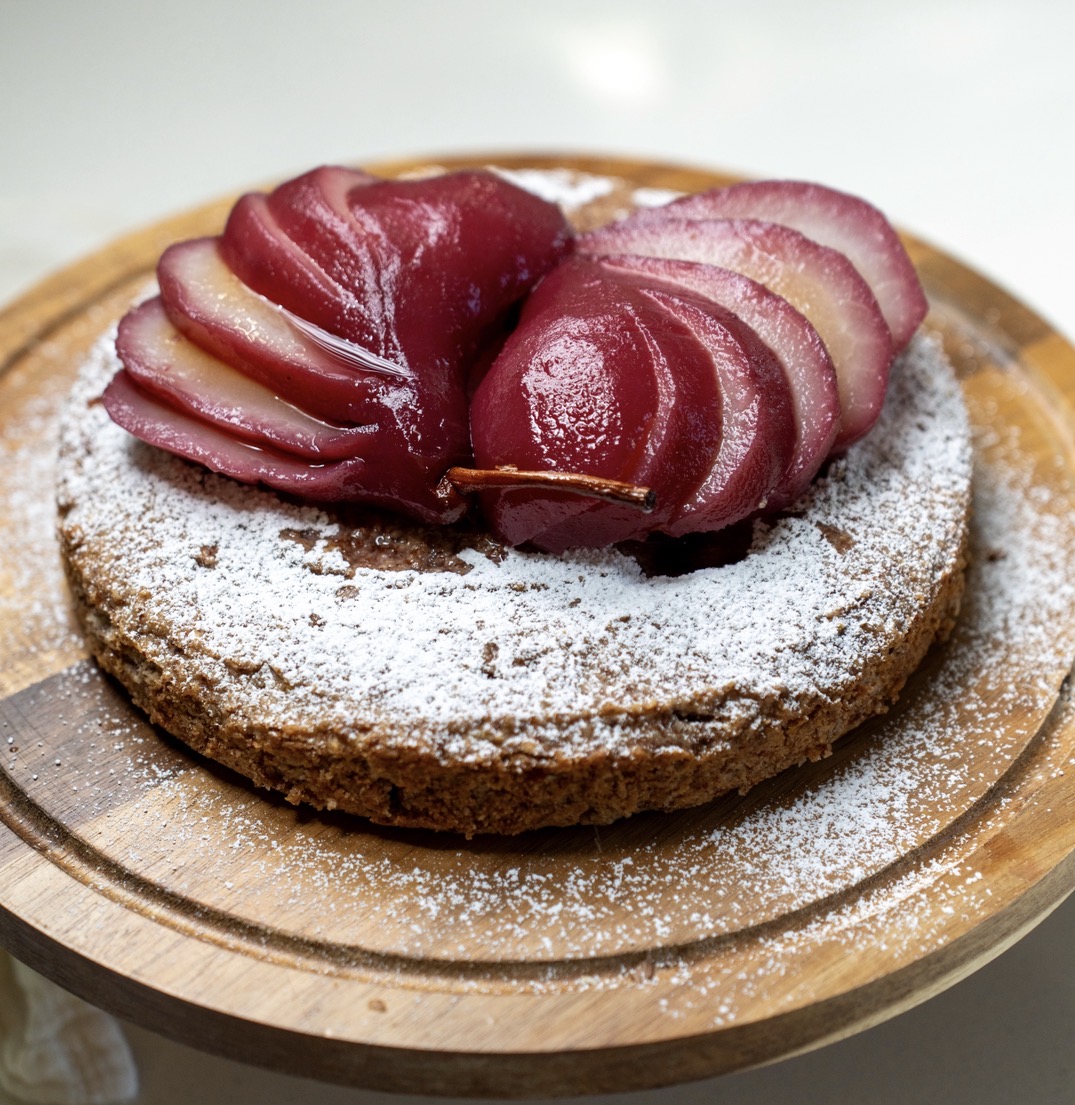
Give the fruit time to rest. Letting it cool in its poaching liquid allows additional flavor and color to develop. This is particularly lovely with red wine poached pears, which take on a gorgeous jewel-toned exterior.
And don’t be afraid to prepare your fruit ahead of time. Poached fruit is an excellent make-ahead dessert because it can be refrigerated in its liquid and served later.
Wait! Don’t Throw Away That Liquid!
This might be my favorite part of the entire technique.
After you’ve finished poaching, you’re left with a liquid full of fruit juices, sugar, aromatics, and flavor.
And that liquid has some serious potential.
Remove the fruit, strain out any spices or aromatics, and return the liquid to the stove.
Now you can reduce it!
As water evaporates, the liquid becomes more concentrated, developing a richer flavor and a more syrupy consistency. Depending on the ingredients, you can create a beautiful sauce that’s perfect for drizzling over your finished dessert.
Just be careful not to reduce it too aggressively. Sweetness, acidity, and any bitterness or tannins become more concentrated as well. Taste as you go!
And here’s an important distinction: Reduce the liquid after removing the fruit. Otherwise, you risk overcooking those beautiful, tender pieces while waiting for your sauce to thicken.
It’s a wonderfully simple way to make a dessert feel just a little more luxurious.
Make It Beautiful!
Of course, we’re not going to go through all that trouble and then forget about presentation!
Poached fruit is already naturally elegant, especially when left whole. But a few thoughtful additions can turn it into something truly spectacular.
Think about contrasting textures and flavors.
A tender, syrupy pear pairs beautifully with something cool and creamy, such as mascarpone, crème fraîche, or vanilla ice cream.
A little crunch from toasted nuts, buttery crumble, or crisp cookies creates another layer of interest.
And that gorgeous reduction? Spoon it around the fruit, drizzle it over the top, or let it pool naturally on the plate.
You don’t need a dozen components to make a dessert feel special. Sometimes, the secret is simply letting a few really good ingredients shine.
A Little Fall Magic
I think one of the loveliest things about cooking is discovering how a simple technique can completely transform an ingredient.
A pear is already delicious on its own. But give it some gentle heat, a fragrant poaching liquid, and a little time, and suddenly it becomes something entirely different.
Something tender, aromatic, beautiful, and just a little bit magical.
And that’s exactly what I love about my Red Wine Poached Pears.
They’re infused with warm, cozy flavors, dressed in a gorgeous deep ruby-red color, and finished with a rich, glossy syrup. They’re elegant enough for a special occasion, but simple enough that you don’t need a special occasion to make them.
So if you’ve never tried poaching fruit before, consider this your invitation to give it a go.
Because sometimes all it takes to make something extraordinary is a little fruit, a little patience, and a little kitchen magic.
Click here for my Red Wine Poached Pears recipe. Happy cooking, chefs!
 Brennah Van Wagoner
Weekly Newsletter Contributor since 2025
Email the author! brennah.oaks@gmail.com