
The Secrets to Keeping Cabinets Clean and Grease-Free
Every once in a while, I like to digress from FOOD and FOOD-related topics to share tips that make our kitchen-life easier. That said, how about we talk about grease- and dust-covered kitchen cabinets?
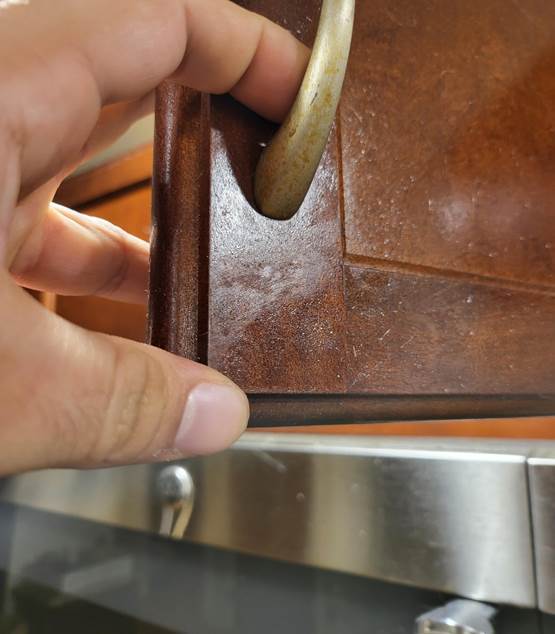
They take a beating few people notice until the grime is impossible to ignore. Continuous cooking releases a fine mist of oil that settles on every nearby surface, and over weeks and months it mixes with dust into a sticky film.
This sticky film of grease and dust then attracts even more dirt. The cabinets nearest the stove take the worst of it, but heat rises and drifts, so even cabinets across the kitchen pick up a thin coating over time. Left long enough, it can dull paint, warp wood veneer, and stain grout lines between tile backsplashes.
If you’re dealing with this issue, hold off on pulling out the Orange Glo®, Murphey’s Oil Soap®, Old English®, or Liquid Gold®. Professional woodworkers and finishing experts generally do not recommend these cleaners for several key reasons:
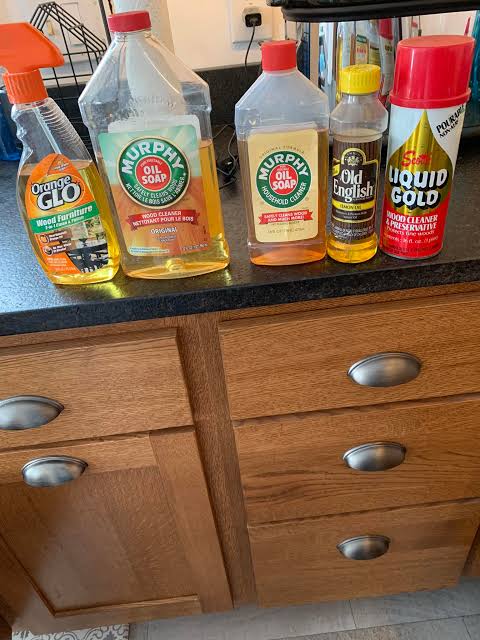
Residue Buildup. Both products leave behind oily, soapy, or waxy residues that dull the wood's appearance over time. This film attracts dust, dirt, and grime, creating a sticky layer.
Interference with Refinishing. Orange Glo contains oils and sometimes silicones, Murphy’s and Liquid Gold leave a soap residue and Old English® actually traps grease and grime. These lingering residues prevent new varnishes, lacquers, or polyurethane topcoats from properly adhering, often causing the new finish to fisheye or peel.
Not Feeding the Wood. These products clean or polish the protective clear coat rather than "nourishing" bare wood underneath.
Instead, woodworkers will recommend:
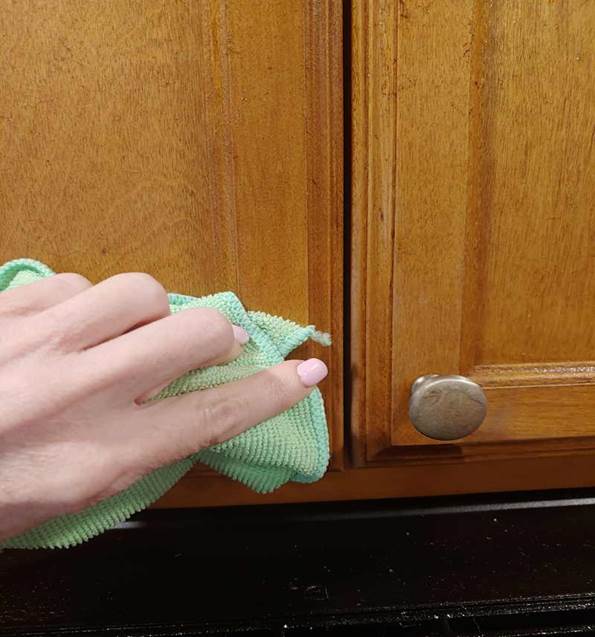
A Damp Microfiber Cloth. For routine cleaning on finished wood, a simple damp microfiber cloth—or water mixed with a tiny drop of mild dish soap (like Dawn)—is the gold standard. Always wipe the surface completely dry afterward.
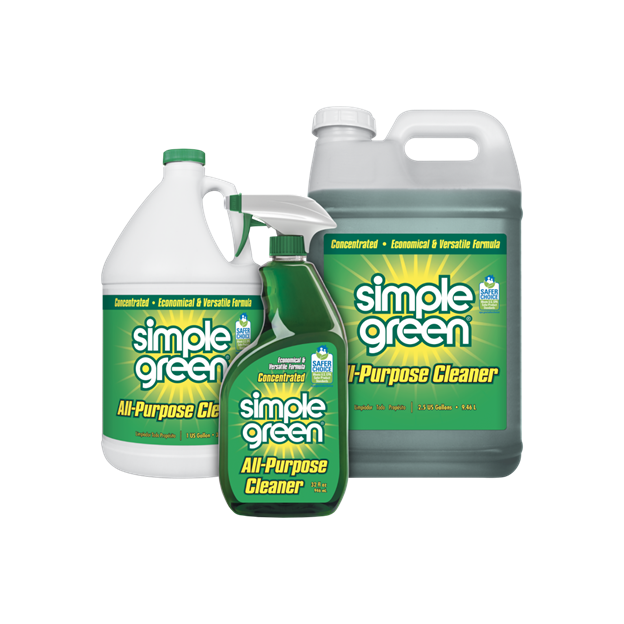
Simple Green All Purpose Cleaner, provided it’s properly diluted and used on finished or laminate cabinets.
The good news is that a simple routine, paired with the right cleaners, keeps cabinets looking new with far less scrubbing than a deep clean requires. If the build-up is light or fairly new (weeks old rather than months old), warm water with a few drops of dish soap cuts grease effectively, since dish soap is formulated to break down fats. Dampen a microfiber cloth (as mentioned above), wipe with the grain of the wood or in the direction of the finish, then follow with a soap-free damp cloth to remove any reside and finish with a dry cloth to prevent water spots. Avoid soaking the wood, since standing water can seep into seams and cause swelling or peeling over time.
And don't forget the details such as cabinet hardware, handles, hinges, and the underside of upper cabinets near the stove. These often get overlooked and tend to accumulate the most grease. A soft toothbrush dipped in soapy water reaches into grooves and corners that a cloth can't.
Lastly, consider a few things you can do to prevent future buildup:
· If you have one, use the exhaust fan in your range hood; it will catch much of the grease before it settles.
· Wipe cabinets near the stove weekly, rather than waiting until you notice visible grime; this practice will keep buildup light enough that plain soap and water can easily remove it.
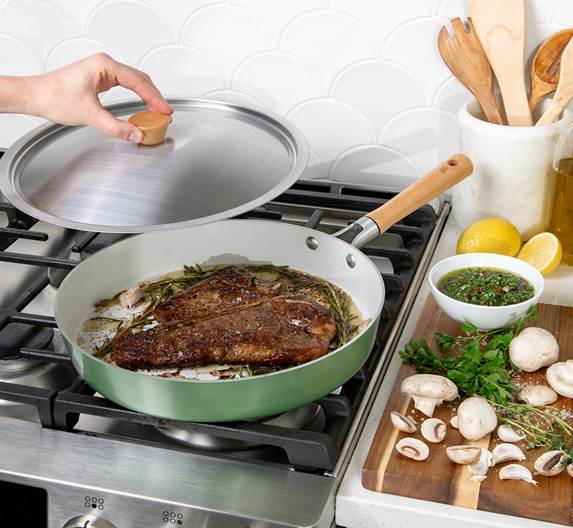
· Keep a lid on pans when possible; this will significantly cut down on airborne grease.
The time this will take yields a pleasant payoff: Grease-free cabinets brighten a kitchen more than almost any other single task, and the habit costs far less time than the alternative.
 Alice Osborne
Weekly Newsletter Contributor since 2006
Email the author! alice@dvo.com