
Cooking with Fats: Function, Flavor, and Technique
Hey chefs,
One of the most misunderstood ingredients in the kitchen isn’t salt or sugar—it’s fat.
We tend to treat fats as interchangeable: oil is oil, butter is butter, right? But in professional kitchens, fat choice is deliberate. It affects not just flavor, but texture, aroma, browning, and even how a dish feels to eat.
Let’s break down the most common cooking fats—what they do, how they behave, and when each one shines.
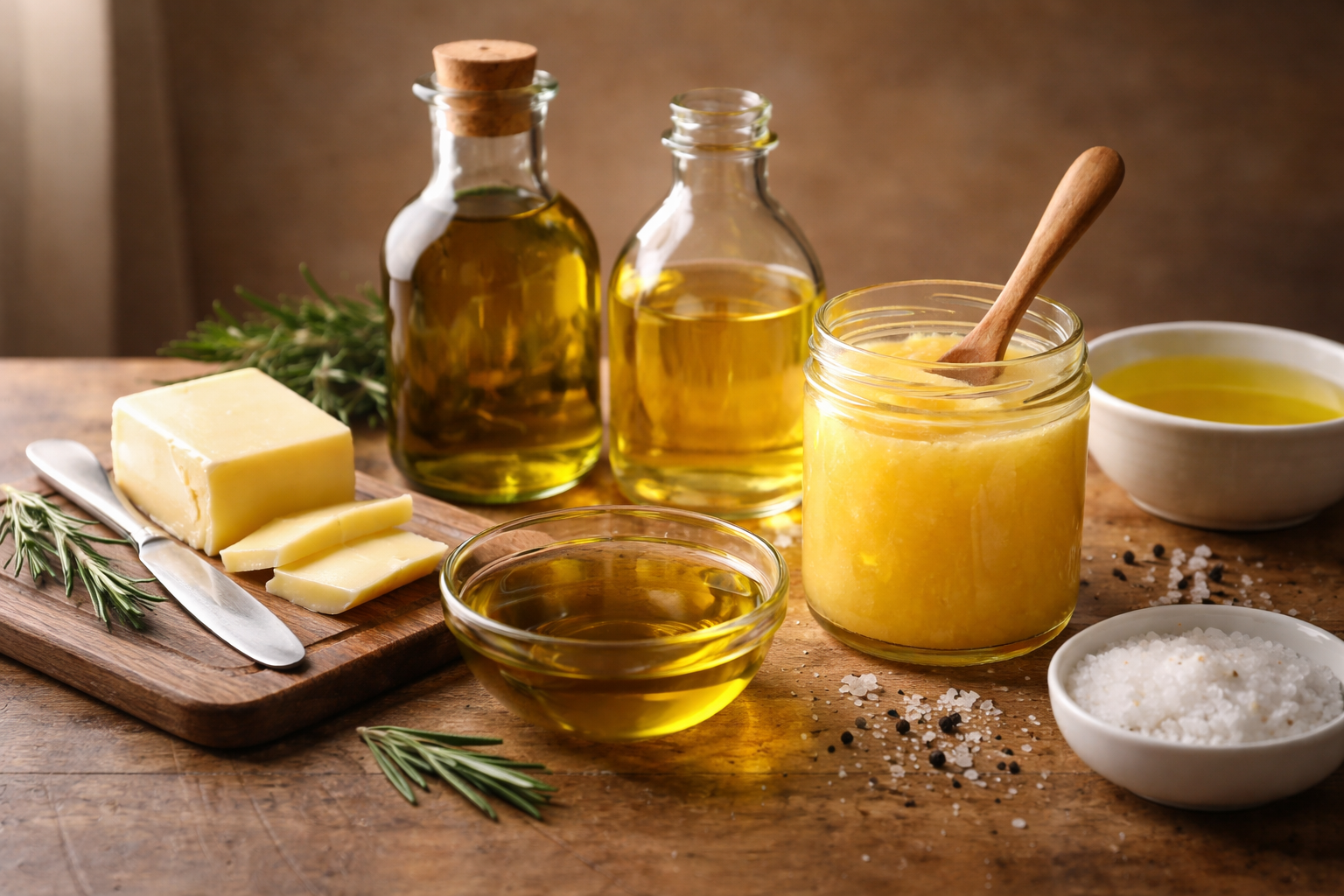
Why Fat Matters More Than You Think
Fat does three major jobs in cooking:
- Carries flavor – Many aromas and flavor compounds are fat-soluble.
- Controls texture – Think tenderness, flakiness, silkiness, or crispness.
- Manages heat – Different fats tolerate heat differently.
Choosing the right fat is less about “healthy vs unhealthy” and more about using the right tool for the job.
Olive Oil: Bright, Fruity, and Finishing-Friendly
Best for:
- Sautéing over medium heat
- Roasted vegetables
- Salad dressings
- Finishing drizzles
Olive oil brings aromatic, grassy, sometimes peppery notes that are very noticeable in finished dishes. That’s a feature—not a flaw.
Chef tip:
- Use extra virgin olive oil when you want to taste it.
- For higher-heat cooking, a lighter olive oil is more stable and less bitter.
Health note:
- Rich in monounsaturated fats and antioxidants.
- One of the most heart-friendly fats when used appropriately.
When not to use it:
- High-heat searing where neutral flavor or higher smoke point is needed.
Butter: Flavor First, Always
Best for:
- Baking
- Sauces
- Finishing vegetables
- Low-to-medium heat cooking
Butter adds sweetness, richness, and that unmistakable dairy aroma. It also contains milk solids, which brown easily—great for flavor, risky for high heat.
Chef tip:
- Browning butter intentionally creates nutty depth.
- Burning butter by accident creates bitterness fast.
Health note:
- Higher in saturated fat, but also very satisfying—meaning you often need less.
- In baking, butter’s structure matters as much as its flavor.
When not to use it:
- Long, high-heat cooking unless clarified or blended with oil.
Ghee (Clarified Butter): Butter’s More Stable Cousin
Best for:
- Sautéing and searing
- Indian and Middle Eastern cooking
- High-heat applications where butter flavor is desired
Ghee is butter with the milk solids removed, leaving behind pure butterfat. That means:
- Higher smoke point
- No burning milk solids
- Clean, rounded butter flavor
Chef tip:
- Great for eggs, roasted vegetables, and spice blooming.
- Ideal when you want butter flavor without fragility.
Health note:
- Still saturated fat, but lactose-free and easier for some people to digest.
Vegetable & Neutral Oils: Quiet Workhorses
Best for:
- Frying
- High-heat sautéing
- Baking where fat should disappear into the background
These oils don’t bring much flavor—and that’s intentional. Their job is heat transfer and texture, not aroma.
Chef tip:
- Neutral oil lets spices, herbs, and aromatics take center stage.
- Essential for crisping and frying where clean flavor matters.
Health note:
- Highly processed oils vary widely in quality.
- Use thoughtfully, not automatically.
Choosing the Right Fat: A Chef’s Shortcut
Ask yourself three questions:
- Do I want to taste the fat?
- How hot is this pan getting?
- What texture am I aiming for—crisp, silky, flaky, or rich?
There’s no single “best” fat—only better choices for specific outcomes.
The Big Takeaway
Fat isn’t just a calorie source—it’s a design decision.
When you choose fats with intention, food tastes clearer, textures improve, and dishes feel more balanced instead of heavy or flat. That’s one of the quiet differences between cooking from recipes and cooking with confidence.
Until next time, cook with care… and with good fat.
 Brennah Van Wagoner
Weekly Newsletter Contributor since 2025
Email the author! brennah.oaks@gmail.com