
Stirring Up Fall Magic
Hey chefs,
It’s October and that means just one thing; Soup season is officially here.
There is something about the first genuinely chilly evenings of fall that makes a pot bubbling away on the stove feel less like dinner and more like an event. Bread suddenly becomes mandatory. Stock starts disappearing from the pantry. And vegetables that have been quietly waiting in the crisper drawer can somehow become the best thing you eat all week.
But good soup is more than throwing a collection of ingredients into broth and simmering them until tender.
The best soups have layers. They have contrast. They have enough richness to feel satisfying, enough acidity to keep you coming back for another bite, and enough texture that you don’t feel like you’re eating an entire bowl of the same thing.
And once you understand a few basic principles, soup becomes one of the easiest places to improvise in the kitchen.
Start With Flavor, Not Liquid
One of the easiest ways to make a disappointing soup is to begin with a giant pot of broth and expect everything else to flavor it later.
Instead, build the flavor before you add most of the liquid.
For many soups, that means starting with some combination of onion, leek, shallot, celery, carrot, garlic, or other aromatics and cooking them in butter or oil.
And actually let them cook.
You are not just heating the onions until they stop being raw. You are concentrating their flavor, developing sweetness, and creating the first layer of the soup.
From there, you can add spices, tomato paste, herbs, or other seasonings directly to the fat before adding your broth. A brief moment in the hot pan can wake up dried spices and deepen ingredients like tomato paste considerably.
If your soup contains meat, mushrooms, corn, squash, or another ingredient that benefits from browning, consider browning that first too.
Water is wonderful at extracting flavor.
It is not particularly good at creating browned flavor.
Do that part before the water arrives.
Choose the Right Texture
Not every creamy soup needs cream.
Potatoes, cauliflower, squash, beans, lentils, rice, bread, and other starches can all create body when blended into a soup.
That means you can control the texture based on the soup you actually want rather than automatically reaching for heavy cream.
Sometimes you want a velvety purée.
Sometimes you want a broth with clearly defined vegetables.
And sometimes the best answer is somewhere in between.
One of my favorite techniques is to blend only part of a soup. You get enough purée to thicken the broth while still keeping pieces of vegetables, beans, meat, or grains intact.
Texture is one of the things that makes a bowl of soup feel interesting instead of monotonous.
Stock Matters—But It Doesn’t Have to Be Homemade
Homemade stock is wonderful.
It is also not a requirement for good soup.
A good-quality broth, stock concentrate, or bouillon can give you an excellent starting point, especially when you are adding plenty of flavor elsewhere in the recipe.
The more important thing is understanding what your broth is doing.
It should support the other ingredients rather than overwhelm them.
If you are making a delicate cauliflower soup, for example, an intensely roasted beef stock would obviously pull the soup in an entirely different direction. A mild chicken or vegetable broth allows the cauliflower, cheese, aromatics, and finishing ingredients to stay in focus.
Also remember that broth reduces as it cooks.
Taste before aggressively seasoning at the beginning, especially if your broth or bouillon is already salty.
You can always add more salt.
Removing it is significantly less convenient.
Creamy Soups Need Balance
Richness is wonderful.
Endless richness is exhausting.
This is why restaurant dishes so often include some kind of acidic finishing element.
A squeeze of lemon juice, splash of vinegar, spoonful of cultured dairy, or another bright ingredient can completely change a soup without making it taste obviously sour.
Acid sharpens flavors.
It makes cheese taste cheesier, vegetables taste more distinct, and rich ingredients feel less heavy.
If you have ever tasted a creamy soup and thought, It needs something, even though it already has enough salt, there is a very good chance that something is acid.
Add it gradually at the end and keep tasting.
Save Something for the Top
Soup toppings are not merely decoration.
They are an opportunity to add everything the soup itself is missing.
A completely smooth soup becomes much more interesting with toasted breadcrumbs or croutons.
A rich soup benefits from fresh herbs, scallions, citrus, or something pickled.
A brothy soup might want grated cheese, crispy onions, toasted nuts, shredded meat, or a drizzle of flavorful oil.
Even something as simple as black pepper freshly cracked over the bowl can make a difference.
Think about contrast:
Creamy + crunchy.
Rich + acidic.
Earthy + fresh.
Soft + crisp.
The bowl should feel finished when it reaches the table.
Soup Is Also One of the Best Places to Play
This may be my favorite thing about soup.
Once you understand the basic structure, there is plenty of room for creativity.
Change the herbs.
Swap the vegetables.
Add a different cheese.
Roast something instead of simmering it.
Purée it completely or leave it chunky.
Turn yesterday’s roasted vegetables into tomorrow’s lunch.
Or, occasionally, make your dinner change colors.
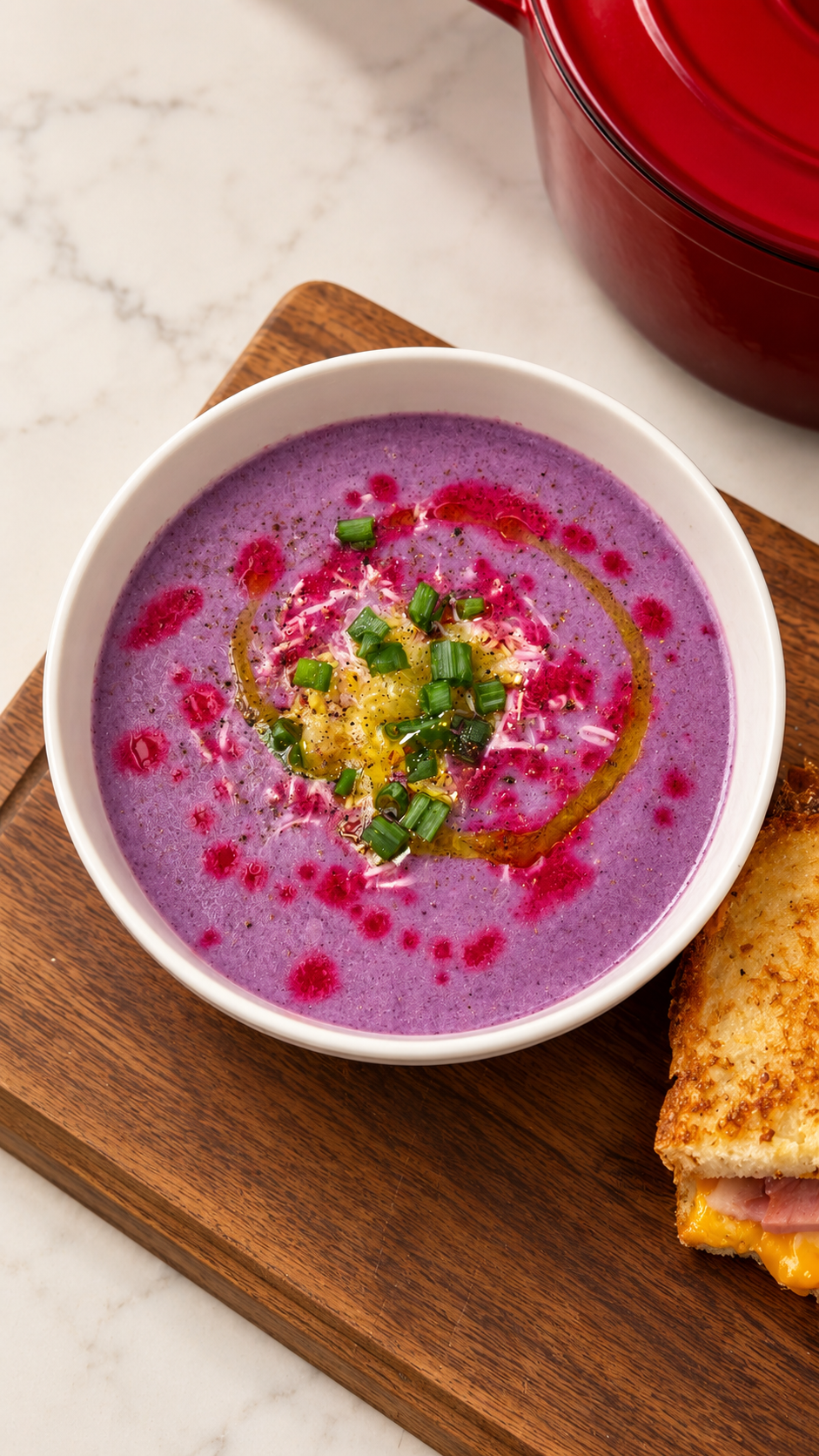
Which brings me to Fairy Soup.
At its core, Fairy Soup is simply a creamy cauliflower cheddar soup. You can absolutely make it with regular white cauliflower and end up with a cozy, delicious bowl of soup.
But if you use purple cauliflower, something much more fun happens.
Purple cauliflower gets its color from pigments called anthocyanins, which are sensitive to changes in acidity. The soup starts out a beautiful purple, and when lemon juice is added at serving, the increased acidity shifts that color toward bright pink.
Actual kitchen chemistry.
Except it looks like magic.
The lemon isn’t there just for the color change, either. It gives the creamy cauliflower and cheddar exactly the bright finish they need.
That is one of my favorite things about cooking: sometimes the technique that makes the food taste better is also the thing that makes it more fun.
So yes, make your soup properly.
Build the aromatics. Brown what needs browning. Season in layers. Think about texture. Finish with acid. Add something interesting on top.
But also buy the purple cauliflower occasionally.
Dinner is allowed to be a little whimsical.
Click here to try my Fairy Soup recipe—a creamy cauliflower cheddar soup that is delicious with white cauliflower, but considerably more magical with purple.
 Brennah Van Wagoner
Weekly Newsletter Contributor since 2025
Email the author! brennah.oaks@gmail.com