
The Spice of Life
Hey chefs,
There is a reason people say variety is the spice of life.
It applies especially well to cooking.
August produce is incredible. Tomatoes are juicy and deeply flavored, corn is sweet, peaches are fragrant, zucchini is everywhere, berries are still hanging on, and markets are overflowing with vegetables that actually taste like themselves.
But abundance can have a downside.
When you are eating the same produce several times a week, even something you love can start to feel repetitive. After the fourth tomato salad or the fifth side of grilled vegetables, you may find yourself thinking you are simply tired of tomatoes, corn, peaches, or zucchini.
Usually, you aren’t.
You are tired of eating them the same way.
One of the best things you can learn as a cook is how to make a single ingredient behave differently. Changing the cut, cooking method, texture, seasoning, or role of an ingredient can completely change how you experience it.
And when you’re cooking with seasonal produce, that is one of the easiest ways to enjoy everything while it is at its best without making every dinner feel like a rerun.
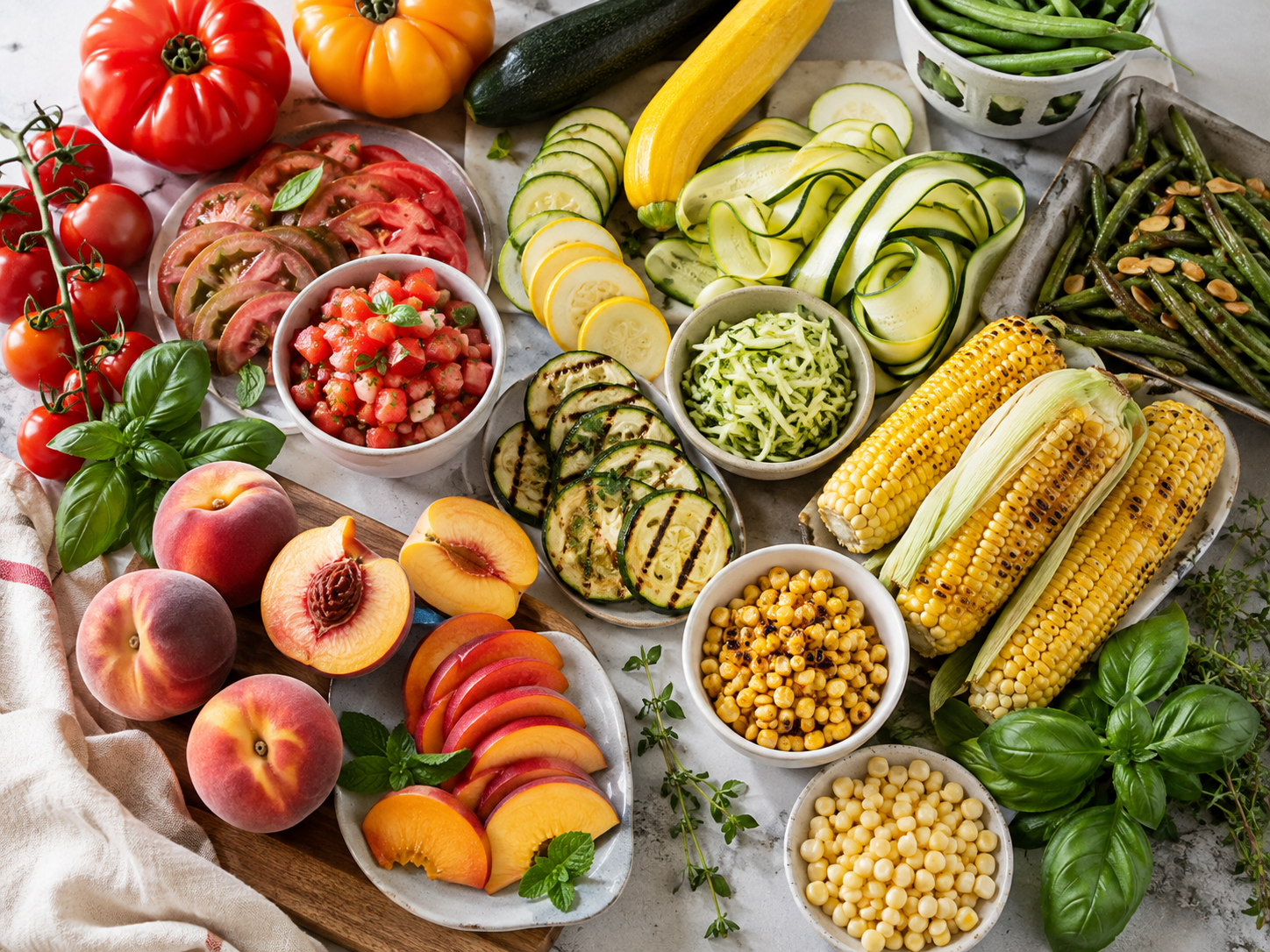
Start With the Cut
Before you change the recipe, change the shape.
The way you cut an ingredient affects far more than presentation. It changes surface area, moisture release, cooking time, texture, and even how intensely you experience its flavor.
A thick slice of tomato feels completely different from finely diced tomato.
Carrot ribbons cook and eat differently from roasted carrot chunks.
Thinly shaved cabbage feels light and crisp, while larger pieces become substantial and sweet when roasted.
A grated vegetable can release moisture and almost disappear into a dish, while larger pieces remain distinct.
Even fruit changes dramatically with the cut. Peach wedges feel juicy and substantial, while finely diced peaches can become salsa, relish, or a topping.
So if something is beginning to feel repetitive, one of the easiest places to start is simply:
Stop cutting it the same way.
Give the Same Ingredient More Than One Texture
A really good dish rarely has only one texture.
Soft food benefits from something crisp.
Creamy food becomes more interesting with something chewy or crunchy.
Tender vegetables can be paired with a raw version of the same ingredient.
And you can create that contrast without bringing in a completely different ingredient.
Use part of your corn fresh and char another portion.
Roast some tomatoes while keeping others raw.
Cook part of a fruit into a compote and leave the rest fresh.
Purée some vegetables into a sauce while leaving others whole.
Now the ingredient has more than one personality on the plate.
Instead of tasting the same bite over and over, you get contrast.
Change the Cooking Method
Heat completely transforms food.
A raw tomato is fresh, acidic, juicy, and bright.
A roasted tomato becomes sweeter, more concentrated, and deeply savory.
A fresh peach is floral and juicy.
A grilled peach picks up caramelized edges and a little bitterness from the char.
Boiled corn is clean and sweet.
Charred corn becomes smoky and nutty.
Roasted vegetables taste completely different from steamed vegetables, even if you season them exactly the same way.
If you have eaten an ingredient several times this week, try changing the way you apply heat.
Think about moving between:
- Raw
- Roasted
- Grilled
- Charred
- Sautéed
- Braised
- Blended
- Pickled
You don’t need a completely new recipe.
Sometimes a different cooking method is enough.
Stop Assuming Vegetables Should Always Be Tender-Crisp
We hear a lot about not overcooking vegetables.
And there are absolutely times when you want something crisp, bright, and just barely cooked.
But sometimes the best thing you can do is cook a vegetable until it completely changes.
Onions become jammy and sweet.
Tomatoes collapse into sauce.
Greens become silky.
Squash can turn creamy.
Peppers become soft and deeply concentrated.
Texture should serve the dish.
A vegetable maintaining its original shape isn’t automatically better than one that has cooked down.
In fact, letting an ingredient soften completely can give it an entirely different role.
Instead of being a piece of vegetable sitting in the dish, it can become part of the sauce, filling, or base.
Change the Ingredient’s Job
This may be the most useful shift of all.
We tend to assign ingredients one role and leave them there.
Corn is a side dish.
Peaches are dessert.
Tomatoes go in salads.
Cucumbers are raw.
Vegetables sit next to the protein.
But ingredients become much more interesting when you stop asking them to do the same job every time.
Produce can become:
- The main component
- A sauce
- A purée
- A garnish
- A filling
- A condiment
- A crunchy topping
- Part of a dressing
- A soup base
- A relish or salsa
A tomato can be the salad one day and the sauce the next.
Corn can be served on the cob, blended into a creamy purée, folded into a salsa, or stirred into risotto.
Peaches can go into cobbler, but they can also become a sauce for pork or a bright salsa for grilled chicken.
When you change the job, you change the entire experience of the ingredient.
Move Between Sweet and Savory
One of the easiest ways to make produce feel less repetitive is to stop keeping fruit and vegetables in such rigid categories.
Fruit does not belong exclusively to dessert.
Peaches, plums, cherries, grapes, berries, and melons can all work beautifully in savory dishes.
Pair fruit with:
- Salty cheeses
- Herbs
- Vinegar
- Mustard
- Chiles
- Grilled meats
- Black pepper
- Toasted nuts
Their natural sweetness becomes much more interesting when balanced with salt, acid, bitterness, or heat.
Vegetables can travel in the opposite direction.
Corn works beautifully in sweeter applications.
Carrots and zucchini can go into cakes and quick breads.
Tomatoes can become jam.
Sweet potatoes can move comfortably between dinner and dessert.
Crossing that sweet-savory line can make an ingredient you have eaten all week suddenly feel completely different.
Change the Flavor Family
Sometimes the ingredient isn’t the problem.
The seasoning is.
If you’ve eaten roasted vegetables with olive oil, garlic, and Parmesan three times this week, the fourth batch may feel boring even if the vegetables are fantastic.
Change the flavor family.
Try:
Lemon + herbs + Parmesan.
Or:
Soy + sesame + ginger.
Or:
Yogurt + garlic + dill.
Or:
Chile + lime + cilantro.
Or:
Brown butter + sage.
Or:
Cumin + coriander + a bright squeeze of citrus.
The cooking method can stay exactly the same while the dish moves in an entirely different direction.
This is why learning flavor combinations is more useful than memorizing endless recipes.
You gain the ability to improvise.
Add Acid
If seasonal produce starts tasting flat, acid is often the missing piece.
A squeeze of lemon.
A splash of vinegar.
Pickled onions.
Mustard.
Yogurt.
A little lime.
Fresh produce—especially ripe summer produce—often has plenty of natural sweetness. Acid sharpens those flavors and keeps them from becoming cloying or dull.
This is particularly important with rich preparations.
Roasted vegetables with butter.
Sweet corn with cream.
Peaches with cheese.
Tomatoes with olive oil.
A small amount of acid can make the entire dish taste more vivid.
Add Something Crunchy
Texture contrast is one of the easiest ways to keep food interesting.
If your produce is soft, creamy, roasted, or saucy, give it something crisp.
Try:
- Toasted breadcrumbs
- Nuts
- Seeds
- Fried shallots
- Crispy chickpeas
- Croutons
- Raw vegetables
- Crisp fresh herbs
A lot of food we describe as boring isn’t actually lacking flavor.
It is lacking contrast.
When every bite has the same texture, your palate stops paying as much attention.
A little crunch wakes everything back up.
Use Fresh and Cooked Versions Together
This is one of my favorite ways to make seasonal produce taste more complex without adding a long list of ingredients.
Use the same ingredient both fresh and cooked.
Fresh tomatoes plus roasted tomatoes.
Raw corn plus charred corn.
Fresh peaches plus peach compote.
Fresh herbs plus herbs cooked into a sauce.
The fresh version tends to bring brightness, acidity, and clean flavor.
The cooked version brings sweetness, concentration, caramelization, or richness.
Together, they create depth.
Let Produce Become the Sauce
Instead of making a sauce and adding vegetables to it, try using the produce to build the sauce itself.
Tomatoes can collapse into a pasta sauce.
Corn can be blended into something creamy and sweet.
Roasted peppers can become a purée.
Cooked onions can melt into the base of a dish.
Squash can add body to soups and sauces.
Peas can be blended with herbs and cheese.
This changes produce from an add-in to an essential part of the structure of the dish.
It is also a fantastic way to use more seasonal vegetables without feeling like you are eating another plate piled high with them.
Combine Raw, Cooked, Creamy, and Crisp
When I am developing a dish, I like to think beyond simply asking, What flavors belong together?
I also ask:
What is the eating experience?
Is everything soft?
Is everything rich?
Is everything sweet?
Is everything the same temperature?
Try building contrast deliberately.
Something roasted + something fresh.
Something creamy + something crisp.
Something sweet + something acidic.
Something warm + a cool garnish.
Something deeply cooked + something bright and raw.
That is often what separates a dish that tastes fine from one you keep wanting another bite of.
You Don’t Always Need Another Recipe
This is really the heart of it.
Seasonal cooking means there will naturally be periods when you are eating many of the same ingredients.
That’s a good thing.
They’re at their best.
So rather than constantly asking:
“What completely different recipe can I make with this?”
Try asking:
“How can I make this ingredient behave differently?”
Change the cut.
Change the heat.
Change the texture.
Change the seasoning.
Use part of it raw.
Let part of it cook down.
Turn it into a sauce.
Move it from sweet to savory.
Add acid.
Add crunch.
That is how you get variety without needing a completely different grocery list every night.
And after all, variety really is the spice of life.
It doesn’t always mean buying more ingredients.
Sometimes it means finding more possibilities in the ingredients you already have.
One Ingredient Can Do More Than One Job
My Lemon Parmesan Zucchini Pasta is a good example of this idea in practice.
The zucchini isn’t simply sliced and added to the pasta as one uniform vegetable. Different portions are treated differently so they contribute different textures and serve different roles in the finished dish.
That is the larger idea I want you to take into your own cooking.
Whether you’re working with tomatoes, corn, peaches, peppers, squash, carrots, berries, or whatever happens to be overflowing at the market that week, don’t assume the ingredient only has one version of itself.
Seasonal produce becomes much more exciting when you stop asking, What else can I make?
And start asking:
What else can this ingredient do?
 Brennah Van Wagoner
Weekly Newsletter Contributor since 2025
Email the author! brennah.oaks@gmail.com