
What to Do With Too Many Tomatoes, Zucchini, Peaches, and Corn
Hey chefs,
There is a very specific point in August when the produce situation gets a little out of hand.
The tomatoes are multiplying on the counter. Someone has handed you another zucchini that is roughly the size of a baseball bat. The peaches all decided to ripen on the same afternoon. And somehow you bought twelve ears of corn because they looked so good at the store.
This is one of my favorite cooking problems to have.
Late-summer produce is incredible because so much of it is at its absolute best right now—but peak-season produce also tends to arrive all at once. The trick is knowing which ingredients should be eaten immediately, which can be cooked down into something useful, and which are actually worth freezing for later.
So before you resign yourself to eating zucchini at every meal for the next six days, here is how I like to handle an August produce overload.
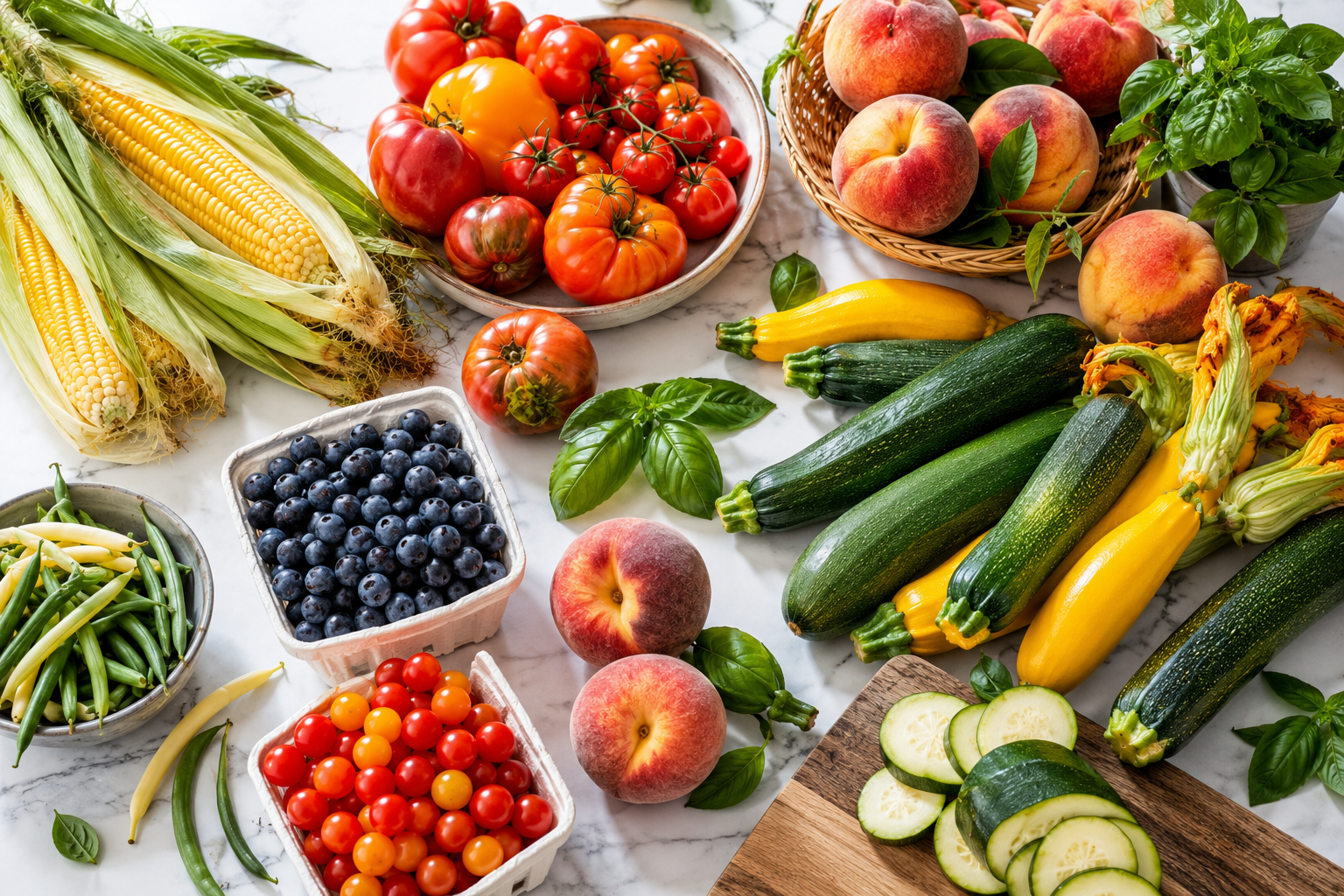
First: Don’t Try to Preserve Everything the Same Way
One of the biggest mistakes with excess produce is thinking, I should freeze all of this.
Sometimes you should.
Sometimes you absolutely should not.
Freezing changes food because the water inside its cells expands into ice crystals. Once the food thaws, those damaged cells release water and the texture becomes softer.
That isn’t necessarily bad—it just determines what the ingredient will be good for later.
A frozen peach probably isn’t going back into a pristine fruit salad.
But into a cobbler? Perfect.
A frozen tomato isn’t going back onto a BLT.
But into tomato sauce? Wonderful.
The question isn’t really “Can I freeze this?”
It’s:
“What do I eventually want to cook with it?”
That is how I decide what to do with a produce surplus.
Too Many Tomatoes
Tomatoes are one of the best August ingredients because you can take them in so many completely different directions.
If your tomatoes are spectacularly ripe, however, I would use some of them fresh first. Peak-season tomatoes deserve at least one meal where very little happens to them.
Salt them. Add good olive oil. Maybe some basil. Eat them on toast. Make tomato sandwiches.
Then deal with the rest.
Roast Them
This may be my favorite solution to an excessive number of tomatoes.
Roasting removes water and concentrates everything good about a tomato: sweetness, acidity, glutamates, and those deep savory flavors that make tomatoes so satisfying.
Cut larger tomatoes into halves or wedges, or leave cherry tomatoes whole. Toss them with olive oil and salt and roast until they collapse and caramelize around the edges.
From there you can use them for:
- Pasta
- Pizza
- Grain bowls
- Toast
- Soups
- Sauces
- Eggs
- Sandwiches
- Risotto
They also freeze beautifully after roasting.
And because you’ve already cooked out some of their water, they take up considerably less freezer space.
Make a Simple Tomato Sauce
You do not need to commit to an all-day Italian grandmother situation every time you have too many tomatoes.
Cook onion or garlic in olive oil, add chopped tomatoes and salt, and simmer until the tomatoes collapse.
Then decide what you want it to become.
Add basil and keep it fresh.
Cook it longer for pasta.
Blend it smooth.
Add chile.
Turn it into pizza sauce.
Use it as the beginning of a braise.
A simple tomato base in the freezer is far more useful than a finished sauce with a very specific flavor profile.
Freeze Tomatoes Whole
This sounds slightly ridiculous, but it works surprisingly well.
Wash and dry ripe tomatoes, remove the stems, and freeze them whole.
Once frozen, transfer them to freezer bags.
They will be soft after thawing, so don’t expect fresh-tomato texture. But they are excellent for sauces, soups and braises.
Bonus: the skins often slip off very easily as they thaw.
Make Tomato Jam
If you have already made sauce and still have tomatoes staring at you, tomato jam is a fantastic change of direction.
Tomatoes cooked with sugar, acid and spices turn into something sweet-savory and deeply concentrated.
Use it with:
- Grilled cheese
- Burgers
- Eggs
- Roast chicken
- Cheese boards
- Sandwiches
It feels completely different from another jar of tomato sauce.
Save the Tomato Water
Here’s a slightly chef-y trick.
If you’re making a tomato salad, lightly salt chopped tomatoes and let them drain over a bowl.
The liquid underneath is tomato water, and it is incredibly flavorful.
Use it in vinaigrettes, sauces, chilled soups, rice, cocktails or mocktails, or anywhere you want tomato flavor without tomato pulp.
Never throw that stuff away.
Too Much Zucchini
Zucchini has somehow become the official vegetable of people quietly leaving produce on their neighbors’ porches.
And I understand why.
One zucchini plant can apparently feed a small municipality.
The problem is that zucchini contains a tremendous amount of water, so dealing with a surplus is largely an exercise in moisture management.
Shred It and Freeze It
This is one of the best ways to store zucchini for baking.
Grate it, portion it according to the amounts your favorite recipes use, and freeze it.
When thawed, zucchini releases a lot of liquid.
That can actually be useful.
If a recipe expects fresh shredded zucchini and relies on that moisture, keep some of the liquid. If you’re adding zucchini to something where excess water would cause problems, squeeze it out.
Labeling your bags with the weight is extremely helpful.
Future you does not want to thaw an anonymous brick of green vegetables and wonder whether it contains 200 grams or 700 grams.
Roast It Hard
Zucchini gets boring when it is pale and watery.
Give it heat.
Cut it into thick pieces, toss with oil and salt, spread it out generously on a sheet pan and roast at high heat.
The most important part is the space between the pieces.
Crowded zucchini steams.
Spaced-out zucchini browns.
Once roasted, toss it with lemon, Parmesan, herbs, chile crisp, pesto, toasted breadcrumbs or feta.
Suddenly your zucchini surplus feels less oppressive.
Make Zucchini Fritters
Grating zucchini is useful because it gives you an opportunity to remove some of its water.
Salt the grated zucchini lightly, let it sit, then squeeze it thoroughly in a clean towel.
Mix it with egg, flour or breadcrumbs, herbs, cheese and seasoning, then pan-fry.
Fritters also freeze much better than raw zucchini slices.
Freeze cooked fritters in a single layer, then transfer them to a bag once solid.
Reheat them in the oven or air fryer so the exterior becomes crisp again.
Fold It Into Foods That Want Moisture
Zucchini is fantastic when you stop asking it to behave like a dry vegetable.
Use it in foods that actually benefit from the moisture:
- Quick breads
- Muffins
- Meatballs
- Fritters
- Pasta sauces
- Soups
- Curries
Finely grated zucchini can almost disappear into sauces and meat mixtures.
Make Zucchini Butter
This is one of my favorite less-obvious uses.
Grate zucchini and cook it slowly in olive oil or butter with garlic and salt until most of the moisture evaporates and the zucchini becomes soft, concentrated and almost spreadable.
Put it on toast.
Stir it through pasta.
Fold it into scrambled eggs.
Spoon it under grilled chicken.
A mountain of zucchini shrinks into a very manageable amount of extremely delicious zucchini butter.
That’s the kind of kitchen magic we need in August.
Too Many Peaches
Peaches are a slightly different emergency because the window between perfect and why is there peach juice all over my counter? can be remarkably short.
If several peaches are ripening at once, sort them by softness.
Eat the softest first.
Cook the next-softest.
Save the firmer ones for later.
Freeze Peach Slices
Peaches freeze wonderfully for future baking and smoothies.
Slice them, remove the pits and arrange them in a single layer on a parchment-lined tray.
Freeze until firm, then transfer them to a freezer bag.
Freezing individually first prevents them from becoming one enormous frozen peach boulder.
You can peel them first if you want, but for many baked desserts I don’t bother.
Frozen peaches are fantastic for:
- Cobblers
- Crisps
- Smoothies
- Sauces
- Compotes
- Oatmeal
Make Peach Compote
When peaches are becoming too soft to slice beautifully, cook them.
A simple peach compote can be as easy as peaches, a little sugar, lemon juice and a pinch of salt.
Cook just until the fruit begins breaking down.
Then spoon it over:
- Pancakes
- Waffles
- Yogurt
- Cheesecake
- Ice cream
- Pound cake
- Oatmeal
You can also freeze the finished compote.
Roast Them
Roasting peaches is especially good when the peaches taste decent but aren’t quite as extraordinary as you hoped.
Heat concentrates their flavor.
Halve them, remove the pits, and roast with a little butter or sugar.
Add vanilla, cardamom, cinnamon or ginger if you want.
Or go savory with black pepper, thyme and a splash of vinegar.
Roasted peaches are beautiful with pork, chicken and salty cheeses.
Make Peach Butter
Just like apple butter, peach butter turns an intimidating amount of fruit into a relatively small jar of concentrated flavor.
Cook peaches slowly until they break down, then continue cooking until the mixture becomes thick and spreadable.
You can flavor it with vanilla, lemon, cinnamon, ginger or cardamom.
Use it on toast, biscuits, pancakes, cake layers or sandwiches.
For pantry-stable canning, use a properly tested canning recipe rather than improvising the acidity or processing method. Otherwise, simply refrigerate or freeze it.
Turn Them Into a Savory Sauce
This is where peaches get much more interesting.
Cook chopped peaches with shallot or onion, vinegar, mustard, herbs and a little sweetness.
Now you have something that belongs next to pork tenderloin, grilled chicken or roasted vegetables instead of another dessert.
Peaches love savory food.
Too Much Corn
Fresh corn has one enormous advantage over our other August troublemakers:
the cobs are useful too.
So before you throw them away, let’s use the whole thing.
Cut the Kernels Off and Freeze Them
Blanch the corn briefly, cool it, then cut the kernels from the cob and freeze them.
Spread the kernels on a tray first if you’d like them to remain loose rather than freezing into a solid block.
Use frozen corn later in:
- Chowder
- Cornbread
- Chili
- Pasta
- Risotto
- Tacos
- Succotash
- Fried rice
You can also freeze corn on the cob, but loose kernels take up much less precious freezer real estate.
Make Corn Stock
Do not throw away those naked corn cobs.
Put them in a pot with water and, if you’d like, onion, garlic or herb stems.
Simmer gently.
Corn cobs release a surprising amount of sweet, milky corn flavor.
Use the stock for corn chowder, risotto, polenta, soups or sauces.
If I’m making something where corn is supposed to be the star, corn stock makes an enormous difference.
Make Corn Butter
Cut fresh kernels from the cob and cook them gently with butter.
Blend some or all of the mixture.
You end up with a naturally sweet, intensely corn-flavored sauce that is beautiful with fish, chicken, pasta or vegetables.
It’s one of those things that tastes much fancier than the ingredient list suggests.
Make Corn Salsa or Relish
Fresh corn loves acid.
Combine cooked or grilled kernels with lime, vinegar, tomatoes, peppers, onions and herbs.
This is especially useful because it transforms your corn into something you can put on practically everything:
Tacos. Chicken. Fish. Eggs. Grain bowls. Salads.
Grill Extra Corn On Purpose
If the grill is already hot, cook more corn than you need.
Cut the leftover kernels from the cob and refrigerate them.
Grilled corn is essentially instant flavor waiting in the fridge.
The slight char makes leftover corn dramatically more interesting in salads, pastas and salsas.
My Favorite Strategy: Preserve Ingredients, Not Meals
When people hear “meal prep,” they often imagine seven identical containers of fully assembled food.
That isn’t usually how I want to eat.
I’d rather have components.
Roasted tomatoes.
Grilled corn.
Peach compote.
Zucchini fritters.
A bag of frozen corn kernels.
A container of zucchini butter.
Now you can combine those things differently throughout the week instead of eating the same dinner four nights in a row.
A roasted tomato can become pasta tonight and toast tomorrow.
Corn can become tacos tonight and chowder next month.
Peaches can go over yogurt in the morning and pork at dinner.
That is much more flexible cooking.
Know What to Use First
When the kitchen is overflowing, prioritize approximately like this:
Use immediately:
Very ripe peaches, split tomatoes, tender herbs, cut produce.
Cook within the next few days:
Ripe tomatoes, zucchini, corn and firm-ripe peaches.
Freeze or preserve:
Anything you’re realistically not going to eat before its quality starts declining.
There is no prize for heroically forcing your family to eat fourteen zucchini before Thursday.
Freeze some.
And Don’t Forget the Scraps
Late-summer produce generates some surprisingly useful scraps.
Corn cobs become stock.
Tomato juice becomes vinaigrette.
Peach peels can infuse syrups.
Herb stems can go into stocks and sauces.
Zucchini ends can disappear into vegetable stock.
You don’t have to save every microscopic scrap of food—but when something still contains a lot of flavor, think twice before tossing it.
That is one of the simplest ways to cook more efficiently.
August Is Supposed to Feel a Little Abundant
There is something wonderful about this part of the year.
The produce bins are overflowing. Farmers markets are ridiculous. Gardens suddenly produce more food than seems physically possible.
You don’t need to turn all of it into an elaborate preservation project.
Eat the perfect peach over the sink.
Make tomato sandwiches.
Slather corn with butter.
Roast the zucchini until the edges are almost too dark.
Then take whatever is left and turn it into something that will make dinner easier a week—or a month—from now.
That is the beauty of cooking with the seasons.
Sometimes the best ingredient isn’t rare or expensive.
Sometimes it’s simply the thing you have way too much of right now.
 Brennah Van Wagoner
Weekly Newsletter Contributor since 2025
Email the author! brennah.oaks@gmail.com