
A Chef’s Guide to Fruit Flavor, Texture, and Structure
Hey chefs,
Now that summer is coming around, seasonal produce is all the rage. Fruit is one of the most useful ingredients in the kitchen, but it is also one of the easiest to misuse. Not because fruit is difficult, but because every form of fruit behaves differently.
Fresh berries, jam, puree, citrus zest, dried cherries, and freeze-dried raspberry powder all bring fruit flavor, but they do not bring the same amount of water, sugar, acidity, texture, or structure.
That matters.
If your cake turns soggy, your buttercream splits, your filling slides out the sides, or your fruit flavor disappears after baking, the problem may not be the fruit itself. It may be the form of fruit you chose.
So let’s break fruit down into a few useful categories and talk about when each one shines.
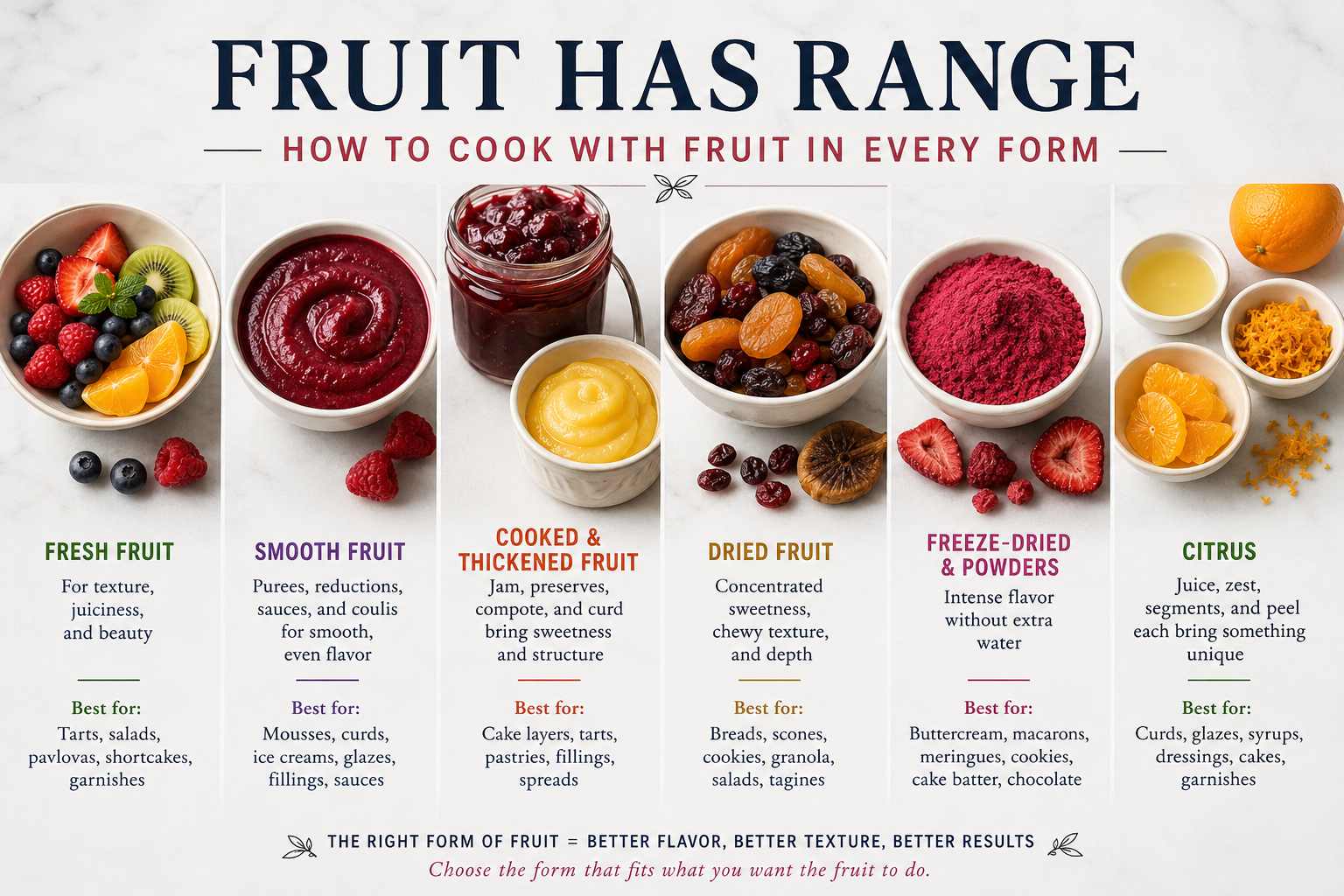
Fresh Fruit: For Texture, Juiciness, and Beauty
Fresh fruit is the best choice when you want fruit to feel alive. It gives you natural texture, bright flavor, beautiful color, and that unmistakable seasonal feeling.
Use fresh fruit for garnishes, tarts, pavlovas, shortcakes, salads, galettes, cobblers, salsas, and desserts that will be served fairly soon after assembling.
The challenge with fresh fruit is moisture. Berries can weep into frosting, peaches can make pastry soggy, and sliced fruit can soften quickly. Fresh fruit also varies wildly depending on ripeness, so the same recipe can taste completely different in June than it does in January.
Best tip: use fresh fruit where its texture matters. If you need fruit flavor inside a buttercream, cake batter, or mousse, fresh fruit usually is not the strongest option.
Smooth Fruit: Purees, Reductions, Sauces, and Coulis
This category is all about fruit that has been blended or cooked into a smooth form.
Fruit puree is wonderful for mousses, curds, sauces, ice creams, sorbets, cheesecake batters, glazes, and fillings. It gives even fruit flavor without chunks.
Fruit reduction is puree or juice cooked down to remove water and concentrate flavor. This is especially useful for buttercream, cake batter, ganache, cheesecake, and fillings because you get more fruit flavor with less added liquid.
Coulis and sauces are looser fruit preparations, usually used for plating, drizzling, layering, or spooning over desserts.
The biggest thing to remember with smooth fruit is that puree still contains a lot of water. If you add too much straight puree to frosting, it can split. If you add too much to cake batter, it can make the texture heavy or gummy.
Best tip: when you want bold fruit flavor inside something delicate, reduce the puree first.
Cooked and Thickened Fruit: Jam, Preserves, Compote, and Curd
These are the fruit forms that bring more structure.
Jam and preserves are cooked with sugar until thick and spreadable. They are great for cake layers, cookies, breakfast pastries, Swiss rolls, tart glazes, and doughnut fillings. Jam is convenient because it is already sweetened and thickened, but it can also be too sweet, so it usually benefits from something creamy, tangy, or buttery to balance it.
Compote is looser and more rustic than jam. It is fruit gently cooked with sugar, citrus, spices, or herbs until saucy. Use it for pancakes, cheesecake, yogurt, ice cream, shortcakes, crepes, or spoonable dessert toppings. It feels homemade and generous, but it may need thickening if you want it to hold between cake layers.
Fruit curd is fruit juice or puree cooked with eggs, sugar, and butter into a silky, custard-like filling. Lemon curd is the classic, but raspberry, passion fruit, lime, orange, and cranberry are gorgeous too. Curd is ideal for tarts, cake fillings, macarons, pavlovas, and crepe cakes when you want fruit flavor that feels rich and elegant.
Best tip: cooked fruit forms are usually better than fresh fruit when you need a filling to hold its shape.
Dried Fruit: For Chew, Depth, and Sweetness
Dried fruit includes raisins, dates, figs, apricots, dried cherries, cranberries, apples, mangoes, and prunes.
Because much of the water has been removed, dried fruit has concentrated sweetness and a chewy texture. It works beautifully in scones, breads, cookies, biscotti, granola, salads, rice dishes, tagines, braises, stuffings, and chutneys.
The downside is that dried fruit can be tough, overly sweet, or prone to stealing moisture from doughs and batters.
Best tip: soak dried fruit before baking if you want it softer. Warm water, juice, tea, or even a flavorful syrup can plump it up and make it taste fresher.
Freeze-Dried Fruit and Fruit Powders: For Big Flavor Without Water
Freeze-dried fruit is one of the best tools for baking because it gives you intense fruit flavor without adding liquid.
You can use it whole for crunch, crush it for texture, or grind it into powder. Freeze-dried fruit powder is especially good in buttercream, whipped cream, macarons, meringues, cookies, cake batter, glazes, chocolate, and natural coloring.
This is why freeze-dried raspberry or strawberry powder works so well in frosting. Instead of adding watery puree, you add a dry ingredient that brings flavor and color at the same time.
The only catch is that freeze-dried fruit absorbs moisture quickly. It can clump, soften, or turn sticky if exposed to humidity.
Best tip: grind it finely, sift it, and store it airtight. Add it to dry ingredients for baking or directly into frostings for concentrated flavor.
Citrus: Juice, Zest, Segments, and Peel
Citrus deserves its own little category because every part behaves differently.
Citrus juice brings acidity and brightness. It is best for curds, sauces, dressings, marinades, glazes, syrups, cake soaks, and balancing sweet or rich dishes.
Citrus zest brings aroma without liquid. It is often the best way to get strong citrus flavor into cakes, cookies, creams, custards, and buttercreams. The colored outer peel holds the fragrant oils, while the white pith underneath tastes bitter.
Citrus segments bring fresh texture and juicy bursts to salads, tarts, seafood, desserts, and garnishes.
Candied citrus peel brings chew, sweetness, and a concentrated citrus note. It is beautiful in sweet breads, cookies, chocolate bark, cakes, and garnishes.
Best tip: use zest and juice together. Zest gives perfume; juice gives acidity.
The Best Way to Choose
Instead of asking, “Can I add fruit to this?” ask, “What do I need the fruit to do?”
For fresh texture, use fresh fruit.
For smooth flavor, use puree.
For stronger flavor with less moisture, use reduction.
For spreadable structure, use jam.
For spoonable softness, use compote.
For silky richness, use curd.
For chew and depth, use dried fruit.
For intense flavor without water, use freeze-dried fruit powder.
For brightness, use citrus juice.
For aroma, use zest.
Fruit is not just a flavor. It is water, sugar, acid, fiber, color, and texture all wrapped into one ingredient. Once you choose the right form, your desserts and savory dishes become brighter, cleaner, more balanced, and much easier to control.
 Brennah Van Wagoner
Weekly Newsletter Contributor since 2025
Email the author! brennah.oaks@gmail.com