
The Easiest Fancy Cheesecake You’ll Ever Make
Hey chefs,
Today let’s talk about cheesecake. Cheesecake sounds like it’s just one single dessert, but it's actually an incredibly diverse category of desserts.
Some cheesecakes are dense and clean-sliced. Some are airy and mousse-like. Some are baked low and slow in a water bath with the seriousness of a science experiment. Some are chilled until they set without ever seeing the inside of an oven.
And then there is Basque cheesecake.
Burnt. Cracked. Crustless. Dramatic. Effortless.
Basically, the rebel child of the cheesecake family — and honestly, my favorite one.
A Little Cheesecake Family Tree
Cheesecake has been around in some form for a very long time. At its simplest, it is a dessert built from soft cheese, eggs or another setting ingredient, sugar, and some kind of structure. But depending on where it comes from and how it is made, cheesecake can turn into completely different desserts.
New York-Style Cheesecake
This is probably the cheesecake most of us picture first: tall, dense, smooth, and rich, usually baked in a springform pan with a graham cracker crust.
New York-style cheesecake is all about structure. It usually relies on a lot of cream cheese, eggs, and sometimes sour cream or heavy cream to create that classic dense-yet-silky texture. It is often baked gently, sometimes in a water bath, to prevent cracking and keep the surface pale and smooth.
The goal is control. Low heat. Even baking. No cracks. No browning. Chill thoroughly. Slice cleanly.
It’s elegant, classic, and delicious — but it wants you to follow the rules.
No-Bake Cheesecake
No-bake cheesecake skips the oven entirely. Instead of eggs setting the filling through heat, it usually relies on whipped cream, gelatin, cream cheese, or other stabilizers to help it firm up in the refrigerator.
The texture is lighter, fluffier, and often more mousse-like than baked cheesecake. It’s a great option when you want something creamy and simple, especially in summer, but it does not have quite the same custardy richness or depth of flavor as a baked cheesecake.
No-bake cheesecake is easy in a different way: no oven, no water bath, no risk of overbaking. But you do have to think about structure, because without eggs and heat, the filling needs enough support to slice neatly.
Italian Cheesecake
Italian-style cheesecake often uses ricotta instead of cream cheese, which gives it a lighter, slightly grainier, more rustic texture. It can be flavored with citrus, vanilla, almond, or even chocolate.
Compared to American cheesecake, ricotta cheesecake tends to feel less heavy and less sweet. It has a more delicate dairy flavor and a slightly drier, more tender crumb. Instead of being ultra-smooth and dense, it has a softer, almost custard-meets-cake quality.
It’s beautiful in its own way — less glossy and polished, more old-world and homey.
Japanese Cheesecake
Japanese cheesecake is the cloud of the cheesecake world.
Instead of being dense and rich, it is light, jiggly, and soufflé-like. It usually combines cream cheese with a meringue-based batter, which gives it height, airiness, and that signature delicate wobble.
This method is much closer to a sponge cake or soufflé than a traditional New York cheesecake. The technique is more precise because the air whipped into the egg whites becomes the structure. Overmix it, undermix it, bake it too hot, cool it too quickly, and the whole thing can deflate.
It is gentle, beautiful, and technical.
Basque Cheesecake
And then we have Basque cheesecake — also called burnt Basque cheesecake.
This style comes from the Basque region of Spain, and it is famous for doing almost everything a traditional cheesecake tells you not to do.
No crust.
No water bath.
No smooth, pale top.
No careful protection from cracks.
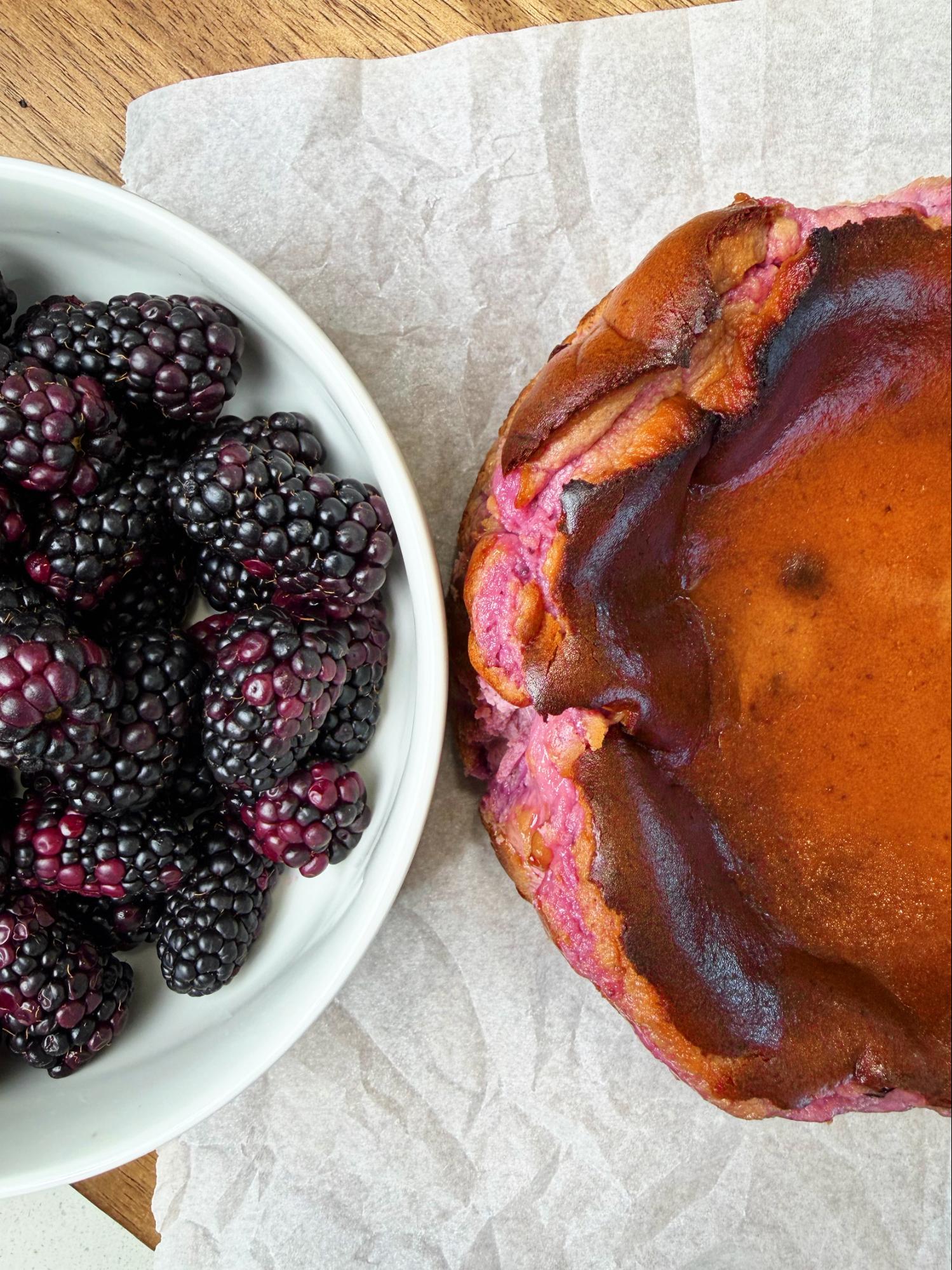
Instead, Basque cheesecake is baked hot until the top becomes deeply browned, almost burnt-looking, while the center stays soft, creamy, and custardy.
It looks rustic, but it tastes luxurious. It feels fancy, but it is shockingly simple.
That is why I love it.
Why Basque Cheesecake Breaks All the Rules
Most baked cheesecakes are treated gently because we are trying to avoid browning, cracking, curdling, sinking, and overbaking.
Basque cheesecake says: what if all of those “mistakes” were the point?
The high heat creates a dark, caramelized top that gives the cheesecake a bittersweet, toasted flavor. The edges puff dramatically in the oven, the top wrinkles and cracks as it cools, and the center settles into this creamy, spoonable, almost custard-like texture.
There is no crust to fuss with. No foil-wrapped pan. No water bath. No anxiety about a perfectly smooth top.
It is one of those rare desserts that looks dramatic because of how easy it is, not because of how complicated it is.
The contrast is what makes it so special: rustic on the outside, silky on the inside. Deeply caramelized on top, creamy and tangy underneath. A little messy, a little elegant, and completely irresistible.
The Texture: Why Basque Cheesecake Is So Good
The best Basque cheesecake has three distinct textures happening at once.
The top is deeply browned and slightly firm, almost like the caramelized top of a crème brûlée’s moodier cousin. It brings bitterness, warmth, and depth.
The edges are set and creamy, with enough structure to slice.
The center is the magic: soft, custardy, and barely set. Not raw, not runny, but creamy in that luxurious way where the cheesecake almost melts as you cut into it.
That creamy center is one of the biggest differences between Basque cheesecake and a classic New York-style cheesecake. New York cheesecake wants to be fully set and clean. Basque cheesecake wants to be just set enough.
It is supposed to slump a little. It is supposed to look imperfect. That is part of the charm.
Why the Burnt Top Matters
The “burnt” top is not just for looks.
That dark browning comes from caramelization and Maillard reactions, which create deeper, more complex flavors. Instead of tasting only sweet and tangy, the cheesecake develops notes of toasted sugar, browned butter, roasted dairy, and even a tiny bit of bitterness.
That slight bitterness is important because cheesecake is so rich. It balances the creaminess and keeps the dessert from feeling flat or overly sweet.
This is also why fruit and honey work so beautifully with Basque cheesecake. Bright berries cut through the richness, and honey adds floral sweetness that plays beautifully against the caramelized top.
In my blackberry Basque cheesecake, the blackberries bring tartness and color, while the black pepper honey drizzle adds warmth and just enough bite to make the whole dessert feel more layered and grown-up.
Tips for the Perfect Basque Cheesecake
Basque cheesecake is simple, but simple does not mean careless. The method is easy, but a few details make the difference between a decent cheesecake and a breathtaking one.
Use Room Temperature Ingredients
Cream cheese needs to be fully softened before mixing. If it is cold, it will not blend smoothly, and you can end up with little lumps in the batter.
Room temperature cream cheese, eggs, and cream mix together more easily, which gives you a smoother final texture without needing to overmix.
Mix Until Smooth, But Don’t Whip Too Much Air In
You want the batter silky and fully combined, but you do not need to beat it like cake batter.
Too much air can make the cheesecake puff excessively in the oven and then collapse more dramatically as it cools. Some rise and fall is normal — actually expected — but you still want a creamy custard texture, not a foamy one.
Scrape the bowl often. Cream cheese loves to hide in little streaks at the bottom of the mixer bowl.
Line the Pan Generously with Parchment
Basque cheesecake is usually baked in a parchment-lined pan with the paper rising above the sides. The parchment creates those beautiful rustic folds around the edge and makes it much easier to lift the cheesecake out once chilled.
Do not try to make the parchment too perfect. The wrinkles are part of the look.
Bake Hot
This is the defining technique.
A classic cheesecake usually bakes gently. Basque cheesecake bakes at a high temperature so the top can brown quickly while the center stays creamy.
That heat is what gives you the signature dark top, puffed edges, and soft interior. If the oven is too low, the cheesecake may set before it browns properly, and you will miss the whole point of the style.
Don’t Fear the Color
This is where people get nervous.
Basque cheesecake should be deeply browned. Not lightly golden. Not beige. Deep, dramatic, almost burnt.
The top should look bold. That color is flavor.
Of course, there is a difference between beautifully burnt and actually acrid. You want a dark caramelized surface, not a dry, smoky, charcoal situation. But in general, most people pull it too early, not too late.
Watch the Jiggle
The center should still have movement when it comes out of the oven. Not a loose liquid wave, but a soft wobble.
As it cools, the residual heat will continue setting the custard. Then, once chilled, the cheesecake becomes sliceable while still staying creamy in the center.
If it looks fully firm in the oven, it may be overbaked by the time it cools.
Cool, Then Chill
Basque cheesecake needs time.
Right out of the oven, it will be puffed, dramatic, and fragile. As it cools, it will sink and wrinkle. This is exactly what should happen.
After cooling at room temperature, it needs to chill so the structure can set and the flavors can deepen. The texture becomes silkier, the slices get cleaner, and the caramelized top settles into the creamy filling.
Serve It Not Too Cold
This is one of my favorite cheesecake tips.
Basque cheesecake is good straight from the fridge, but it is best after sitting out for a bit. When it is slightly warmer, the center becomes creamier and the flavors open up.
Cold dulls flavor. A short rest at room temperature makes the blackberry, caramelized dairy, honey, and black pepper taste more alive.
Why Basque Cheesecake Is My Favorite
I love a dessert that feels impressive without being fussy.
Basque cheesecake has that rare combination of drama and ease. It looks like something you would order at a beautiful restaurant, but the process is wildly approachable. You do not need a crust. You do not need a water bath. You do not need to panic over cracks.
It is fancy and rustic at the same time.
It is elegant because of its texture and flavor, but humble because of its appearance. The wrinkles, the dark top, the parchment folds, the sunken center — all of it makes the cheesecake feel handmade in the best possible way.
And flavor-wise, it is everything I want in a dessert: creamy, tangy, caramelized, slightly bittersweet, rich but balanced.
My personal favorite flavor combination in a basque cheesecake is blackberry with a black pepper honey drizzle. It may sound strange but the black pepper pairs beautifully with the fruity blackberry, the rich cheese, and the floral honey.
Here is my recipe.
So yes, cheesecake can be classic. It can be airy. It can be no-bake and simple. It can be ricotta-based and rustic. It can be soufflé-light and delicate.
But burnt Basque cheesecake?
That one has my heart.
It breaks the rules beautifully — and somehow, that is exactly what makes it perfect.
 Brennah Van Wagoner
Weekly Newsletter Contributor since 2025
Email the author! brennah.oaks@gmail.com