
The Complete Guide to Cooking with Garlic
Hey chefs,
Garlic is one of the most used ingredients in the kitchen.
And also one of the most misunderstood.
Because most people treat garlic like a yes-or-no ingredient:
- “Add garlic”
- “Don’t add garlic”
But in reality, garlic isn’t just an ingredient.
It’s a tool.
And how you cut it, handle it, and cook it completely changes:
- its intensity
- its sweetness
- its sharpness
- and the role it plays in the dish
So today, we’re not just talking about garlic.
We’re talking about how to control it.
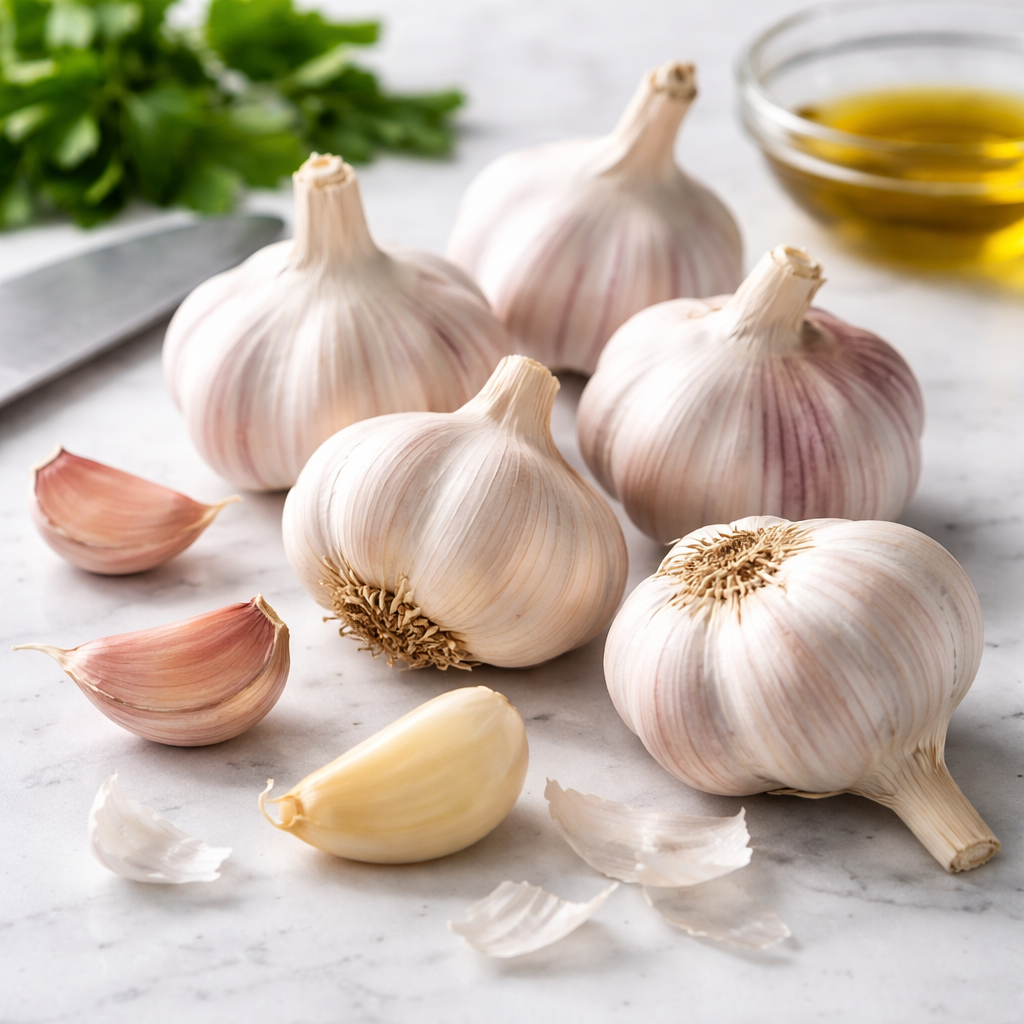
The Big Idea: Garlic Changes Based on How You Break It
Garlic’s flavor comes from compounds that are released when its cells are broken.
The more you break it down:
- the stronger it becomes
- the sharper it tastes
The less you break it:
- the milder it stays
- the more it leans sweet and nutty when cooked
This means:
your knife work is seasoning your food before it even hits the pan.
The Spectrum of Garlic (From Bold → Gentle)
Let’s walk it from most intense to most subtle.
1. Garlic Paste (Microplaned or Crushed)
Flavor: Strong, sharp, immediate
Best for: Marinades, dressings, sauces, rubs
When you turn garlic into a paste, you’re fully breaking down its structure.
This releases maximum flavor compounds
It disperses evenly into whatever you’re making
That’s why it’s perfect for:
- lamb rubs 👀
- vinaigrettes
- garlic-forward sauces
Watch out:
It can burn quickly in a hot pan and turn bitter.
Use it when you want garlic to be present in every bite.
2. Finely Minced Garlic
Flavor: Strong, but slightly more controlled
Best for: Sautéing, sauces, general cooking
This is the most common—and for good reason.
- Still releases strong flavor
- But holds a little structure
- Slightly less aggressive than paste
This is your everyday garlic
Chef tip:
Add it after your oil is hot but before anything browns too much—so it softens, not burns.
3. Thinly Sliced Garlic
Flavor: Mellow, aromatic, slightly sweet
Best for: Pasta, oil infusions, gentle sautéing
Sliced garlic behaves very differently.
- Less surface area broken → less sharp
- Cooks into a soft, slightly sweet flavor
Think:
- aglio e olio
- garlic chips
- infused oils
This is garlic that supports, not dominates.
4. Smashed Garlic (Whole or Lightly Crushed)
Flavor: Subtle, infused, rounded
Best for: Roasting, pan infusions, whole dishes
When you smash garlic:
- you crack it open
- but don’t fully break it down
This releases flavor slowly and gently
Perfect for:
- roasting with meats
- adding to pans for background flavor
- soups and braises
This is how you make something taste like garlic…
without tasting garlicky.
5. Whole Garlic Cloves
Flavor: Very mild → sweet and nutty when cooked
Best for: Roasting, confit, long cooking
Whole garlic is almost a different ingredient.
Roasted slowly, it becomes:
- sweet
- spreadable
- mellow
This is garlic at its most comforting
6. Garlic Powder
Flavor: Even, mellow, slightly savory
Best for: Seasoning blends, dry rubs
This one gets underestimated.
But garlic powder:
- distributes evenly
- doesn’t burn
- gives consistent background flavor
It’s not a replacement—it’s a different tool.
How to Choose the Right One
Instead of asking:
“Should I add garlic?”
Start asking:
“What role do I want garlic to play?”
- Bold and front-and-center → paste
- Balanced and versatile → minced
- Soft and aromatic → sliced
- Subtle and infused → smashed
- Sweet and mellow → whole roasted
- Even and background → powder
The Biggest Mistake People Make
Using the same garlic technique for everything.
That’s like using the same heat level for every dish.
You lose control.
You lose nuance.
And everything starts tasting… the same.
The Shift
When you start thinking about garlic this way, everything changes.
You’re not just adding flavor.
You’re shaping it.
Closing
Next time you reach for garlic, pause for a second.
Not “should I use it?”
But—
how do I want it to show up?
That’s the difference between following a recipe…
and cooking like a chef.
 Brennah Van Wagoner
Weekly Newsletter Contributor since 2025
Email the author! brennah.oaks@gmail.com