
Stop Making Oily Pasta
Hey chefs,
There are certain dishes that feel like they belong on a white tablecloth with a candle flickering nearby — but are secretly weeknight-doable.
Shrimp Scampi with Tomato Crudo is one of them.
It’s fast. It’s bright. It’s elegant.
And it’s a masterclass in sauce control, heat management, and contrast.
Today, I want to teach you how to think about this dish — so you can execute it like a chef every single time.
Because scampi isn’t about complexity.
It’s about precision.
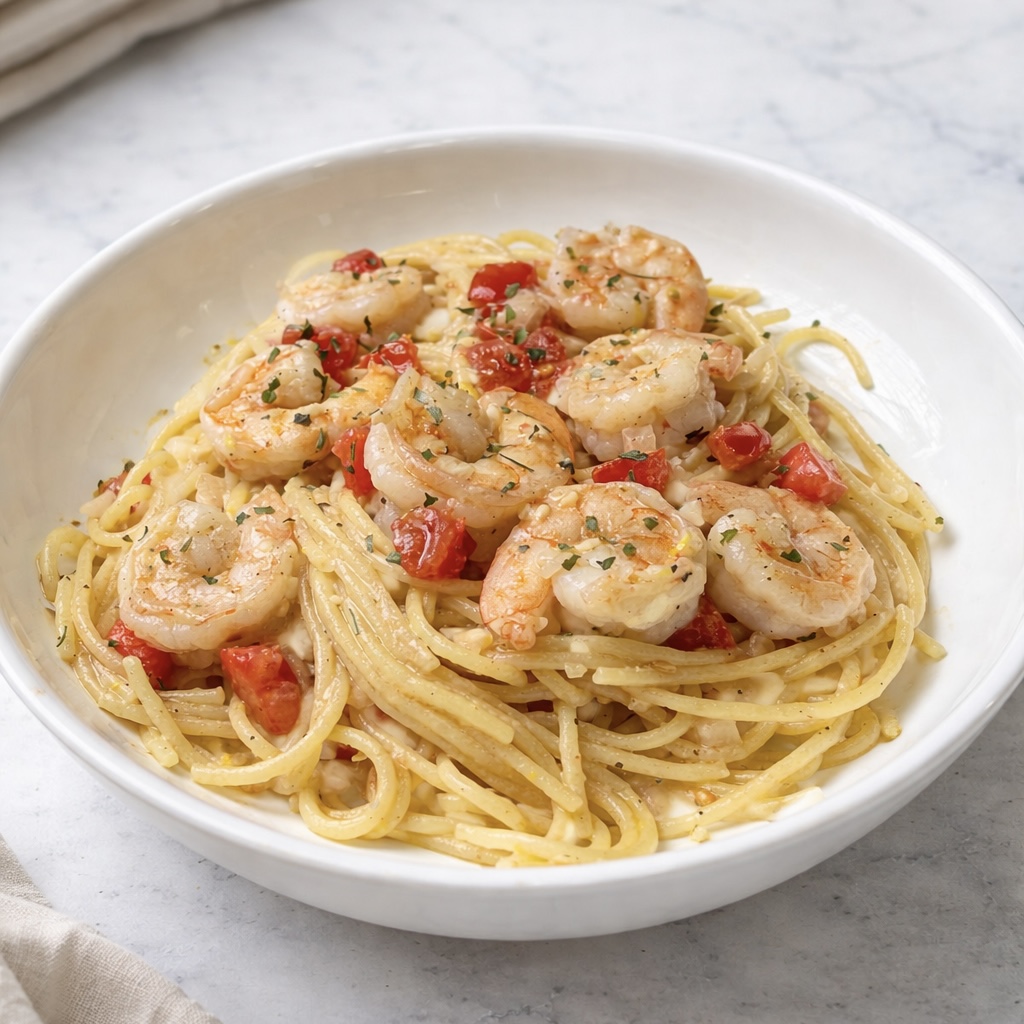
The Soul of Scampi: Emulsion
At its core, shrimp scampi is a butter-wine emulsion.
Not a broth.
Not oily noodles.
Not lemon shrimp swimming in liquid.
An emulsion.
When you combine:
- Butter (fat)
- Pasta water (starch + water)
- Agitation (tossing)
- Controlled heat
You create a glossy, clingy sauce that coats every strand of pasta.
This is the difference between “home cooked” and “restaurant-level.”
General Emulsion Rules (That Apply Everywhere)
You can use these principles in pan sauces, risottos, beurre blanc, even finishing soups:
- Starch is your stabilizer.
Pasta water isn’t optional — it’s structural. - Add fat gradually and off heat at the end.
That final swirl of butter? It thickens and glosses without breaking. - Toss, don’t stir lazily.
Movement activates emulsification. - If it looks greasy, you need more agitation or more starch.
Once you understand this, you’ll never fear a pan sauce again.
Why Tomato Crudo Changes the Game
“Crudo” simply means raw.
In Italian cooking, crudo preparations highlight pristine ingredients with minimal interference.
Here, the tomato crudo does three critical things:
- Acidity Lift – It sharpens the butter sauce.
- Temperature Contrast – Warm pasta + room temp tomatoes = dimension.
- Textural Contrast – Silky noodles meet juicy bite.
And those juices you’re told not to drain?
That’s liquid gold.
They fold into the sauce and create natural brightness without more lemon.
This is contrast theory at work:
- Rich + Acid
- Warm + Cool
- Soft + Juicy
Professional cooking is often just controlled contrast.
General Cooking Tips You Can Apply Anywhere
1. Dry Protein = Better Sear
Water is the enemy of browning.
Whether it’s shrimp, chicken, or scallops:
- Pat completely dry.
- Salt just before cooking.
- Don’t crowd the pan.
Steam is not flavor.
2. “Just Opaque” Is Done
Shrimp go from perfect to rubber in 60 seconds.
Pull them when:
- They’re mostly opaque
- Slightly underdone in the center
- Lightly curled (a tight “O” shape means overcooked)
Residual heat will finish them in the sauce.
3. Control Garlic Heat
Garlic should be fragrant and pale — not golden brown.
Browned garlic turns bitter fast.
If it starts coloring, lower heat immediately.
This rule applies to almost every Mediterranean pan sauce.
4. Salt the Pasta Water Aggressively
It should taste like the sea.
Why? Because it’s your only chance to season the pasta itself — and that seasoning carries into your sauce.
Specific Tips to Make This Recipe Perfect Every Time
Let’s dial in the details.
1. Use a Wide Pan
Surface area matters.
A cramped saucepan won’t reduce wine efficiently or allow proper tossing.
Use your largest sauté pan.
2. Reduce the Wine Properly
Simmer until it reduces by about half and no longer smells sharply alcoholic.
If you rush this, the sauce tastes thin and raw.
3. Undercook the Pasta Slightly
Stop cooking it 1 minute before al dente.
It finishes in the sauce — absorbing flavor and helping bind the emulsion.
4. Add Pasta Directly to the Sauce
Do not rinse.
Do not let it sit in a colander.
Transfer it immediately while hot. The starch clinging to it helps everything come together.
5. Adjust Lemon at the End
Lemon changes as it cooks.
Always add the final lemon juice off heat and taste before adding more. The tomato crudo already contributes acidity.
6. Finish with Fresh Olive Oil
That last drizzle before serving?
Not decoration.
High-quality olive oil adds aroma and fresh fruitiness that cooking dulls.
What This Dish Teaches You
Shrimp Scampi with Tomato Crudo is deceptively simple.
But if you execute it correctly, you’ve practiced:
- Proper protein searing
- Building and reducing a pan sauce
- Emulsifying with starch
- Managing residual heat
- Balancing richness with acid
- Layering temperature and texture
That’s real cooking.
And once you master this framework, you can:
- Swap shrimp for scallops
- Add blistered corn
- Finish with chili oil
- Or turn it into a white wine clam pasta
Technique scales.
Flavor follows.
This is one of those recipes that feels impressive — but it’s really about control, not complexity.
Click here to see the recipe.
Cook it with intention.
And let the sauce get glossy.
 Brennah Van Wagoner
Weekly Newsletter Contributor since 2025
Email the author! brennah.oaks@gmail.com