
NO MORE Sad and Limp Pasta!
I want to share something from one of my favorite food writers, Leah Colins. She’s the Senior Culinary Editor at Serious Eats, and was previously a recipe developer and editor with America's Test Kitchen for almost 9 years. She has developed recipes for and edited over 20 cookbooks, so this gal knows her stuff.
Leah is a pasta expert, too. She says, “If your pasta always turns out a little too soft and a little too sad, there's a good chance you're following the one rule that practically guarantees mushy noodles. The fix is a simple timing trick most people miss. Once you learn it, you'll never have to suffer through overcooked pasta again.”
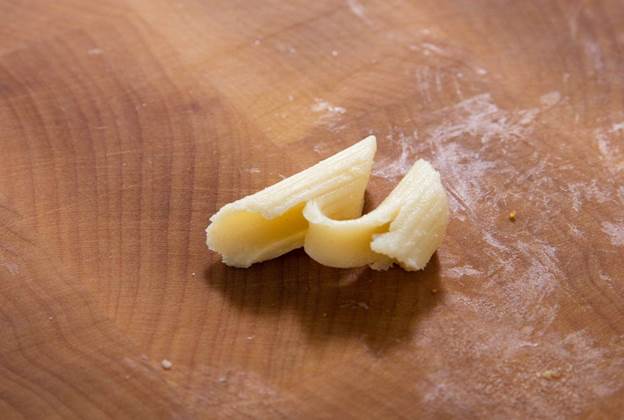
Who hasn’t experienced home-cooked pasta that falls apart at the touch of a fork? Such a sad dining experience. The good news is that there's an easy way to avoid turning out pathetic pasta ever again: DON’T TRUST THE PACKAGE’S INSTRUCTIONS!
Leah’s advice is based on science: As pasta cooks, its starch molecules absorb water, swell, and eventually start to burst, releasing starch into the water. If they cook for too long, those starches will fully gelatinize and break down, turning the noodles soft and waterlogged. That's how you end up with sad, slippery pasta that the sauce can't cling to.
But if you pull your pasta earlier, while those starch molecules are still partially intact, they'll hold their structure and then, when you finish cooking the pasta in the sauce, release just enough starch into that sauce to bind everything together without breaking apart.
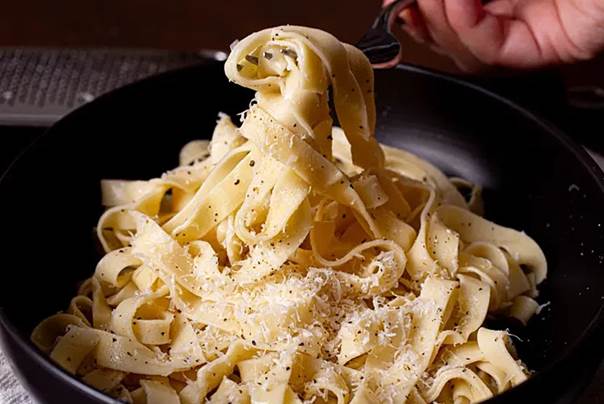
That's how you get a glossy, restaurant-quality emulsion of the sauce, the pasta's surface starches, and a bit of the starchy cooking water that makes every strand of spaghetti look kissed by the sauce, not just splashed with it. But you need perfect timing to reach this perfect consistency.
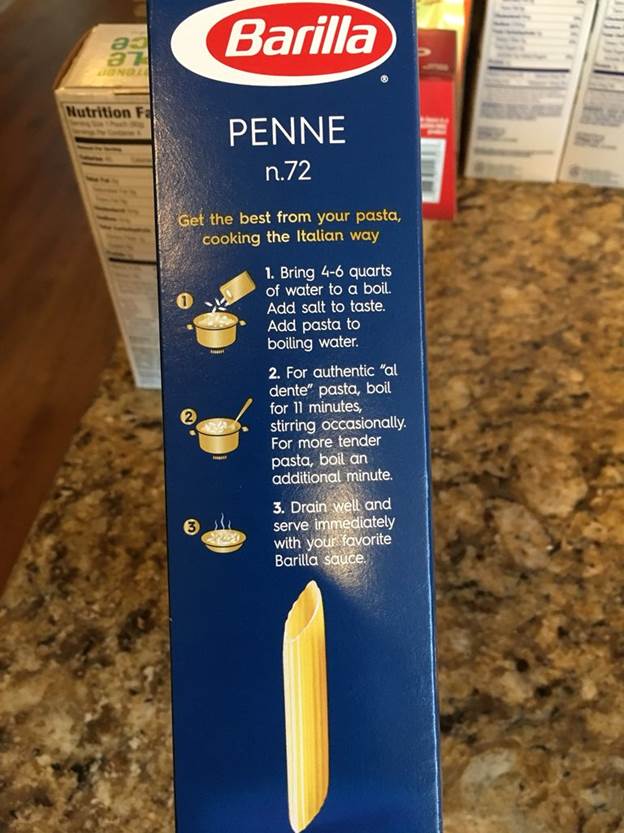
Those cooking times on the package (next to "al dente") look official, but think of them more as guidelines. These times are calibrated for pasta that's drained and served immediately—not for pasta that finishes cooking in the sauce, which is the method preferred by most professional chefs.
Leah says, “Manufacturers test their times for what they consider "fully cooked"—that soft, uniform texture which, in reality, is edging toward overdone. They can't predict whether you'll toss your noodles in a bubbling sauce or dump them into cold salad dressing, so they err on the side of too safe, which usually means too soft.”
To let the pasta finish cooking in its sauce improves not just texture, but flavor, too. In a nutshell, when you finish pasta in sauce, the noodles absorb some of that sauce as they cook, release starch back into it, and the two merge into one cohesive dish.
This method is used especially for spaghetti with fresh garlic and tomato sauce, pasta with clams, creamy mushroom pasta, and lots more recipes. HOWEVER, if you're making a cold pasta salad or a baked dish like ziti or lasagna, then you’ll want to follow the recipe's directions instead.
With the science piece understood, let’s look at the specifics for perfectly cooked pasta meant for sauce:
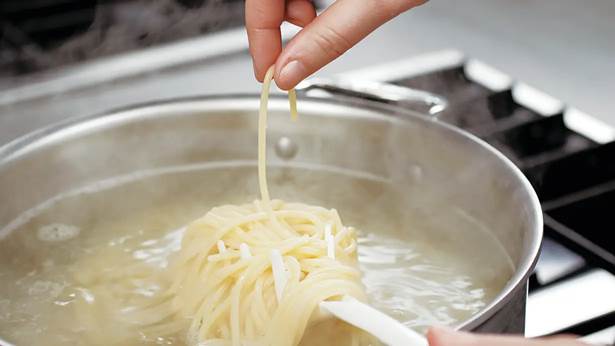
· Taste early, taste often.
· STOP BEFORE IT’S DONE.
· Pull your pasta a full one to two minutes earlier than the package suggests, even a hair before al dente. When you taste, the center should have a faint resistance, that subtle core of firmness that tells you it's not quite there yet. No crunch, just a little push-back with some spring, a hint of defiance.
· Trust the process—since pasta keeps cooking it’s drained, it will continue to cook in that last stretch (as it simmers with its sauce)—so it’s critical to get it out of the water early.
· Transfer the pasta straight into your simmering sauce. Don't drain and rinse, don't wait, don't let it sit in a colander cooling. That final minute or two of simmering together is essential.
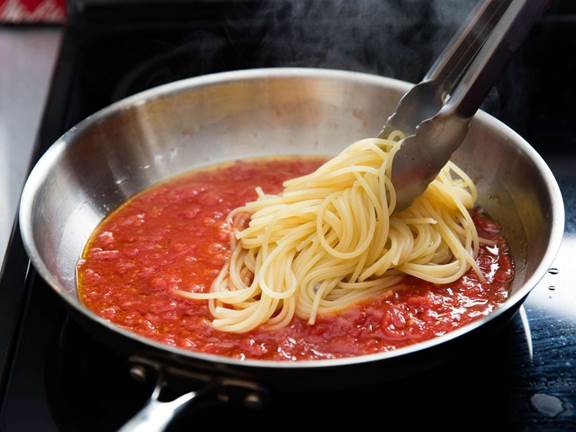
So, to sum up, three crucial things occur during that short window, and I’ll close with them. First, the pasta absorbs some of the sauce's liquid and seasoning. Next, it releases starch, helping the sauce tighten up and cling to each strand. And then the noodles finish cooking evenly, ending up tender, not mushy. Music to our pasta-loving ears, yes? Sad and mushy NO MORE!
 Alice Osborne
Weekly Newsletter Contributor since 2006
Email the author! alice@dvo.com