
January is Cold. Your Food Should Be Warm
hey chefs,
January is not the time for punishment food.
It’s the time for warm bowls, deep flavor, and meals that feel grounding instead of restrictive.
One of the biggest things culinary school taught me is that comfort doesn’t come from excess. It comes from temperature, texture, and balance. When those three things are right, food feels indulgent even when it’s simple.
That’s why chefs lean so heavily on soup in winter. Not because it’s light or virtuous — but because it’s one of the most efficient ways to build satisfaction.
Let’s talk about how to make soups that are actually great.
The Anatomy of a Great Soup (Chef Rules)
1. Start with a real flavor base
Every great soup begins the same way: fat + aromatics + patience.
Onions, leeks, garlic, shallots — whatever you’re using — need time. You’re not just softening vegetables; you’re building sweetness and depth. Rushing this step is the fastest way to end up with a flat soup.
Chef rule: If the pot doesn’t smell incredible before liquid goes in, slow down.
2. Depth comes from layering, not piling on ingredients
Great soups don’t need a long ingredient list. They need layers.
That means:
- Browning vegetables before adding liquid
- Adding herbs early for infusion, then again at the end for freshness
- Seasoning gradually instead of dumping salt at the finish
This is how soups taste “complex” without being heavy.
3. Texture matters more than calories
This is where a lot of January cooking goes wrong.
Soups feel satisfying because of mouthfeel, not fat content alone. Think:
- Chewy grains (barley, farro, rice)
- Creaminess from starch release
- Contrast between tender and slightly firm components
When texture is right, you don’t need to overcompensate with cream or cheese.
4. Warm food changes how we experience flavor
Temperature affects perception more than most people realize.
Warm foods:
- Taste richer
- Smell more aromatic
- Feel more comforting psychologically
This is why soups are such powerful winter food. They hit both the sensory and emotional notes without trying too hard.
5. Finish with intention
Professional kitchens always finish soups, even simple ones.
A final adjustment might be:
- A splash of acid
- Fresh herbs
- A drizzle of oil
- Cracked black pepper
That last 30 seconds is what takes soup from “fine” to “wow.”
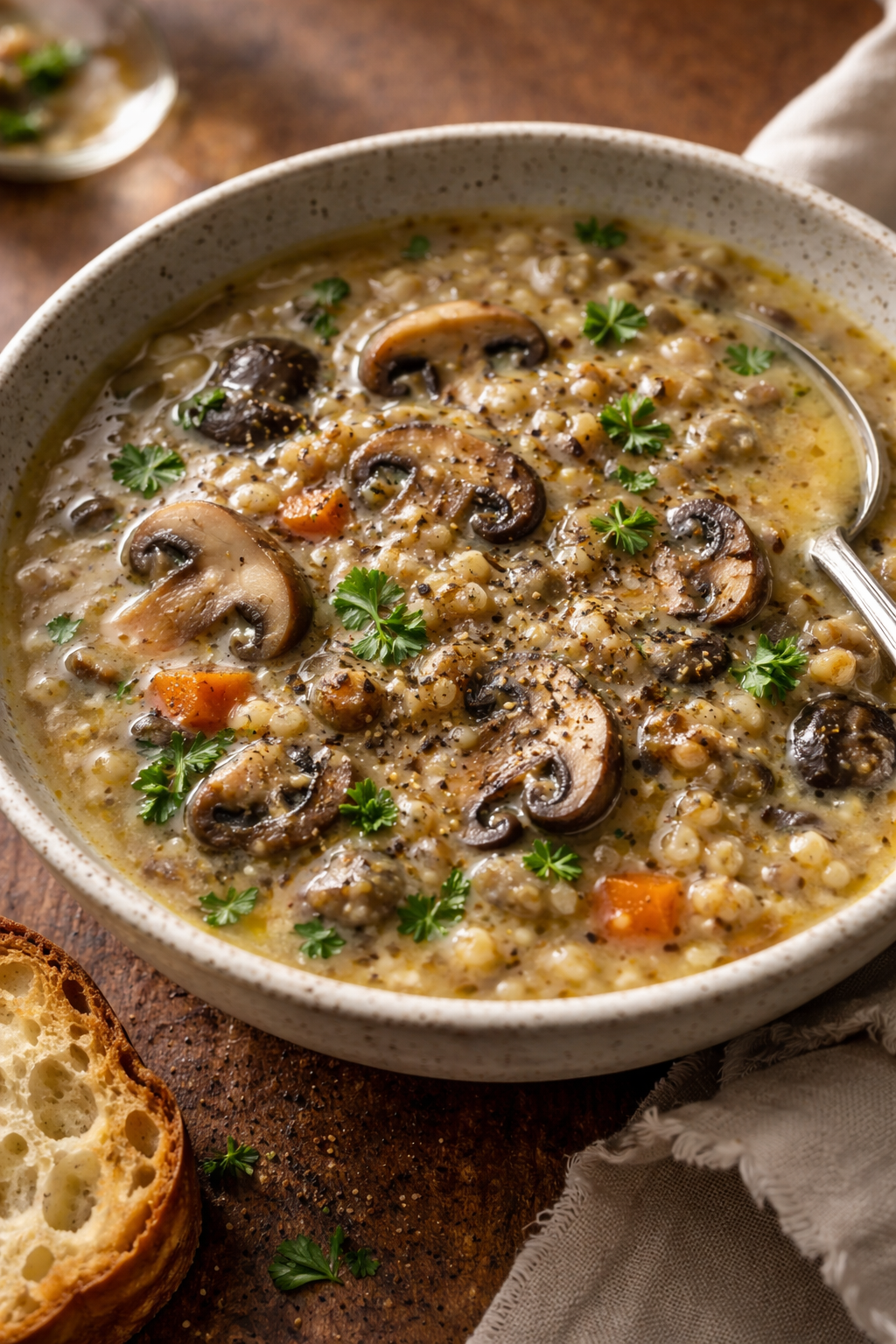
Applying This to Creamy Mushroom & Barley Soup
This week’s soup is a perfect example of how these principles come together.
Chef tips specific to this soup:
- Brown the mushrooms properly.
Don’t crowd the pan and don’t rush it. You want moisture to release and evaporate so the mushrooms actually develop flavor. - Let barley do the work.
As it cooks, barley releases starch that naturally thickens the soup. This creates a creamy texture without needing much dairy. - Use cream as a rounding agent, not a crutch.
A small amount at the end softens edges and enhances richness without overwhelming the soup. - Season in stages.
Salt the onions. Taste after the mushrooms. Adjust again after the barley is tender. This builds depth instead of blunt saltiness. - This soup loves a rest.
Like most grain-based soups, it gets better after a night in the fridge as flavors meld and texture settles.
January food should feel warm, thoughtful, and grounding — not restrictive or joyless.
Soup does that better than almost anything else.
Click here to see this week's recipe.
Once you understand why this soup works, you can start building great soups with whatever you have on hand — and that’s where real confidence in the kitchen begins.
 Brennah Van Wagoner
Weekly Newsletter Contributor since 2025
Email the author! brennah.oaks@gmail.com