
Tender and Juicy Bites are the Promise!
Have you noticed that you tend to eat more meat in the winter than you do in the summer? Research says it’s so. We eat more protein-rich, heavy foods like meat in winter because our bodies crave energy to generate heat (thermogenesis), combat lower serotonin from less sunlight, and support a slightly slower metabolism, while also fulfilling psychological needs for warmth and comfort.

Meat. It’s what the body wants. But how do you support this want and stay within your grocery budget? As I’ve been trying to figure this out, I was really grateful for an answer that came to me via Jillee’s newsletter, www.onegoodthingbyjillee.com. She suggests we meet this need by buying cheaper cuts of meat. Well sure, but how do you cook them so they’re EDIBLE?
She had that answer as well: As you savvy Cook’n readers likely already know, it’s all about tenderizing. Jillee says we only need two “secret” ingredients: salt and time (and probably patience). In fact, this is such a tried-and-true method, that there’s even a cookbook by this name that’s loaded with recipes for applying this technique.

Professional chefs world-wide consider using salt the best way to tenderize cheaper meat cuts. They say this process, also referred to as “dry brining,” causes a miraculous, tenderizing transformation! Salting before cooking will turn a tough cut of meat super tender and juicy, even if you start with thin or cheaper cuts of steak.
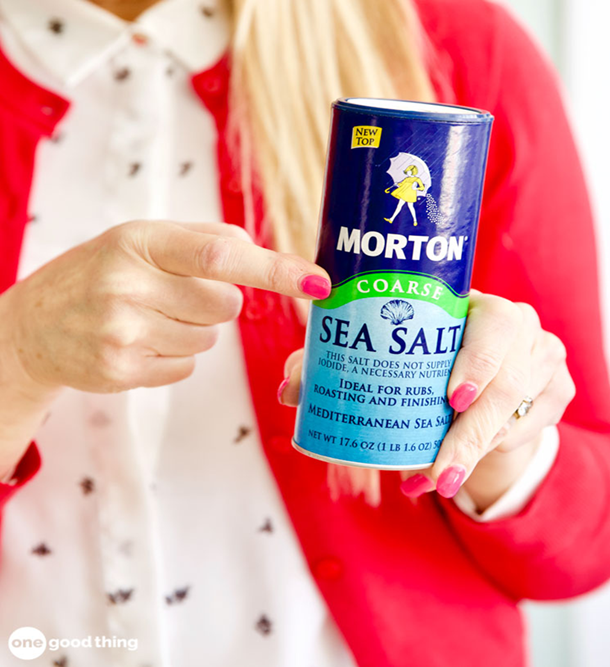
But not just any salt will do. Standard table salt won’t cut it. We need to use a coarse sea salt or kosher salt to achieve the best results. Coarse salt helps create the briny solution that will break down the proteins and muscle fibers in the meat for maximum tenderness.
It seems counter-intuitive, though. Doesn’t salt dry stuff out? Yes. However, the effect of salting any food is largely a matter of timing.
Over a short period of time, like an hour or even overnight, coarse salt will draw out some of a steak’s natural moisture. That liquid will dissolve the salt and form a brine, and once that brine is reabsorbed, it will tenderize and flavor the meat.
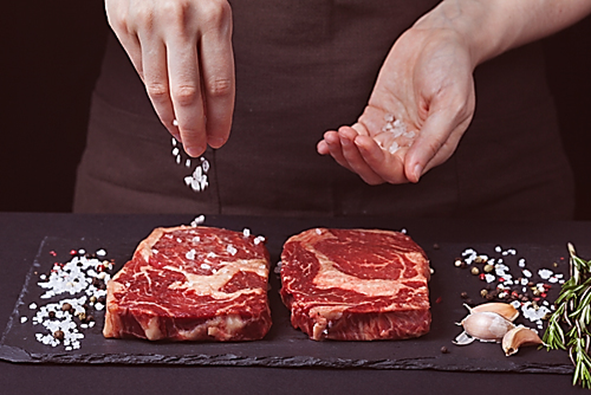
If the steak is left for a long period of time in the brine (like a few weeks or even months), the salt would eventually pull all of the moisture out of the meat, curing and preserving it in the process. Amazing, yes?
So start tenderizing—dry brining—your meat by arranging it on a plate, then cover all sides with about 1 teaspoon of coarse salt. This is a good time to add any seasonings, too. Crushed garlic, for instance. Use your fingers to press the salt (and garlic, if using) into the surface of the meat.
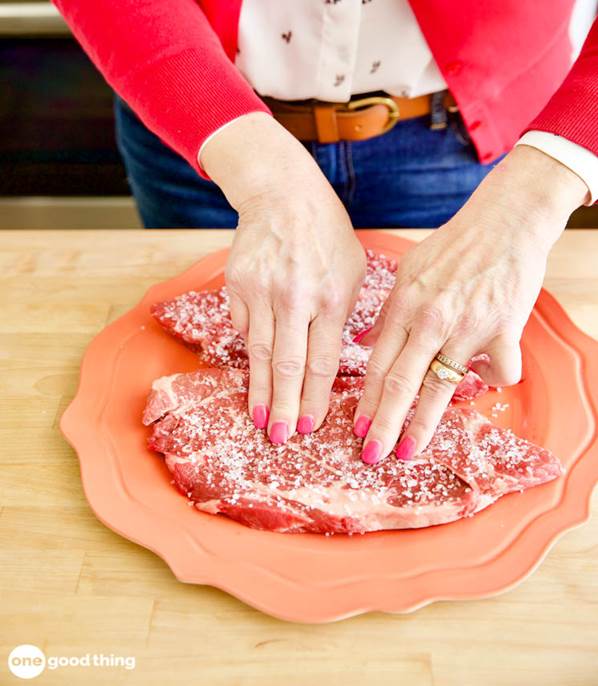
Let the meat sit for 45 minutes to an hour before cooking, or longer for thicker cuts. (This process is quick enough to do at room temperature, but there’s nothing wrong with refrigerating your steaks while dry brining them, if you prefer.)
After the wait, use a few paper towels to wipe the remaining salt off the steaks and pat them dry. It’s not recommended that you rinse them, as rinsing raw meat risks spreading bacteria all over your sink. Be sure to dry both sides of the steak thoroughly, so that you can get a delicious, crispy sear.
From here, just follow your recipe’s directions regarding cook time, etc. Tender and juicy bites are the promise!
 Alice Osborne
Weekly Newsletter Contributor since 2006
Email the author! alice@dvo.com