
Here’s a Question For Ya…
Do we REALLY need to wash rice prior to cooking it? Here’s the lowdown from the food researchers at www.seriouseats.com, and I’m pretty much quoting:
Before modern milling made rice the tidy, uniform product we buy today, rinsing served a very pragmatic purpose: It was basic housekeeping. Rice traveled long distances in burlap sacks, picked up dust along the way, and often contained bits of bran, husk, and field debris.

Washing wasn't a technique so much as a necessary cleanup step—like rinsing produce before eating it. In many parts of the world, especially in Asia, that habit became so ingrained that "wash the rice" wasn't a recipe instruction so much as cultural muscle memory.
Today, though, our situation is very different. Industrial milling and polishing remove the bran far more efficiently than old stone mills ever did. And high-speed optical sorters scan individual grains for defects with almost absurd precision. By the time a bag of rice reaches us, it's already cleaner than anything our great-grandparents could have imagined.
OK, so back to the question: If modern rice is clean, do we really need to wash it prior to cooking it? Fact is, research shows many, if not most cooks—myself included—still rinse it. But do we NEED to?
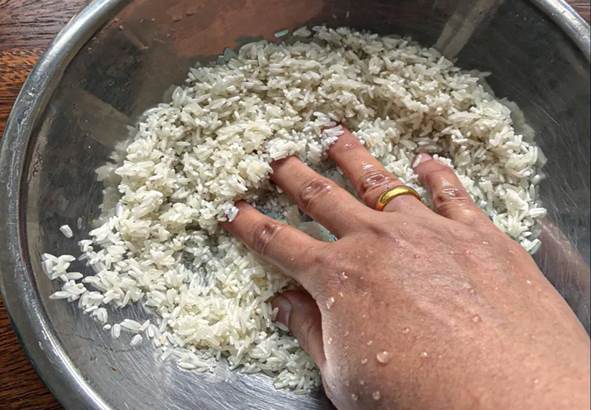
Well, yes. While we're no longer washing any dirt off, we are washing away surface starch. This is that fine, powdery layer formed during milling and transport (when grains rub against each other). That starch dissolves into the cooking water, which experience proves can make rice clump, stick, or turn unexpectedly gummy. Rinsing removes this loose starch and, for many varieties, it helps grains cook more evenly by preventing patchy hydration.
Once we understand that rinsing is really about managing surface starch, not dirt, the next obvious question is how much rinsing is enough? The old advice to rinse rice "until the water runs clear" is basically impossible—the water never turns truly clear, just progressively less cloudy until you give up.
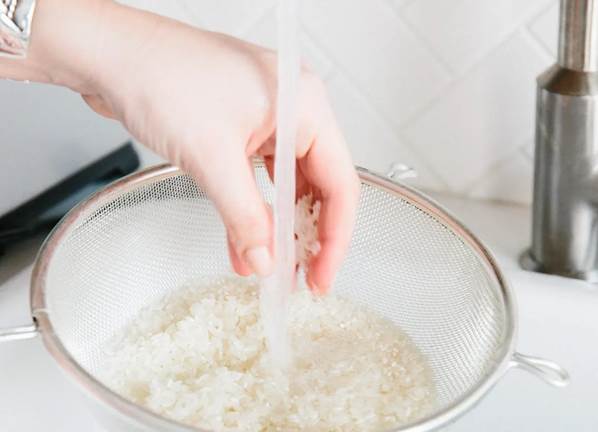
Washing rice shouldn't feel like a futile, endless, laborious task. Ease and practicality is what we want. The standard is three to four quick rinses with just enough agitation to lift the milky, powdery starch off the grains and send it swirling down the drain. During the first rinse, you'll see that your hand comes out coated in a thin white slurry—that's the loose starch layer.
The experts at Zojirushi suggest this: “After the first two rinses, drain the water completely. Then, using your finger pads, quickly stir the wet rice about 30 times in a circular motion without water. That little burst of friction dislodges the starch hiding between the grains far better than endless rinsing ever could. When you add water again, you'll usually get a much clearer rinse in just one or two passes.”
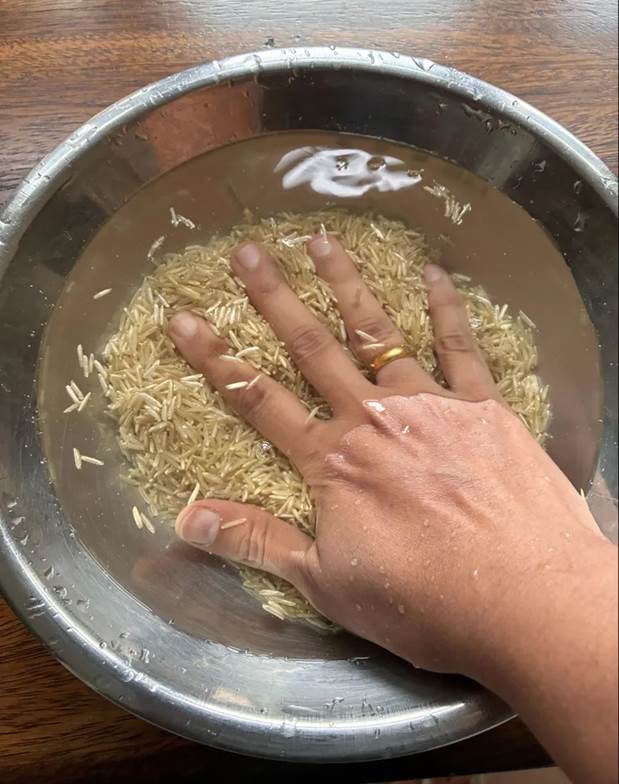
One final note: brown rice behaves differently. Because the bran layer stays intact, very little starch escapes into the water. The bowl stays almost crystal clear from the first rinse, and there's no need for the swish-and-stir technique. So one quick rinse is all you need.
Good information, right? We can save ourselves a little time in 2026 by not spending “forever” rinsing, rinsing, rinsing, rinsing… You get the idea!
 Alice Osborne
Weekly Newsletter Contributor since 2006
Email the author! alice@dvo.com