
Dry January, Chef-Approved
Hey chefs,
In honor of Dry January, I thought we’d talk about an often-overlooked corner of the culinary world: drinks.
While I was in culinary school, I had the chance to attend a mixology class, and it completely reframed how I think about beverages. Not as an afterthought. Not as something sweet you throw in a glass. But as a constructed dish — one built on balance, structure, and intention, just like anything coming out of the kitchen.
And here’s the good news: everything we learned applies just as beautifully to mocktails.
Whether you don’t drink alcohol at all, are taking a break this month, or simply want drinks that feel just as thoughtful as the food you’re serving, mocktails deserve the same care and creativity as cocktails. So let’s talk mixology basics, chef-approved flavor patterns, and how to start building your own fantastic non-alcoholic drinks — no Pinterest fluff required.
Think Like a Chef, Not a Bartender
One of the biggest takeaways from mixology class was this:
Great drinks follow the same rules as great food.
You’re balancing:
- Sweet
- Acid
- Bitterness
- Dilution
- Aroma
- Texture
If a drink tastes flat, it’s usually missing acid or bitterness.
If it tastes harsh, it needs sweetness or dilution.
If it feels boring, it probably lacks aromatics or texture.
Sound familiar? It’s the same reason we finish dishes with acid, add salt thoughtfully, and care about mouthfeel.
The Mocktail Formula (That Actually Works)
Instead of thinking in recipes, think in components:
1. The Base (Body & Flavor)
This is what gives your drink substance.
- Brewed tea (black, green, herbal, hibiscus)
- Fresh juice (citrus, pomegranate, apple, pear)
- Coconut water
- Cold-pressed vegetable juice (cucumber, carrot, beet)
Chef tip: Tea is wildly underused in mocktails and adds complexity without sweetness.
2. Acid (Brightness & Balance)
Every good drink needs acid.
- Lemon or lime juice
- Orange or grapefruit juice
- Shrubs (vinegar-based syrups)
- A splash of kombucha
If your drink tastes “meh,” add acid before adding sugar.
3. Sweetness (Restraint Is Key)
Sweetness should support, not dominate.
- Honey syrup (1:1 honey + warm water)
- Simple syrup
- Maple syrup
- Date syrup
- Fruit purées
Start with less than you think you need. You can always add more.
4. Bitterness & Depth
This is what keeps drinks from tasting juvenile.
- Tonic water
- Unsweetened cranberry juice
- Non-alcoholic bitters
- Citrus peel expressed over the glass
- Herbal infusions (rosemary, thyme, bay)
5. Aromatics & Garnish (Don’t Skip This)
A drink is smelled before it’s tasted.
- Fresh herbs
- Citrus twists
- Ginger slices
- Edible flowers
- Spices like star anise or cardamom
This isn’t just decoration — it’s flavor delivery.
Chef-Approved Flavor Pairings (That Rarely Fail)
Here are a few combinations I return to again and again:
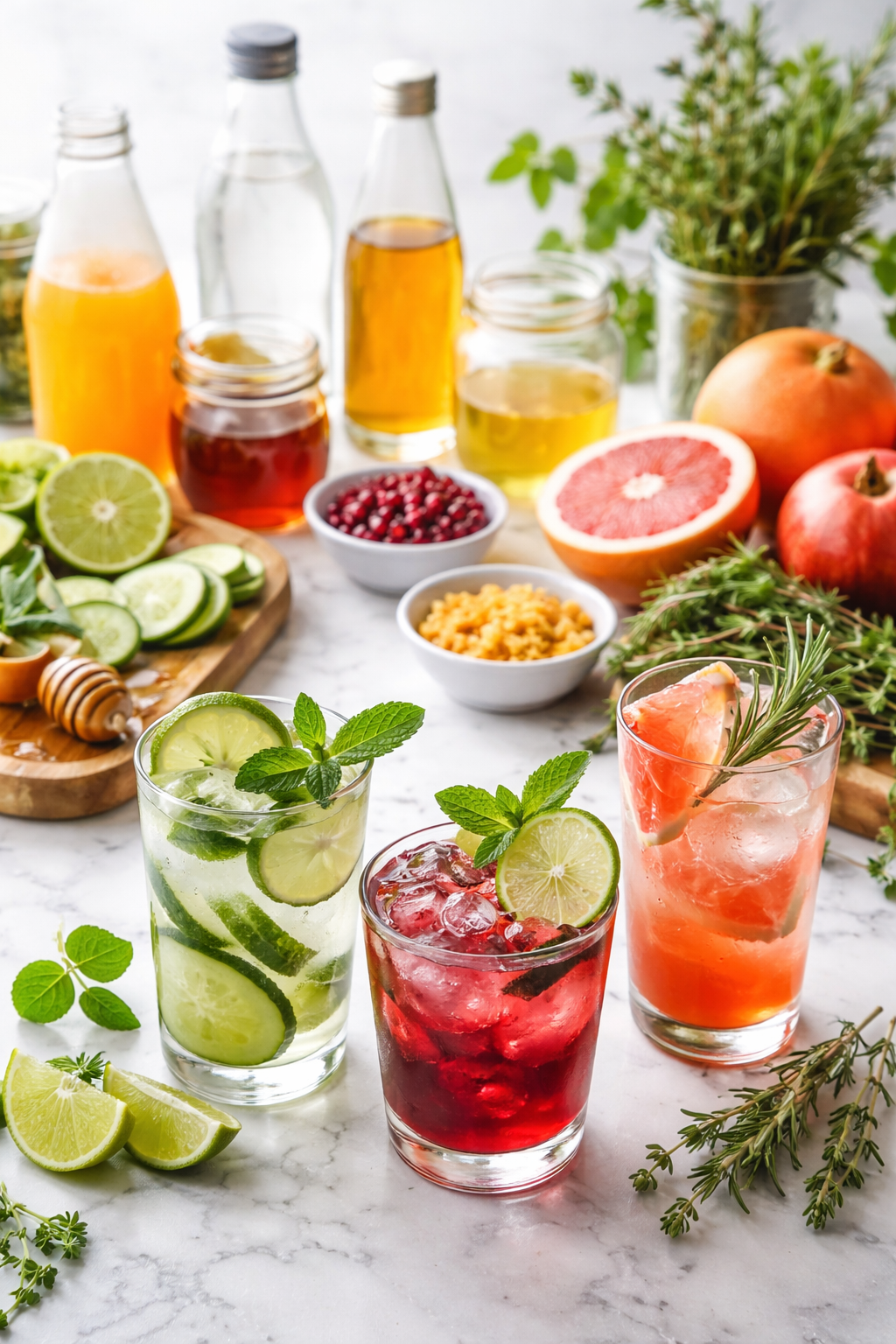
- Grapefruit + Rosemary + Honey
Bright, slightly bitter, incredibly balanced - Cucumber + Lime + Mint
Clean, refreshing, and endlessly drinkable - Apple + Ginger + Lemon
Cozy but sharp — great for winter mocktails - Pomegranate + Orange + Thyme
Deep, festive, and complex without being sweet
Structured and grounding, almost wine-like in feel
My Favorite Simple Mocktail Build
One of my go-to “impress without effort” drinks:
- Strongly brewed hibiscus tea, chilled
- Fresh lime juice
- Honey syrup
- Splash of sparkling water
- Lime wheel + fresh mint
It hits tart, floral, sweet, and refreshing — and it feels intentional, not like juice in a fancy glass.
Final Thought: Treat Drinks Like Dishes
Mocktails aren’t about pretending to drink alcohol. They’re about applying culinary thinking to beverages.
When you approach drinks the same way you approach food — tasting as you go, adjusting balance, caring about aroma and texture — you end up with something that feels complete, celebratory, and deeply satisfying.
And honestly? Once you start thinking this way, it’s hard to go back.
Cheers (with or without alcohol)
 Brennah Van Wagoner
Weekly Newsletter Contributor since 2025
Email the author! brennah.oaks@gmail.com