
How Professional Kitchens Avoid Dinner Burnout
hey chefs,
If cooking feels weirdly exhausting right now—even though you technically have food—you’re not imagining it. This week after Christmas is chaotic by nature. Schedules are off, people are home at odd hours, leftovers are half-used, and no one wants a whole production for dinner.
Here’s the professional shift that saves this week every time:
Stop cooking full meals. Cook components instead.
This isn’t a shortcut. It’s not lazy.
It’s how real kitchens actually function.
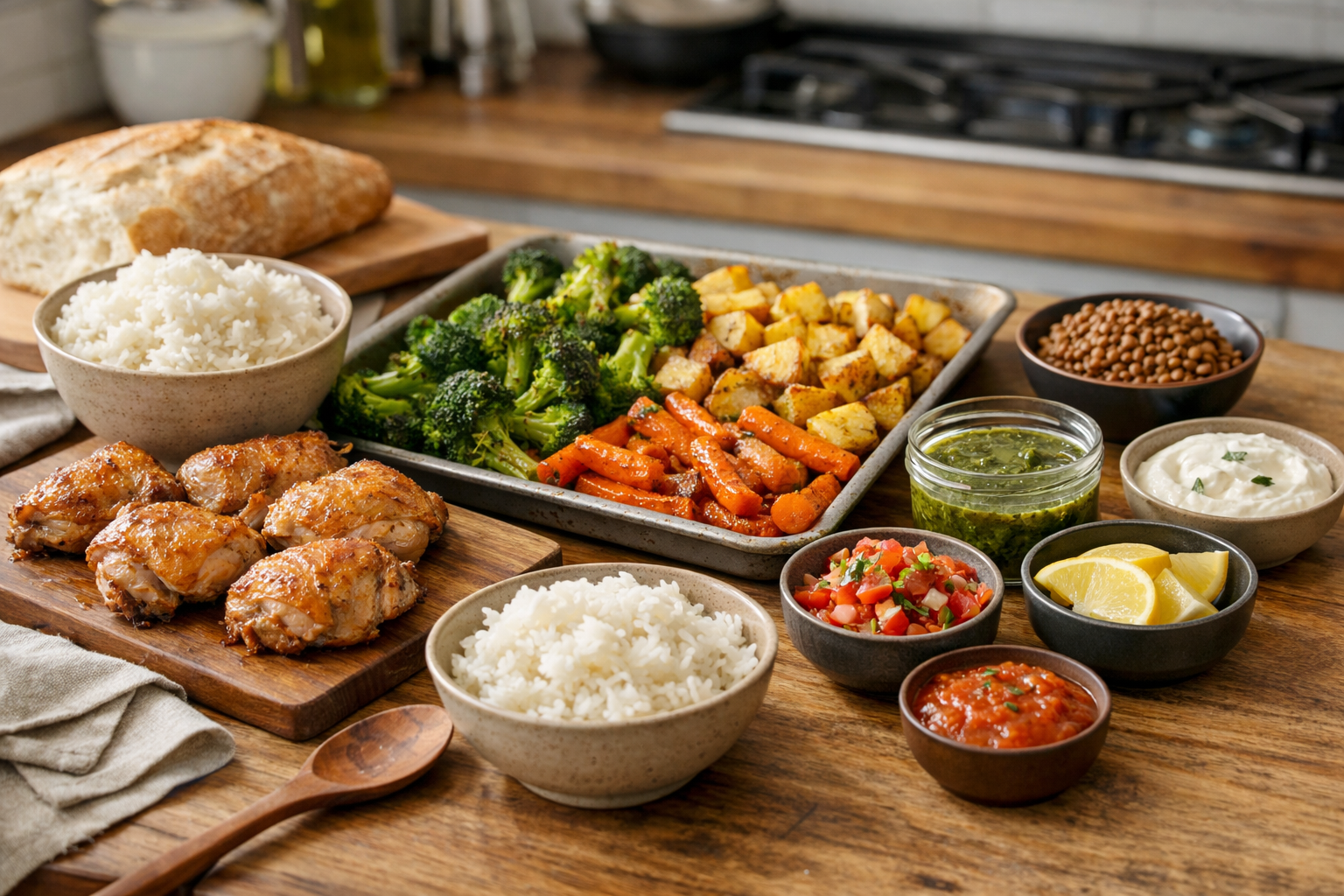
What “Cooking Components” Means (and Why It Works)
Instead of deciding what dinner is, you cook a few flexible building blocks:
- One protein
- One vegetable
- One starch
- One finishing element (sauce, dressing, herb, acid)
That’s it.
Restaurants don’t cook “a meal” from scratch every night. They cook mise en place—prepared components that can be assembled quickly depending on what’s needed in the moment. This week, your home kitchen needs the same energy.
Why it works especially well right now:
- People eat at different times
- Appetites are inconsistent
- Energy is low
- Decision fatigue is high
Components let dinner happen without pressure.
How to Do This Like a Pro (Not Meal Prep in Disguise)
The key is neutral seasoning.
Cook your components simply so they can go multiple directions later.
1. Pick a Protein (and don’t overthink it)
- Roast chicken thighs
- Brown ground beef or turkey
- Slow-cook a pot of beans or lentils
- Bake tofu or fish
Season with salt, pepper, maybe garlic or onion.
Save bold flavors for later.
2. Roast or Sauté One Big Vegetable
- Carrots, broccoli, cabbage, squash, peppers
- Olive oil + salt
- Roast until deeply flavorful
Vegetables that are already cooked become instant meals later.
3. Make One Starch (Optional but Helpful)
- Rice
- Potatoes
- Pasta
- Bread
You don’t need a mountain—just enough to anchor meals.
4. Finish Later (This Is Where the Magic Is)
This is the chef trick most home cooks miss.
You don’t flavor everything at once.
You finish to order.
Examples:
- Lemon + olive oil
- Yogurt sauce
- Chili oil
- Salsa
- Vinaigrette
- Cheese + herbs
Same chicken, three completely different dinners.
What This Looks Like Over a Few Days
- Day 1: Chicken + roasted veg + rice
- Day 2: Chicken tacos with salsa and lime
- Day 3: Soup made from leftover chicken, veg, and broth
- Day 4: Grain bowl with sauce and greens
You cooked once. You ate many times.
No one feels like they’re eating leftovers.
No one had to plan a whole week.
Why This Is Better Than Traditional Meal Prep (Especially This Week)
Meal prep assumes:
- You know what you’ll want
- You’ll eat at the same time
- You want repetition
Component cooking assumes:
- Life is unpredictable
- Appetites change
- Flexibility matters
It gives you structure without commitment—which is exactly what this in-between week calls for.
A Note on Expectations (Read This Twice)
This week is not about:
- Perfect nutrition
- A clean slate
- Reinventing your cooking habits
It’s about feeding yourself well enough to land gently.
Cooking components keeps you eating real food without demanding your full attention—and that’s a win.
How I Use Cook’n for This (Without Planning a Whole Week)
This is one of my favorite times to use Cook’n.
Instead of planning meals, I:
- Save a few flexible recipes
- Pull ideas based on ingredients I already have
- Decide at the moment how to finish what’s cooked
No rigid plan. No guilt. Just support when my brain is tired.
If this week feels fuzzy and dinner feels heavy—try cooking components instead of meals.
You’ll eat better, waste less food, and give yourself permission to rest.
And honestly?
That’s exactly what this week is for.
 Brennah Van Wagoner
Weekly Newsletter Contributor since 2025
Email the author! brennah.oaks@gmail.com