
Bright, Fresh, and Layered: My Favorite Spring Cake
Hey chefs,
It’s officially spring—and some of my favorite fruits are finally back in season and showing up on sale. One of my absolute favorites this time of year is the Cara Cara orange.
Oranges are one of those ingredients we tend to lump into a single category, but from a culinary perspective, they behave very differently depending on the variety. Understanding that difference is what takes something from “good” to intentional.
A Quick Guide to Common Orange Varieties
- Cara Cara oranges – Naturally pink flesh, low acidity, very sweet, almost berry-like. Incredible for desserts because they don’t fight with sugar—they support it.
- Blood oranges – Deeper, more complex flavor with slight bitterness and raspberry notes. Beautiful, but can overpower delicate desserts.
- Navel oranges – Classic, balanced citrus. Great all-purpose option, but less aromatic and visually striking.
- Mandarins / Clementines – Super sweet, low acid, easy to peel. Best for snacking or light applications rather than structured desserts.
- Valencia oranges – Higher acidity, juicier, ideal for juicing and cooking where you want brightness to cut richness.
For this recipe, Cara Cara is doing something very specific: it gives us color, sweetness, and softness without adding harsh acidity. That’s what allows the entire dessert to feel light and elegant instead of sharp or aggressive.
I love Cara Cara oranges for their beautiful pink hue and gentle sweetness. And crepes? They’ve been one of my favorite foods for as long as I can remember.
In fact, crepes were the first thing I ever learned to cook. I memorized the recipe as a kid and made them constantly. One time I tripled the recipe to feed all my cousins—and instead of adding 6 cups of flour, I mistakenly added 6 cups of powdered sugar.
And you know what?
They were amazing.
That was my first recipe development moment. While it was a complete accident, this crepe cake is nothing but intentional.
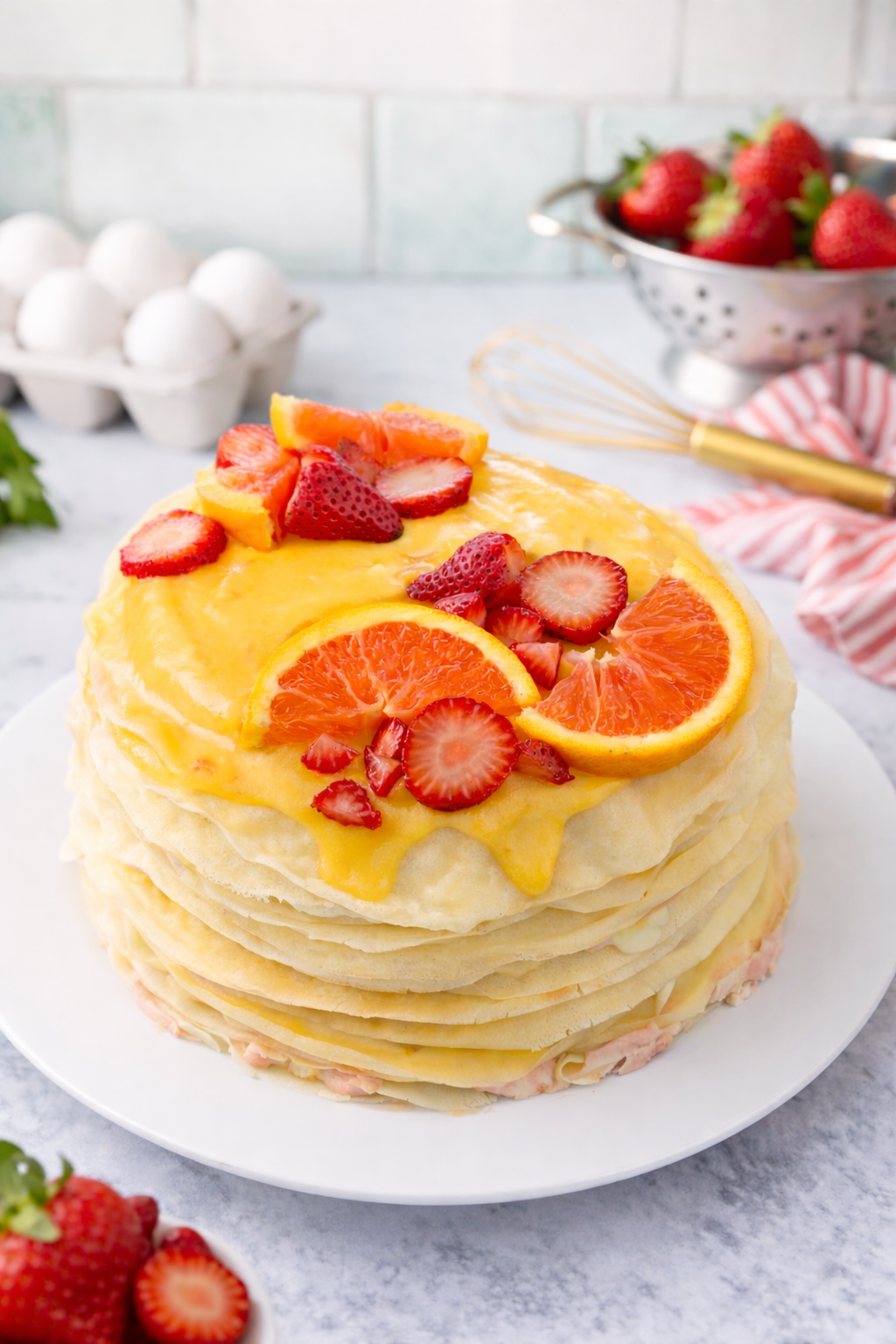
Let’s Talk Crepes (Because They Matter More Than You Think)
Crepes come from France, traditionally served either sweet (crêpes sucrées) or savory (crêpes salées). At their core, they’re incredibly simple—but technique is everything.
Here’s what’s actually happening:
- Resting the batter isn’t optional—it hydrates the flour and relaxes gluten, giving you tender, flexible crepes instead of rubbery ones.
- Thinness is the goal – You’re building layers, not pancakes. Think delicate sheets, not structure.
- Low, controlled heat keeps them soft and pliable. If they crisp, they won’t layer cleanly.
A perfect crepe should feel almost like fabric—soft, flexible, and just sturdy enough to hold filling.
Mille Crêpe Cake: Where Technique Becomes Art
“Mille crêpe” literally means a thousand crepes—which is dramatic, but accurate in spirit.
This style of cake is all about:
- Precision layering
- Consistent thickness
- Balance between structure and softness
Unlike a traditional cake, there’s no crumb to hold everything together. Your stability comes from:
- Even crepes
- Properly structured fillings
- Chill time (this is what transforms it from stacked pancakes into a sliceable cake)
When done correctly, you get that signature striped, almost architectural cross-section—and in this recipe, those stripes alternate between strawberry and orange.
The Fillings: Where the Real Culinary Work Happens
This cake is secretly a masterclass in custards and emulsions.
Orange Curd (Silk + Shine)
- Cooked gently to thicken eggs without scrambling
- Finished with butter for richness and gloss
- Strained for a perfectly smooth texture
What you’re building here is a stable emulsion—fat and liquid held together in a silky suspension. That’s what gives you that glassy finish on top.
Strawberry Pastry Cream (Structure + Body)
- Thickened with cornstarch for stability
- Balanced with real fruit purée
- Cooked until glossy and fully activated
This is what gives the cake sliceability.
Diplomat Cream (The Secret to Lightness)
Both fillings are turned into diplomat cream by folding in whipped cream.
This step is where a lot of people go wrong.
- If your base (curd or pastry cream) is too cold and stiff → you’ll get lumps
- If your whipped cream is too stiff → it won’t incorporate smoothly
- If you fold too aggressively → you lose all the air
The goal is something that feels like:
a mousse, but more stable
Light enough to keep the cake delicate, but structured enough to hold clean layers.
The Assembly: Controlled, Not Rushed
This cake rewards patience.
A few key professional habits to keep in mind:
- Alternate fillings intentionally → this is what creates the visual pattern
- Press lightly every few layers → keeps things level without squeezing out filling
- Chill when needed → if it feels unstable, stop and reset
And most importantly:
The final chill is not optional.
That 4–6 hour rest (ideally overnight) is when everything sets, hydrates, and becomes sliceable.
Why This Cake Works
This isn’t just a pretty dessert—it’s balanced on multiple levels:
- Flavor: sweet strawberry + soft citrus + creamy richness
- Texture: tender crepes + airy fillings + silky curd
- Visual: natural pinks, oranges, and soft spring tones
- Structure: light, but stable enough to slice cleanly
It’s one of those desserts that feels impressive—but if you understand the why behind each step, it becomes completely approachable.
Final Thought
This cake is spring on a plate.
It’s fresh, bright, layered, and just a little bit nostalgic—for me, at least. Somewhere between childhood crepes and culinary school technique, this is exactly the kind of dessert I love making this time of year.
Click here for the full recipe—take your time with it, enjoy the process, and lean into the details. That’s where the magic lives.
 Brennah Van Wagoner
Weekly Newsletter Contributor since 2025
Email the author! brennah.oaks@gmail.com