
Salads, But Make Them Worth It
Hey chefs,
Let’s talk about something that should be easy this time of year… but somehow isn’t:
Spring salads.
Because here’s the truth—most spring salads are boring.
Not because the ingredients are bad (they’re incredible right now), but because they’re treated like an afterthought instead of an actual dish.
A handful of greens. A few toppings. Dressing. Toss.
That’s not a salad. That’s a missed opportunity.
Let’s fix it.
What’s Going Wrong
Most spring salads fail for a few key reasons:
- No texture contrast (everything is soft or everything is crunchy)
- Too cold, too one-note (straight out of the fridge, no dimension)
- Under-seasoned layers (only the dressing has flavor)
- No focal point (nothing that makes you excited to eat it)
In culinary school, we don’t build salads by throwing things in a bowl.
We build them like composed dishes.
And once you start thinking this way, everything changes.
1. Season Every Layer (Not Just the Dressing)
This is the biggest shift you can make.
Instead of relying on dressing to carry the entire salad:
- Lightly salt your tomatoes
- Season your cucumbers
- Toss your greens with a tiny bit of olive oil before dressing
- Finish with flaky salt at the end
Why it matters:
Salt pulls out natural flavor. Dressing just enhances it.
A properly seasoned salad tastes good even before dressing hits it.
2. Add Warm Components
One of the fastest ways to elevate a salad:
Add something warm.
- Roasted carrots or asparagus
- Seared chicken or steak
- Warm grains like farro or quinoa
Why it works:
Warm + cold creates contrast, and contrast creates interest.
It also slightly wilts the greens in spots, which helps everything eat better.
3. Build Texture Like a Pro
Every great salad has at least three textures:
- Crunchy → nuts, seeds, croutons
- Creamy → goat cheese, avocado, yogurt-based dressing
- Crisp/Fresh → greens, raw veg
Optional but powerful:
- Chewy → dried fruit, grains
If everything feels the same in your mouth, the salad falls flat—no matter how good it tastes.
4. Balance Brightness (Spring = Acid Forward)
Spring food should taste alive.
That means:
- Lemon juice or zest
- Light vinegars (champagne, white wine)
- Fresh herbs
Pro tip:
Add acid in layers—not just the dressing.
A squeeze of lemon at the end can completely wake up the dish.
5. Give It a Star Ingredient
A salad needs a reason to exist.
Pick one ingredient and let it lead:
- Peak strawberries
- Roasted asparagus
- Burrata
- Fresh herbs
Then build around it.
If someone asked, “What’s in this salad?”
There should be an obvious answer.
Putting It All Together
Here’s what this looks like in real life:
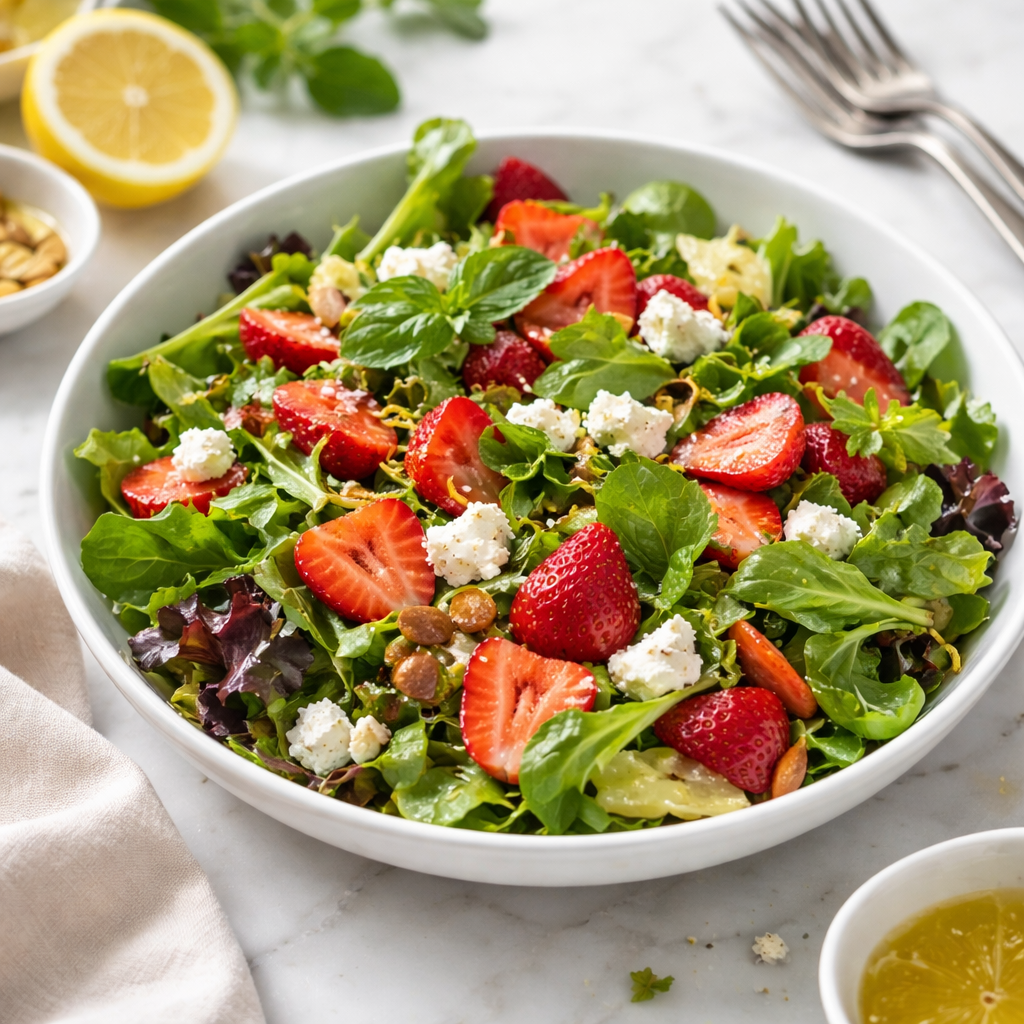
Strawberry + Herb Spring Salad
- Fresh greens (lightly dressed in olive oil + salt first)
- Sliced strawberries (seasoned lightly)
- Warm toasted almonds
- Goat cheese
- Fresh basil + mint
- Lemon vinaigrette
- Finish with flaky salt + lemon zest
Now you’ve got:
- Sweet + bright
- Creamy + crunchy
- Warm + cold
- Seasoned layers
That’s a composed salad.
The Big Shift
Spring salads shouldn’t feel like a side dish you have to eat.
They should feel like something you crave.
When you:
- season intentionally
- build texture
- add contrast
- and let ingredients shine
You’re not making a salad anymore.
You’re building a dish.
If you start treating your salads like this, you’ll notice something quickly:
People stop pushing them to the side…
and start asking for the recipe.
 Brennah Van Wagoner
Weekly Newsletter Contributor since 2025
Email the author! brennah.oaks@gmail.com