
The Coziest Dinner I Made in Culinary School (Plus a Little Bonus)
Hey chefs,
It’s cozy season here in December, and today we’re talking about one of the coziest, most comforting meals I made during culinary school: pork schnitzel. Oh my goodness—this dish was divine. Golden. Crispy. Juicy. Absolute winter-magic on a plate.
Let’s dig a little deeper into what makes schnitzel so special: its roots, what it really is, and the simple techniques that help you nail it every single time.
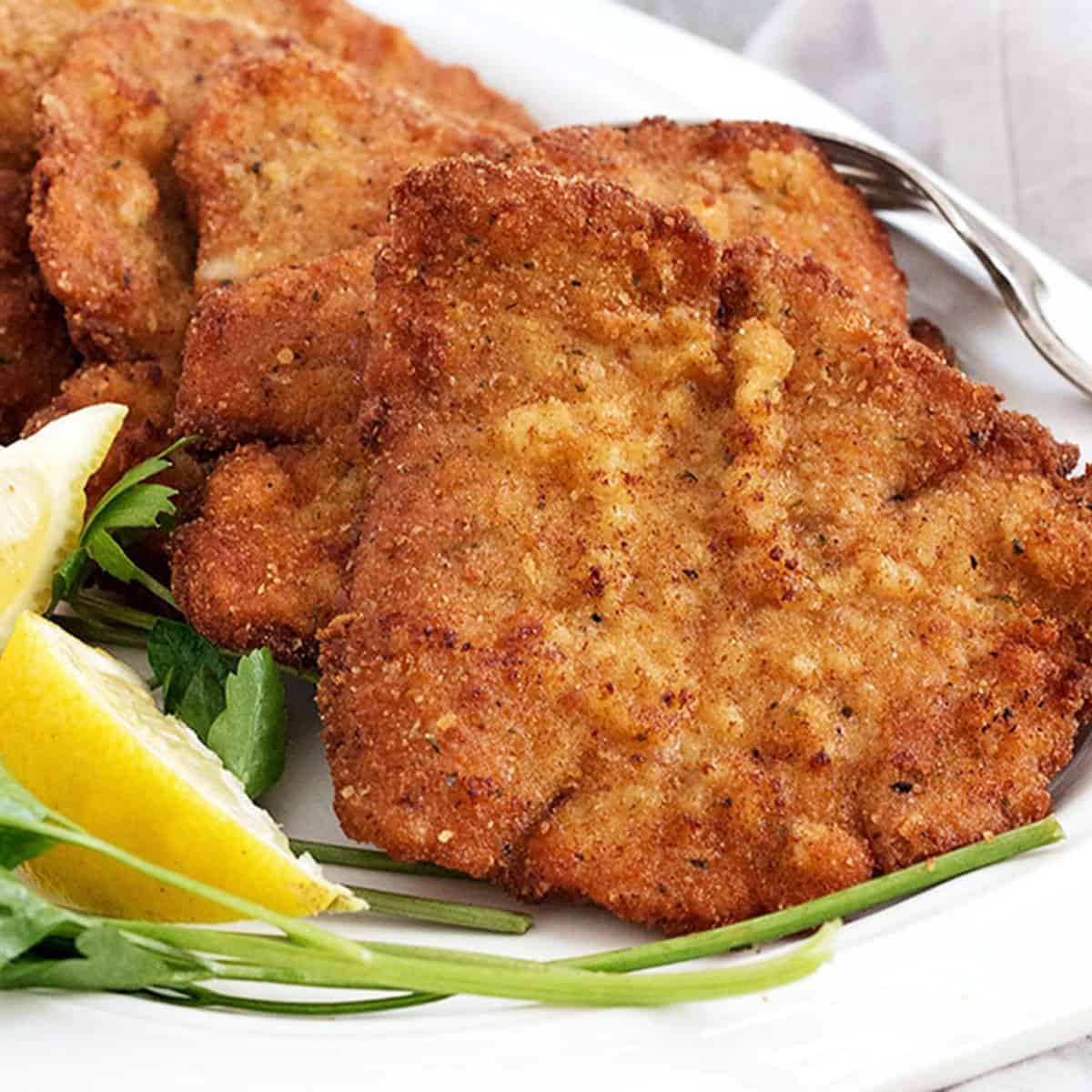
What Exactly Is Schnitzel?
At its heart, schnitzel is all about transformation. You take a humble cutlet of pork (or veal, chicken, or turkey), pound it thin until it’s nearly translucent, and give it the royal treatment: flour → egg → breadcrumbs. Then a shallow fry in shimmering oil turns it into something light, crisp, and deeply satisfying.
The technique is simple—but like all timeless dishes, the details matter.
A Bite of History
Schnitzel traces its lineage back to Austria and Germany, where it became a cultural staple long before it appeared in culinary textbooks. Served everywhere from home kitchens to beer halls, it’s one of those dishes that feels like a warm hug from a European grandma. Every region has its own little spin—some add lemon, some add mushroom gravy, some go for herbed breadcrumbs—but the spirit of the dish never changes: crispy outside, tender inside, pure comfort.
How to Make Perfect Schnitzel Every Time
A few pro tips from culinary school:
• Pound evenly.
The thinner and more uniform the cutlet, the more evenly it cooks.
• Season every layer.
Salt the pork, season the flour, and even hit the breadcrumbs with a little salt and pepper. This is how you build real flavor.
• Use the three-stage breading setup properly.
Flour → egg → breadcrumb. Tap off excess at each step for maximum crispiness.
• Shallow-fry, don’t deep-fry.
You want just about ¼ inch of oil—enough to let the schnitzel float slightly while still browning beautifully.
• Keep it moving.
Gently swirl the pan so the oil kisses the entire surface and you get that even golden crust.
• Don’t forget the lemon.
A squeeze of fresh lemon is the classic finishing touch that wakes the whole dish up.
Bonus: Let’s Talk Spaetzle (Because I Couldn’t Resist)
I was going to stick to one recipe this week… but schnitzel and spaetzle together were so good in culinary school that I can’t, in good conscience, keep them apart. Consider this your cozy little bonus lesson.
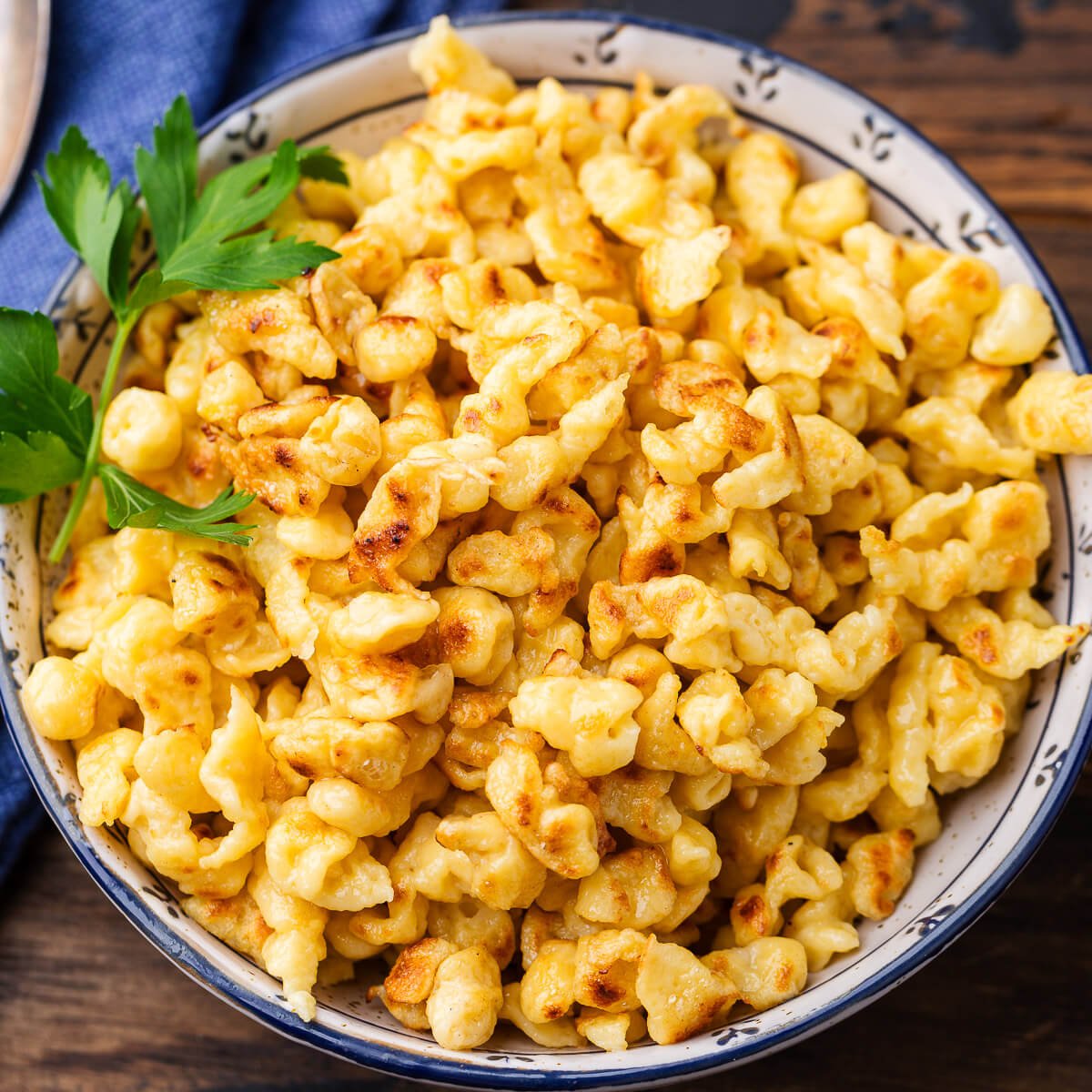
What Is Spaetzle?
Culinary school was actually my first introduction to spaetzel. Spaetzle (pronounced SHPEHTS-leh) is a tender, chewy German egg noodle—somewhere between a dumpling and a noodle. The dough is loose and batter-like, then pushed through small holes (a spaetzle maker, colander, or even a cheese grater in a pinch) into simmering water. The irregular shapes are part of the charm.
They’re rustic, buttery, deeply comforting, and ridiculously easy to eat by the bowlful.
Tips for Making Perfect Spaetzle
• Go for a thick, pourable batter.
Thicker than pancake batter, thinner than biscuit dough. If it’s too stiff, it won’t push through the holes easily.
• Let the batter rest.
Even 10–15 minutes allows the flour to hydrate and gives you a more tender dumpling.
• Use well-salted simmering water.
Spaetzle cooks fast—usually just 1–2 minutes once it floats.
• Shock or butter—your choice.
You can cool it quickly to stop cooking, or just toss hot spaetzle straight into a pan with melted butter (my favorite).
• Get some color.
After boiling, pan-fry it in butter until the edges get golden and a little crispy. This is where the magic happens.
• Add herbs or cheese.
Chives, parsley, browned butter, Emmental, gruyère… you can dress spaetzle up in endless cozy ways.
Here are the recipes for this week:
That’s all for this week, chefs. Thanks for stopping by my little corner of the culinary world. I’ll link both recipes at the end—because these two dishes were destined to be served together. Go make something warm, golden, and delicious. See you next time!
 Brennah Van Wagoner
Weekly Newsletter Contributor since 2025
Email the author! brennah.oaks@gmail.com
Subscribe to Cook'n Premium and get newsletter articles like this each week!