
The Secret to Making Spring Ingredients Shine
Hey chefs,
There’s a moment every year when food just… wakes up again.
After months of deep, rich, slow-cooked everything, early spring ingredients come in bright, crisp, and alive. And if you treat them the same way you treated winter food, you’ll miss what makes them special.
Spring produce doesn’t need to be transformed.
It needs to be highlighted.
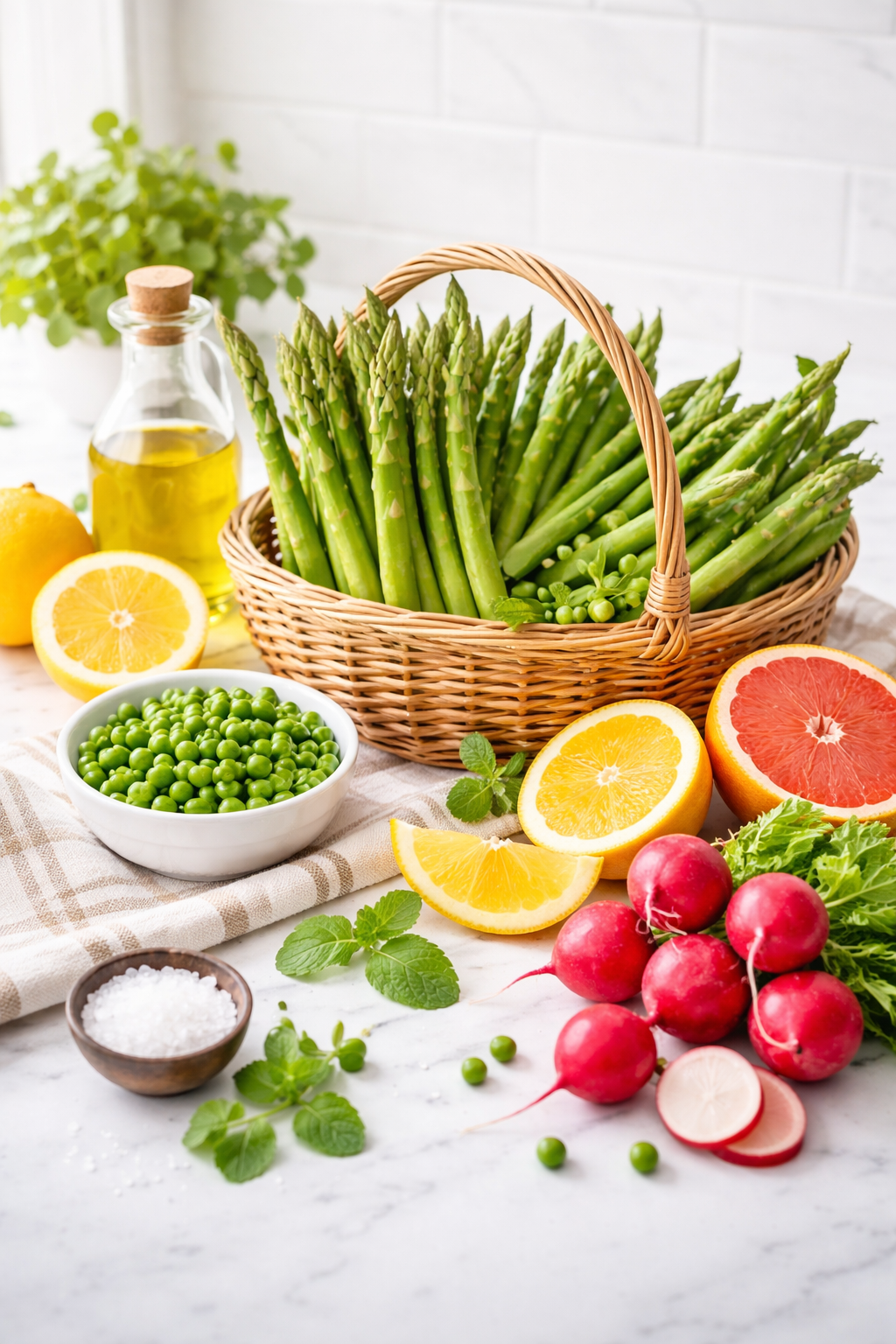
Today, I want to show you how chefs handle early spring ingredients—specifically asparagus, peas, citrus, and radishes—so they taste fresh, vibrant, and honestly kind of addictive.
The Mindset Shift: From Heavy to Alive
Spring cooking is about restraint.
Instead of:
- Long cook times
- Heavy sauces
- Deep caramelization
We move toward:
- Quick cooking
- Bright acidity
- Clean fats
- Texture contrast
Think of it less like “building flavor” and more like revealing it.
Asparagus: Keep It Snappy
Asparagus should be vibrant, slightly crisp, and green—not olive, not limp, not sad.
Chef Technique:
Blanch + Shock
- Salt your water like the ocean
- Cook asparagus 1–2 minutes (depending on thickness)
- Transfer immediately to ice water
This locks in:
- Color
- Texture
- Fresh flavor
Finish Like a Chef:
- Olive oil
- Lemon zest + juice
- Flaky salt
- Optional: shaved parmesan
Pro tip: Slice on a bias or shave raw for a more elegant texture.
Peas: Sweet, But Make Them Pop
Peas are naturally sweet—but without contrast, they fall flat.
Chef Technique:
Quick blanch (30–60 seconds) + shock
Even if they’re already tender, this:
- Sets the color
- Warms them gently
- Keeps them from turning dull
Finish Like a Chef:
- Butter or olive oil
- Lemon zest or a splash of vinegar
- Fresh herbs (mint, basil, tarragon)
The goal: sweet + bright + slightly salty = balanced.
Citrus: Your Secret Weapon
Citrus is what makes spring food taste like spring food.
Not just juice—zest is where the magic lives.
Chef Moves:
- Add zest at the end (heat kills its aroma)
- Use juice to brighten, not drown
- Segment citrus for clean, elegant bites
Where to Use It:
- Over vegetables
- In vinaigrettes
- Finished over proteins
If your dish tastes flat, it probably needs acid—not more salt.
Radishes: Peppery, Crisp, Underrated
Radishes bring crunch, bite, and a little attitude.
Most people underuse them—or throw them in whole and call it a day.
Chef Technique:
- Slice thin (mandoline = best friend)
- Soak briefly in ice water to crisp
- Season lightly
Finish Like a Chef:
- Butter + flaky salt (classic and perfect)
- Toss into salads for crunch
- Pair with acid to balance the bite
Think of radishes as your texture weapon.
The Formula That Changes Everything
If you take nothing else from this, take this:
Great spring dishes are built on contrast.
- Bright (acid)
- Rich (fat)
- Fresh (herbs/veg)
- Crisp (texture)
That’s it.
You don’t need complicated recipes. You need intentional finishing.
Final Chef Tips (These Matter More Than You Think)
- Salt your blanching water properly (this seasons from within)
- Don’t overcook—spring vegetables should still have life
- Finish at the end (acid, herbs, zest)
- Taste after finishing, not before
This is the difference between:
“This is good”
and
“Wait… why is this so good?”
Spring ingredients are already doing most of the work for you.
Your job is to not get in the way.
Keep it simple. Keep it bright. And let the food feel alive.
 Brennah Van Wagoner
Weekly Newsletter Contributor since 2025
Email the author! brennah.oaks@gmail.com