
The Dish Culinary School Uses to Teach Everything
Hey chefs,
One of the biggest mindset shifts culinary school gave me wasn’t about fancy ingredients or complicated techniques—it was about restraint. Learning when to do less, when to let ingredients speak, and when patience matters more than flair.
And honestly? Ratatouille might be the perfect dish to illustrate that lesson.
At first glance, ratatouille feels humble. Vegetables. Olive oil. Herbs. Nothing flashy. But in culinary school, dishes like this are where instructors really start paying attention—because simplicity exposes everything. Knife work. Heat control. Seasoning. Timing. Respect for ingredients.
This week’s article is about what ratatouille taught me in culinary school—and how to make it truly great at home.
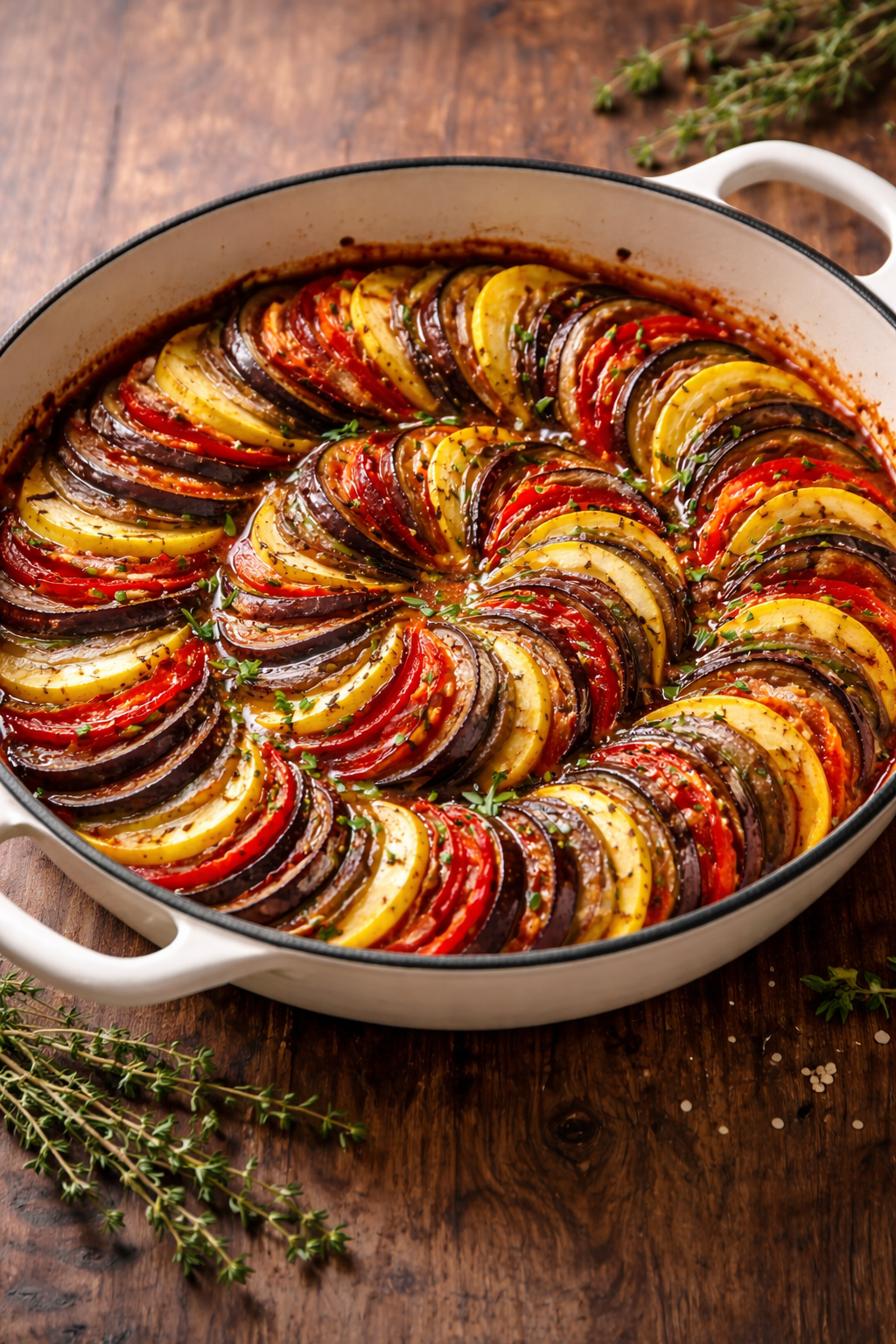
What Ratatouille Really Is (and What It Isn’t)
Ratatouille comes from Provence, where vegetables aren’t filler—they’re the main event. At its core, it’s a vegetable stew built on layering flavor, not dumping everything in a pot and hoping for the best.
A proper ratatouille highlights:
- Eggplant that’s silky, not spongy
- Zucchini that’s tender but intact
- Tomatoes that melt into sauce
- Aromatics that deepen rather than dominate
In school, we learned that ratatouille isn’t about perfection—it’s about balance.
Culinary School Lessons Hidden Inside Ratatouille
1. Knife Skills Matter More Than You Think
Uniform cuts aren’t about aesthetics—they’re about even cooking. When your eggplant is twice the size of your zucchini, one turns to mush while the other stays raw.
Chef tip:
Aim for consistent thickness, not perfection. If everything cooks at roughly the same rate, you’re already winning.
2. Salt Is a Process, Not a Moment
One of the biggest rookie mistakes is salting only at the end. In culinary school, we season as we go.
For ratatouille:
- Lightly salt the eggplant early to draw out bitterness
- Season onions as they sweat to build a base
- Adjust again once tomatoes reduce
This creates depth instead of flat, last-minute saltiness.
3. Respect Water Content
Vegetables release moisture. If you crowd the pan or rush the process, you’ll steam instead of sauté.
Why this matters:
Eggplant absorbs oil and water. If the pan is too cool or crowded, it becomes greasy and limp instead of luscious.
Chef move:
Cook in stages if needed. Ratatouille rewards patience.
4. Tomato Is a Sauce, Not a Star
Tomatoes should bind the dish—not overpower it.
In school, we’re taught to think of tomato as a supporting structure. If your ratatouille tastes like tomato soup with vegetables floating in it, something went wrong.
Let tomatoes:
- Break down naturally
- Concentrate slowly
- Carry the flavors of garlic, herbs, and olive oil
5. Herbs Are a Finish, Not a Fix
Fresh thyme, bay, or basil should enhance, not shout.
Add hardy herbs early so they infuse gently. Save delicate herbs for the end so they stay bright and aromatic.
How to Make Ratatouille Taste Incredible (Not Just “Healthy”)
Here’s what elevates ratatouille from decent to memorable:
- Good olive oil (this is not the place to skimp)
- Proper browning before combining everything
- Low, slow simmering once assembled
- Time to rest (it tastes better the next day—always)
Culinary school drills this into you: flavor needs time. Ratatouille is living proof.
How to Serve It Like a Pro
Ratatouille is wildly versatile:
- Spoon it over polenta or crusty bread
- Serve alongside roasted chicken or fish
- Fold leftovers into omelets or grain bowls
- Use it as a pasta sauce base with a splash of pasta water
It’s economical, nourishing, and endlessly flexible—exactly the kind of cooking chefs rely on week after week.
Final Chef Thoughts
Ratatouille taught me that good cooking isn’t about impressing—it’s about understanding fundamentals. When vegetables are treated with care, they don’t need gimmicks. They need heat, salt, fat, and time.
This is the kind of dish culinary school quietly loves—because if you can make this well, you can cook almost anything.
Click here for the recipe.
When you make it, slow down. Taste as you go. Trust the process.
That’s where the magic lives.
 Brennah Van Wagoner
Weekly Newsletter Contributor since 2025
Email the author! brennah.oaks@gmail.com