
July Produce Guide
Hey chefs,
It’s the beginning of July, which means we have officially entered the part of the year where the farmers market starts showing off.
This is the season of stone fruit dripping down your wrist, zucchini multiplying like it has somewhere to be, herbs growing faster than you can chop them, and tomatoes just starting to flirt with greatness. It is one of the best times of the year to cook because the ingredients are doing a lot of the work for you.
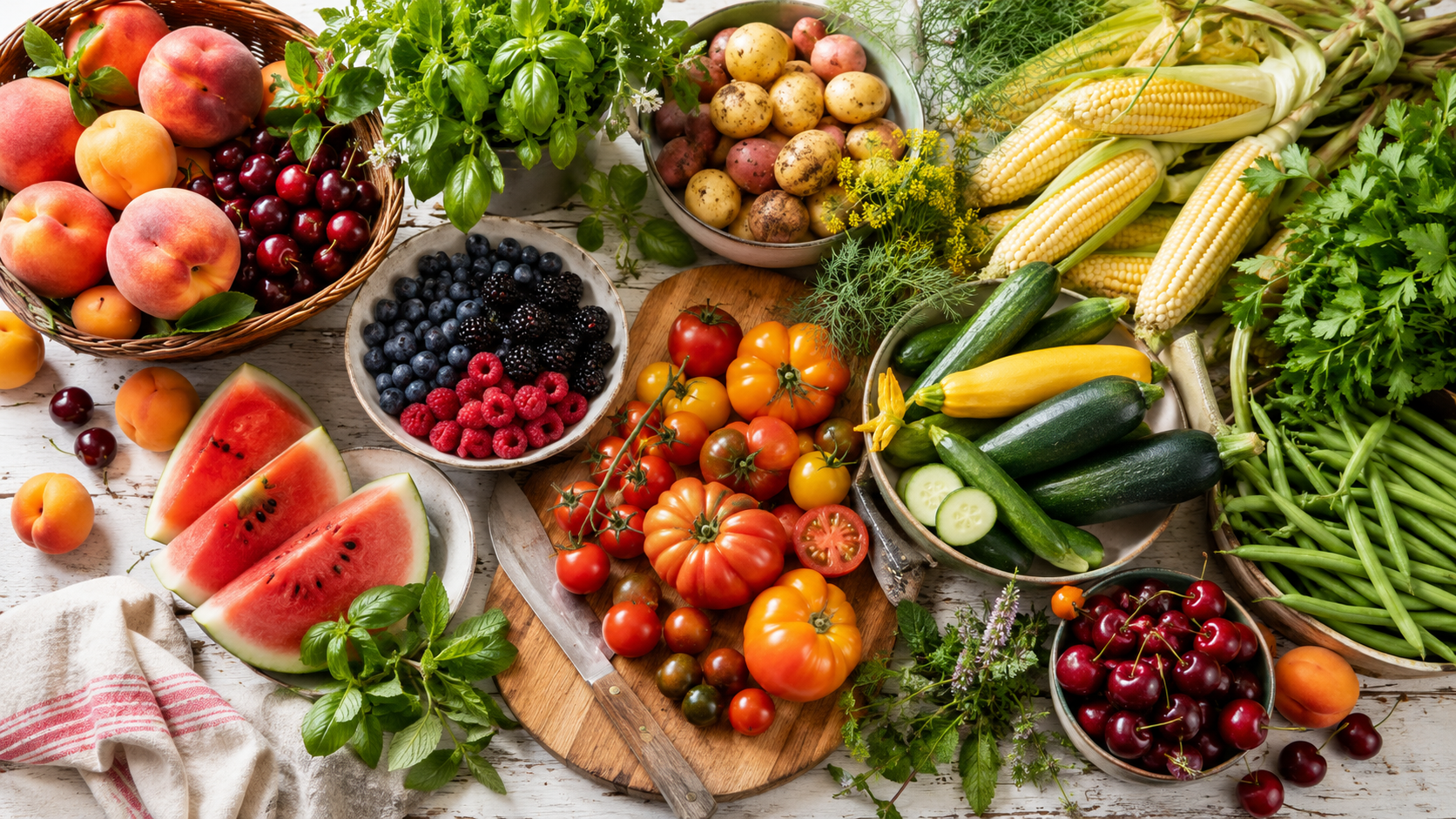
That is the secret of seasonal cooking: it does not always mean making something complicated. It means paying attention. When produce is at its peak, you can cook less aggressively, season more thoughtfully, and let the ingredient be the reason the dish works.
Seasonality will vary depending on where you live, but in many parts of the United States — especially here in the mountain west — July is when summer produce really starts to come alive. Think cherries, apricots, blueberries, green beans, zucchini, cucumbers, herbs, peppers, eggplant, melons, corn, and the first good tomatoes of the season. Some crops are already peaking, some are just beginning, and some are giving us a delicious preview of August.
Let’s talk about what is in season right now, and more importantly, how to use it.
Stone Fruit: Cherries, Apricots, Peaches, Plums, and Nectarines
Stone fruit is one of July’s great gifts.
Cherries and apricots are especially beautiful at the beginning of the month. Peaches, plums, and nectarines start coming in too, depending on your region and the weather. This is the produce aisle’s way of telling you to stop overthinking dessert.
The best thing about stone fruit is that it works in both sweet and savory dishes. Yes, you can bake it into cobblers, crisps, galettes, cakes, and tarts. But you can also put it next to pork, chicken, burrata, whipped ricotta, grilled bread, bitter greens, or anything smoky from the grill.
The chef trick is to balance its sweetness with acid, salt, fat, and a little bitterness. Stone fruit loves lemon juice, vinegar, olive oil, black pepper, chile, fresh herbs, toasted nuts, and creamy dairy.
Try this:
Slice ripe peaches or nectarines and toss them with lemon juice, olive oil, basil, flaky salt, and black pepper. Serve with burrata and grilled bread.
Pit cherries and simmer them with balsamic vinegar, a little sugar or honey, black pepper, and thyme until glossy. Spoon over pork tenderloin, grilled chicken, or cheesecake.
Halve apricots, brush with honey and olive oil, grill cut-side down, then serve with yogurt, pistachios, and a pinch of salt.
For baking, stone fruit does not need much. A little sugar, a little acid, a starch if it is juicy, and something buttery. That is the whole game.
Berries: Blueberries, Raspberries, Blackberries, and Strawberries
Berries are a July staple, but they need a little respect. They are delicate, high-moisture, and often more acidic than people expect. That is what makes them exciting.
Use berries fresh when they are perfect. Bake them when they are good but not incredible. Cook them down when they are starting to soften.
Blueberries are especially useful because they hold their shape better than raspberries or strawberries. They are beautiful in muffins, buckle cakes, cornmeal cookies, cobblers, pancakes, and lemony desserts. Raspberries are brighter and more fragile, which makes them perfect for sauces, curds, fillings, and quick compotes. Blackberries bring a deeper, winey flavor that loves lime, ginger, vanilla, almond, and brown butter.
A few easy ways to use July berries:
Make a berry compote with sugar, lemon juice, and a tiny pinch of salt. Spoon it over pancakes, cheesecake, yogurt, ice cream, pound cake, or pavlova.
Fold blueberries into cornmeal batter for a rustic skillet cake.
Mash raspberries with sugar and lemon juice, then swirl them into whipped cream, cream cheese frosting, or no-churn ice cream.
Toss berries with a spoonful of sugar and let them macerate for 15 minutes before serving. That tiny step makes them taste more intentional.
And please, salt your fruit. Not heavily. Just enough to wake it up.
Zucchini and Summer Squash
July zucchini is abundant, affordable, and often misunderstood.
The mistake people make with zucchini is treating it like it has a huge flavor on its own. It doesn’t. Zucchini is mild, watery, and tender, which means it needs high heat, good seasoning, or a clever technique.
If you want zucchini to taste amazing, you have a few options.
First, get rid of some of the water. Salt grated zucchini and squeeze it before using it in fritters, quick breads, muffins, savory pancakes, or fillings.
Second, cook it hot and fast. Grill it, sear it, roast it, or sauté it in a wide pan so it browns instead of steams.
Third, pair it with bold flavors. Zucchini loves garlic, lemon, basil, mint, Parmesan, feta, chile flakes, browned butter, tomatoes, corn, and yogurt sauces.
Ideas:
Grill thick planks of zucchini and finish with lemon, olive oil, Parmesan, and torn herbs.
Make zucchini fritters with scallions, herbs, egg, flour, and cheese. Serve with garlicky yogurt.
Shave raw zucchini into ribbons and toss with lemon juice, olive oil, salt, pepper, toasted almonds, and pecorino.
Fold grated zucchini into chocolate cake or muffins. It adds moisture without making the dessert taste like vegetables.
Zucchini is not boring. It just needs a plan.
Cucumbers
Cucumbers are the air conditioning of the produce world.
They are crisp, juicy, refreshing, and exactly what you want when the kitchen feels too hot to exist. The main thing cucumbers need is contrast: salt, acid, spice, herbs, or creaminess.
Use them raw. Keep them cold. Season them more than you think.
A quick cucumber salad can go in a dozen directions. Rice vinegar, sesame oil, chile crisp, and scallions. Sour cream, dill, lemon, and black pepper. Lime, Tajín, cilantro, and red onion. Yogurt, garlic, mint, and olive oil.
For the best texture, salt sliced cucumbers for 10 to 20 minutes, then drain off the liquid before dressing them. This keeps the final dish crisp instead of watery.
Try this:
Smash cucumbers with the side of a knife, tear them into pieces, salt them, drain them, then toss with rice vinegar, sesame oil, garlic, chile crisp, and scallions.
Or go creamy: cucumbers, sour cream or Greek yogurt, dill, lemon juice, salt, pepper, and a little grated garlic.
Cucumbers are also perfect for drinks, sandwiches, chilled soups, and anything served next to grilled meat.
Tomatoes
At the beginning of July, tomatoes can be a little region-dependent. Some places are already swimming in beautiful tomatoes; others are just starting to see the good ones arrive. Either way, this is the month to start paying attention.
A truly good tomato does not need much. In fact, doing too much to it can make it worse.
Salt is the most important ingredient. Salt tomatoes and let them sit for 10 minutes before serving. The salt pulls out juice, intensifies the flavor, and basically creates its own dressing.
Use tomatoes with:
Olive oil
Vinegar
Basil
Mozzarella
Burrata
Mayo
Toast
Corn
Peaches
Cucumbers
Avocado
Grilled bread
Black pepper
Flaky salt
A few perfect July tomato ideas:
Tomato toast with mayo, salt, pepper, and herbs.
Tomato and peach salad with basil, vinegar, olive oil, and burrata.
Panzanella with tomatoes, cucumbers, toasted bread, red onion, and a sharp vinaigrette.
Marinated tomatoes tossed with hot pasta, garlic, Parmesan, and basil.
The most important rule: do not refrigerate good tomatoes unless you absolutely have to. Cold temperatures dull their flavor and wreck their texture. Keep them at room temperature and eat them while they are beautiful.
Corn
Corn is one of those ingredients that feels like summer even before you cook it.
Early July corn may just be starting, depending on where you live, but once the good corn hits, use it everywhere. Corn is sweet, starchy, juicy, and deeply compatible with butter, cream, lime, chile, cheese, herbs, and smoke.
Grill it. Cut it off the cob. Fold it into salads. Stir it into risotto. Add it to pasta. Make fritters. Make chowder. Make salsa. Put it in cornbread.
One of the best chef tricks is to use the cob, not just the kernels. After cutting off the kernels, scrape the cob with the back of your knife to collect the corn “milk.” Add that to soups, sauces, risotto, creamed corn, or pasta. It gives you sweetness and body without needing a lot of cream.
Try this:
Make a corn salad with grilled corn, cherry tomatoes, scallions, lime juice, mayo or sour cream, cotija or feta, cilantro, and chile powder.
Or make a simple corn pasta: sauté corn in butter with garlic, add a splash of pasta water, Parmesan, black pepper, and basil, then toss with hot pasta.
Corn wants fat, salt, and acid. Give it all three.
Green Beans
Green beans are underrated because too many of us grew up eating them overcooked.
Fresh green beans should be snappy, bright, and just tender. They are great blanched, sautéed, grilled, roasted, or blistered in a hot skillet.
For the best color and texture, blanch them in very salty boiling water until crisp-tender, then shock them in ice water. From there, you can toss them into salads, rewarm them in butter, or sauté them with garlic.
Flavor pairings that work beautifully:
Lemon and almonds
Garlic and Parmesan
Brown butter and hazelnuts
Tomatoes and basil
Dijon vinaigrette
Bacon and shallots
Sesame and soy sauce
Try this:
Blanch green beans, then toss with Dijon vinaigrette, cherry tomatoes, toasted almonds, and herbs.
Or blister them in a screaming hot pan with oil, then finish with garlic, lemon, and Parmesan.
Green beans are one of the best side dishes for grilled dinners because they can be served warm, room temperature, or cold.
Peppers and Eggplant
Peppers and eggplant start becoming more exciting in July and really build momentum as summer goes on.
Peppers can be used raw when they are sweet and crisp, or roasted until soft and smoky. They love vinegar, garlic, olive oil, herbs, cheese, sausage, rice, beans, chicken, and eggs.
Eggplant needs a little more technique. It can be silky and luxurious when cooked properly, but spongy or bland when under-seasoned. Salt it if you want to draw out moisture and improve texture, especially for frying or roasting. Use enough oil, cook it until truly tender, and pair it with bold flavors.
Great July uses:
Roasted peppers with olive oil, vinegar, garlic, and basil.
Stuffed peppers with rice, sausage, tomatoes, herbs, and cheese.
Grilled eggplant with yogurt sauce, herbs, and pomegranate molasses or balsamic glaze.
Ratatouille-style vegetables with zucchini, tomatoes, peppers, eggplant, garlic, and herbs.
Eggplant Parmesan if you are willing to turn on the oven and commit to greatness.
Peppers bring sweetness. Eggplant brings silkiness. Together, they make summer cooking feel abundant.
Herbs: Basil, Mint, Dill, Cilantro, Parsley, Chives, and Tarragon
Fresh herbs are not garnish. They are ingredients.
July is the time to use herbs generously. Not a polite little sprinkle. A handful. A shower. A sauce. A salad. A green, fragrant, slightly chaotic celebration.
Basil is the obvious summer star, but do not forget mint with fruit, dill with cucumbers and potatoes, cilantro with corn and lime, parsley with grilled meats, chives with eggs and sour cream, and tarragon with chicken, green beans, and creamy dressings.
The easiest way to use herbs is to turn them into a sauce.
Make pesto with basil, nuts, garlic, cheese, olive oil, and lemon.
Make chimichurri with parsley, oregano, garlic, vinegar, chile, and olive oil.
Make herby yogurt sauce with Greek yogurt, lemon, garlic, dill, mint, parsley, and salt.
Make green goddess dressing with herbs, mayo, sour cream, lemon, anchovy or capers if you like, and black pepper.
A good herb sauce makes almost anything taste intentional: grilled chicken, roasted potatoes, eggs, sandwiches, grain bowls, vegetables, fish, steak, or even a spoonful of leftover rice.
New Potatoes
New potatoes are one of my favorite seasonal ingredients because they taste like potatoes before potatoes become winter storage food.
They are thin-skinned, creamy, and naturally sweet. You do not need to peel them. In fact, please don’t. The skin is part of the charm.
Boil them gently in well-salted water until tender, then dress them while they are still warm. Warm potatoes absorb flavor better than cold potatoes, which is why the best potato salads start with seasoning the potatoes before adding the creamy dressing.
Use vinegar, pickle brine, mustard, olive oil, herbs, sour cream, mayo, scallions, celery, bacon, eggs, or whatever direction you want to take it.
A few great July potato ideas:
Warm potato salad with Dijon vinaigrette, herbs, and green beans.
Crispy smashed potatoes with garlic butter and Parmesan.
Creamy herb potato salad with pickles, celery, scallions, and eggs.
Grilled potato packets with butter, onions, and herbs.
New potatoes are humble, but when they are done right, they steal the show.
Melons
Melons are the dessert you do not have to bake.
Watermelon, cantaloupe, and honeydew are all about refreshment. The key is choosing a ripe melon and then giving it contrast.
Melon loves salt. It also loves lime, chile, mint, basil, feta, cucumber, prosciutto-style salty elements, yogurt, and ginger. Since I do not cook with alcohol, I also love using melon in bright, non-alcoholic drinks with citrus, sparkling water, herbs, and a little honey or sugar if needed.
Try this:
Watermelon, feta, mint, lime juice, olive oil, and black pepper.
Cantaloupe with yogurt, honey, pistachios, and flaky salt.
Honeydew blended with lime juice, mint, and sparkling water.
Melon also makes a great base for granita, popsicles, agua fresca, smoothies, and fruit salads that actually taste fresh instead of sad.
How to Build a July Meal
The easiest way to cook in July is to stop thinking in terms of heavy recipes and start thinking in terms of combinations.
Pick one grilled or simple protein. Add one starchy side. Add one raw, crunchy, acidic thing. Add one juicy fruit or vegetable moment. Finish with herbs.
For example:
Grilled chicken
Creamy herb potato salad
Cucumber tomato salad
Peaches with burrata and basil
Or:
Burgers
Corn salad
Watermelon with lime and mint
Blistered green beans
Or:
Grilled pork tenderloin
Cherry balsamic sauce
Smashed new potatoes
Zucchini ribbons with lemon and Parmesan
That is the beauty of July cooking. You do not need to force a theme. The produce is the theme.
A Few Chef Tips for Cooking with July Produce
Taste before you season. Summer produce changes a lot from week to week. One peach might need lemon. Another might need nothing.
Use acid generously. Lemon juice, lime juice, vinegar, pickle brine, and buttermilk-style tangy dressings make summer produce feel brighter and less heavy.
Salt fruit and vegetables. A tiny bit of salt makes tomatoes taste more tomato-y, melon taste sweeter, and cucumbers taste more refreshing.
Do not overcook everything. A lot of July produce is at its best raw, barely cooked, grilled quickly, or roasted hard and fast.
Use herbs like ingredients. A big handful of herbs can turn simple food into something that tastes restaurant-level.
Dress warm starches while warm. Potatoes, grains, pasta, and beans absorb flavor best when they are still warm.
Let ripe produce lead. If something is perfect, do less. If something is only okay, cook it, marinate it, grill it, roast it, or turn it into sauce.
The Big July Takeaway
July cooking is generous.
It is juicy tomatoes, cold cucumbers, grilled corn, creamy potatoes, smoky zucchini, cherries in desserts and savory sauces, berries in everything, and herbs absolutely everywhere.
This is the month to cook with color. Cook with texture. Cook with the market bag open on the counter and let the ingredients boss you around a little.
Because when produce is this good, the best thing a chef can do is listen.
 Brennah Van Wagoner
Weekly Newsletter Contributor since 2025
Email the author! brennah.oaks@gmail.com