
How Chefs Actually Reset in January
Hey chefs,
January has a funny way of making people feel like they need to start over—new rules, new foods, new energy they somehow don’t actually have yet.
From a professional kitchen perspective, that approach almost never sticks.
What does work is starting the year with structure instead of restriction. Cooking that’s thoughtful, repeatable, and grounded in technique. Food that nourishes you, respects your budget, and still tastes really good—because if it doesn’t taste good, it won’t last past week two.
This is the kind of January reset chefs actually rely on.
Start with habits, not rules
When I’m cooking at home—especially after a busy season—I don’t look for “healthy” recipes. I look for foundational meals. Dishes that do more than just feed me once. Meals that turn into leftovers, lunches, soups, and something comforting at the end of a long day.
That’s the difference between cooking that feels disciplined and cooking that’s actually sustainable.
Instead of cutting things out, focus on:
- Buying whole ingredients
- Cooking once with intention
- Letting one good decision carry you through the week
This is how professional kitchens stay efficient, and it works just as well at home.
Budget cooking doesn’t mean lower quality
One of the biggest myths I see in January is that eating well has to cost more. In reality, the opposite is usually true.
Whole foods—vegetables, grains, beans, whole proteins—are often cheaper per serving than convenience foods. The key is choosing ingredients that work hard for you.
When you design meals around:
- A single main protein
- Seasonal vegetables
- Simple pantry spices
…you get better flavor, less waste, and more meals from the same grocery trip.
That’s not frugal cooking. That’s smart cooking.
Flavor comes from technique, not excess
Here’s the part culinary school drills into you early: flavor doesn’t come from piling on ingredients. It comes from how you cook.
Proper seasoning. High heat when it matters. Letting food rest. Using the whole ingredient instead of just the “pretty” parts.
When you cook with intention, you don’t need heavy sauces, extra sugar, or expensive shortcuts. The food tastes rich because it’s cooked well—not because it’s overcomplicated.
This is especially important in January, when people are craving comfort but want to feel good afterward.
Cook once. Eat well all week.
One of the most powerful shifts you can make this month is thinking beyond a single dinner.
Ask yourself:
- Can this turn into tomorrow’s lunch?
- Will the leftovers reheat well?
- Is there a second or third meal hiding in this dish?
This mindset takes pressure off daily cooking and makes it much easier to stay consistent—without burning out or reaching for takeout.
A chef’s January staple
At the end of this article, I’m linking one of my favorite examples of this approach in action: a whole roasted chicken with root vegetables.
It’s the kind of meal chefs rely on for a reason:
- One protein becomes several meals
- Vegetables roast in the same pan, soaking up flavor
- The technique is simple, but the results feel deeply satisfying
It’s nourishing without being restrictive. Budget-friendly without feeling cheap. And it sets you up for success long after the first night’s dinner.
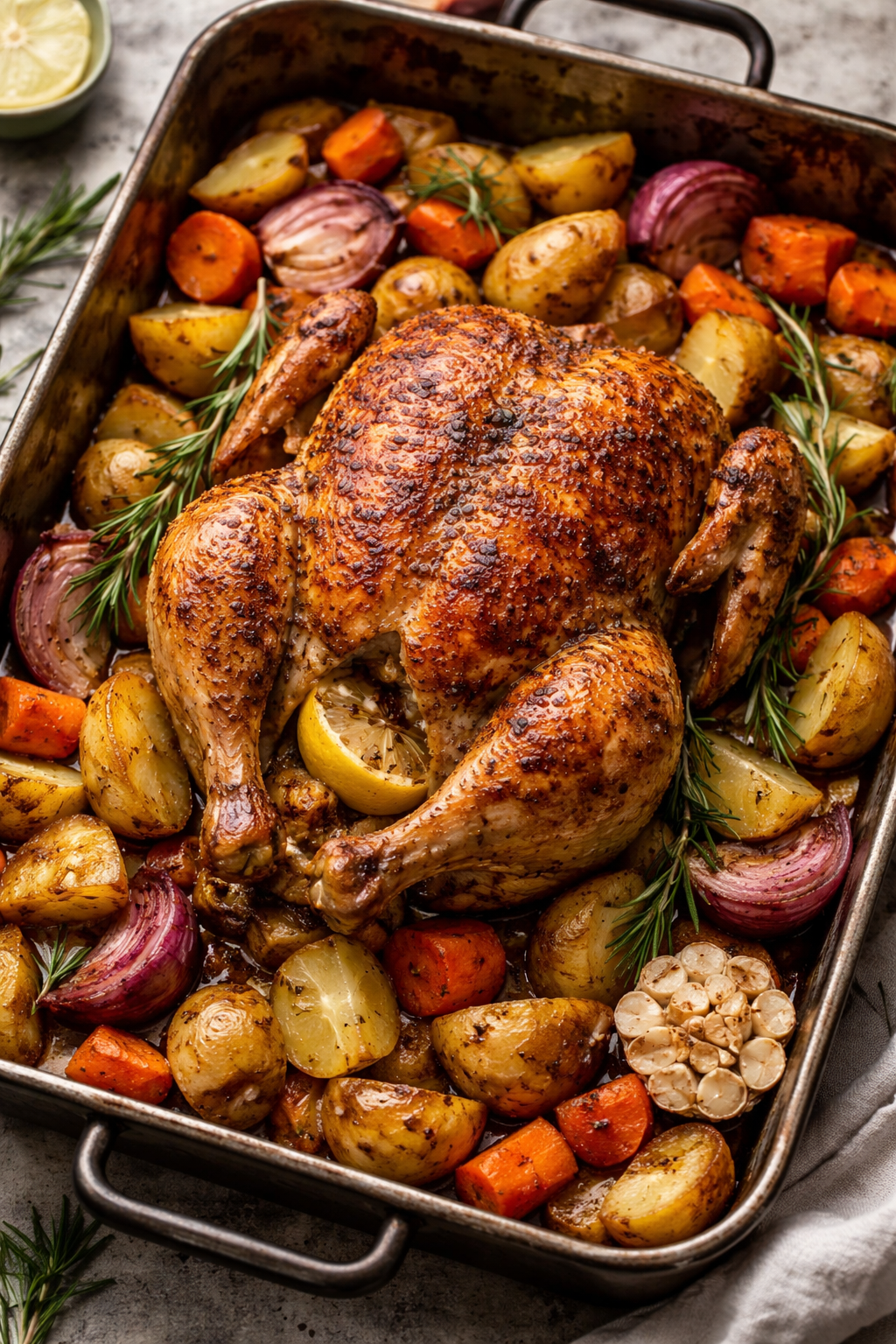
Why this recipe works—and how to make it great
A whole roasted chicken with vegetables isn’t fancy food, but it is foundational food. The kind of dish that teaches you how to cook better every time you make it.
A few chef tips to make it exceptional:
- Dry the chicken well before seasoning. Moisture is the enemy of crisp skin. A thorough pat-down with paper towels makes a bigger difference than any spice blend.
- Season generously—but simply. Salt, pepper, and a few warming spices are enough when the technique is right.
- Roast hot. High heat is what gives you golden skin and caramelized vegetables without drying out the meat.
- Let it rest. Give the chicken at least 15 minutes before carving. This keeps the juices where they belong and makes slicing easier.
These small details are what turn a basic roast into something you actually look forward to eating again.
How to stretch it through the week
This is where the real January magic happens.
After the first night:
- Leftover chicken becomes salads, wraps, grain bowls, or a simple soup.
- Roasted vegetables reheat beautifully with eggs, fold into pasta, or blend into a quick purée for soup or sauce.
- Bones and scraps can become a light homemade stock—just simmer with water, onion ends, and a few herbs. Even a short simmer adds incredible value.
One chicken can easily turn into:
- Dinner the first night
- Lunches for a few days
- A pot of soup later in the week
That’s not meal prep in the rigid sense—it’s just cooking with foresight.
A January mindset shift
Instead of asking, “What should I cook tonight?”
Try asking, “What can I cook once that helps me all week?”
This approach saves money, reduces stress, and keeps you eating well without feeling like you’re constantly starting over. It’s how professional kitchens stay efficient—and it works just as well at home.
If you want to start the year strong and sustainably, this is one of the best places to begin.
Click here to get the recipe.
Here’s to a January built on good food, good habits, and cooking that actually works in real life.
 Brennah Van Wagoner
Weekly Newsletter Contributor since 2025
Email the author! brennah.oaks@gmail.com