
A Thanksgiving-Worthy Dessert Sure to Steal the Spotlight
Hey chefs,
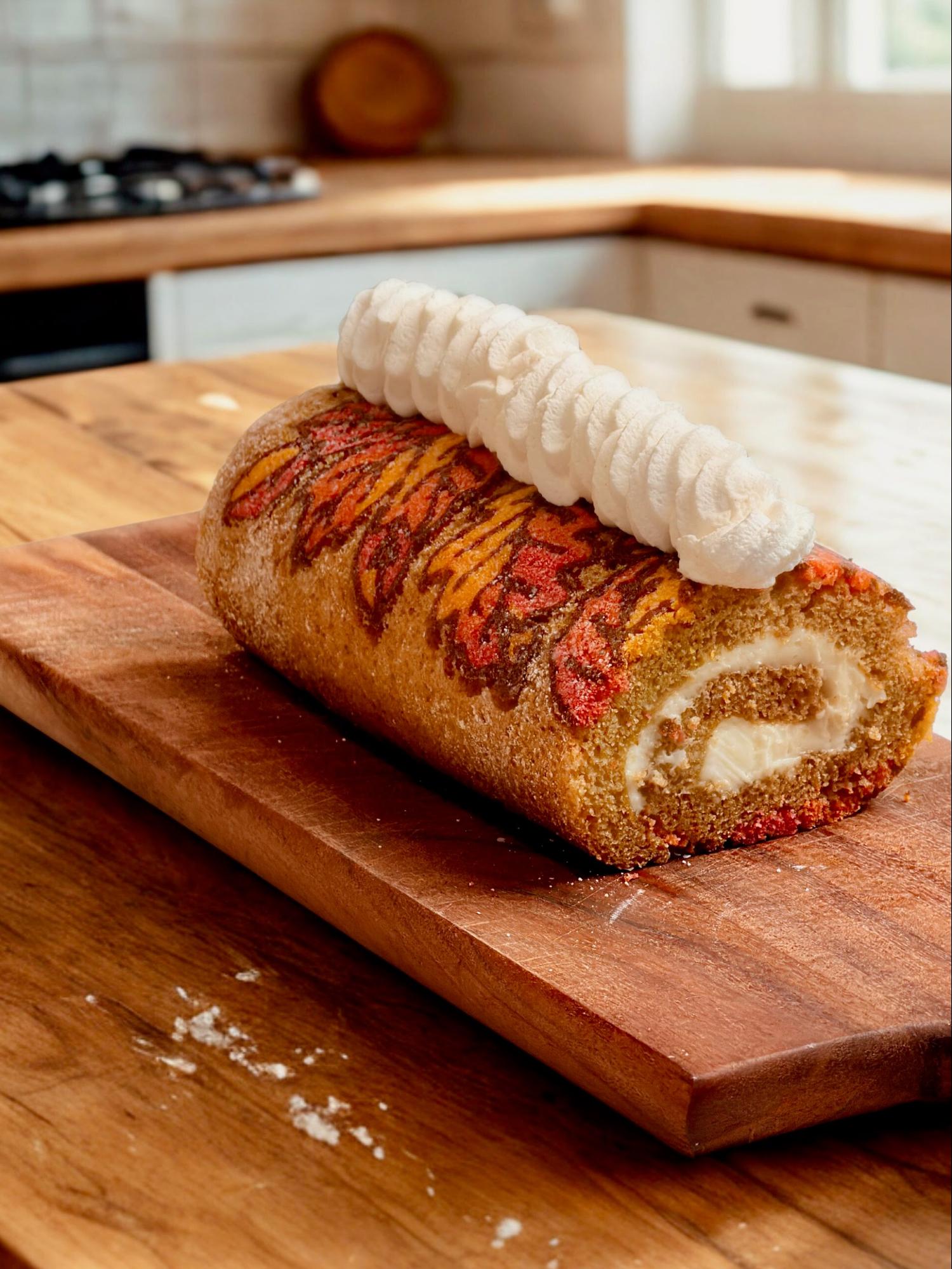
Thanksgiving is next week, and while pie will always have a special place at the table, today we’re diving into a dessert that deserves just as much spotlight: the roll cake. More specifically, the beautiful, cozy, fall-coded Falling Leaf Pumpkin Roll—a perfect option for the pie skeptics or anyone craving something warm, soft, and showstopping.
This one hits every fall note: tender pumpkin sponge, rich cream cheese filling, a baked-in falling leaf design that looks like it came straight from a patisserie—and just when you think it can’t get better, the caramel cinnamon whipped cream sweeps in and takes the whole thing to the next level. It ties the flavors together, adds a warm toffee-spice finish, and makes every slice feel like a little cloud of autumn.
Before you grab your mixing bowls, let’s break down the why and how behind roll cakes, the pastry science that makes them work, and the jaconde pattern technique that transforms them from simple to spectacular. Think of this as a mini culinary-school lesson—informative, professional, and just the right amount of fun.
A Quick Guide to Roll Cakes (and Why They’re So Special)
Roll cakes—also known as roulades, jelly rolls, or Swiss rolls—have been around for centuries. Early American cookbooks featured jelly-filled versions in the 1800s, and Europeans have been rolling up sponges even longer. No matter the name or origin story, they all follow the same principle:
A thin, flexible sponge gets baked, spread with something delicious, then rolled into a tight spiral.
What makes them unique is that they rely on lightness, not heaviness. They’re foam-based cakes, meaning they get their structure from eggs and air—not stacks of flour or fat. The result is a sponge that is:
- soft
- pliable
- springy
- light enough to roll without cracking
In other words: the perfect cozy dessert for fall, especially when paired with cream cheese filling and a swirl of caramel cinnamon whipped cream.
The Science Behind the Perfect Roll (aka Why It Rolls Instead of Cracks)
If you’ve ever feared your cake cracking mid-roll, here’s the inside scoop:
More eggs = more flexibility.
Eggs provide the protein structure that holds the cake together while still keeping it elastic.
Less flour = a tender sponge.
Too much flour toughens the cake and makes it prone to breaking.
Rolling while hot = crucial.
Think of a warm sponge like warm clay: it shapes beautifully.
A cooled sponge? Not so much.
The “memory roll” technique.
Rolling the cake with parchment while it’s hot teaches the sponge its shape. When you unroll it for filling later, it behaves.
Once you understand these principles, roll cakes become shockingly approachable—and consistently beautiful.
What Is a Jaconde Pattern? (And Why Does It Look So Impressive?)
Jaconde patterns come from classic French patisserie. They’re how pastry chefs create those stunning designs baked directly into roulades and entremets—florals, stripes, geometric motifs, leaves, and more.
The secret is simple:
A separate pattern batter + freezing + sponge batter on top = built-in artwork.
Jaconde batter is thicker than the sponge and contains more fat (usually butter), which allows it to hold its shape. Once piped, it’s frozen so the design stays crisp when the sponge is spread over it.
The Falling Leaf Pumpkin Roll uses this technique with autumn leaf designs, giving it that beautifully illustrated exterior without needing fondant, food pens, or post-bake decoration.
Pro Tips for Creating Crisp, Clean Jaconde Patterns
✔ Parchment paper only.
Freezes fast and releases cleanly. Silicone mats don’t freeze well enough.
✔ Freeze for 10–20 minutes.
Just long enough for the pattern to firm up. Too long, and the pattern may separate from the sponge while baking.
✔ Use gel or powdered colors.
Liquid food coloring can thin the batter and cause bleeding.
✔ Aim for thin, precise piping.
Thick lines crack or flake; thin lines melt in beautifully.
✔ Keep batter consistency uniform.
If one color is thicker or runnier, your pattern will bake inconsistently.
✔ Choose bold fall colors.
Pumpkin batter is warm-toned, so rich reds, burgundies, golds, and browns stay vibrant.
Roll Cake Success Tips (Straight From Culinary School)
✔ Don’t overmix.
You want the air from the eggs to stay intact for maximum flexibility.
✔ Don’t overbake.
This is the No. 1 culprit for roll cake cracking. The sponge should spring back lightly when touched.
✔ Roll immediately while hot.
Use the parchment to help guide it. Think “quick and confident”—hesitation causes dents.
✔ Cool completely before filling.
Filling a warm sponge results in melted filling and soggy layers.
✔ Apply a thin, even layer of filling.
Too much filling causes overflow and uneven spirals.
✔ Re-roll gently.
The cake has already learned its shape—now it just needs a soft, patient touch.
Why This Dessert Belongs on Your Thanksgiving Table
This pumpkin roll hits the sweet spot between nostalgic and impressive. It has the warm spice profile people expect on Thanksgiving, the soft texture non–pie lovers adore, and a built-in design that makes it truly special.
It brings the elegance of a French pastry with the comforting flavors of a fall harvest. Basically: it’s the dessert equivalent of a cozy sweater that also happens to be runway-ready.
Ready to make it?
Click here for the full recipe and instructions.
Until then… keep calm and roll on.
 Brennah Van Wagoner
Weekly Newsletter Contributor since 2025
Email the author! brennah.oaks@gmail.com