
Plated Desserts 101: What I Learned About Dessert Design in Culinary School
Hello Chefs,
Today in culinary school, we stepped into the art gallery side of the kitchen and worked on one of the most elegant, thoughtful parts of pastry: plated desserts.
Now, you might be thinking, “Isn’t every dessert a plated dessert if… you know… you put it on a plate?” That’s what I thought too. But it turns out, there’s a whole world of intention, balance, and design that goes into creating a true plated dessert—and it’s not just about taste. It’s about texture, temperature, presentation, and how everything works together on one plate.
The Anatomy of a Plated Dessert
In culinary school, we were taught that a classic plated dessert should have seven components (yes—seven!). Each one adds a different element of flavor, texture, or visual interest. Here’s the basic breakdown:- Main item – the star of the plate (cake, tart, etc.)
- Sauce – something to tie flavors together and add moisture
- Crunch element – like a tuile, brittle, or crumble for texture
- Creamy element – mousse, whipped cream, pastry cream, etc.
- Frozen element – usually ice cream, sorbet, or granité
- Garnish – edible flowers, herbs, or a decorative accent
- Temperature contrast – hot vs. cold for an engaging experience
Some components overlap (like using ice cream as the creamy + frozen element), but the idea is to create balance and contrast in every bite.
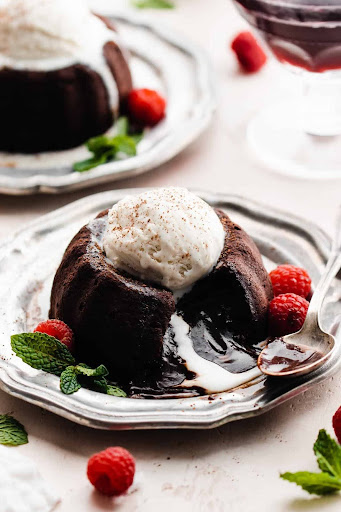
Our Dessert: Molten Lava Cake with All the Fancy Things
We built our plated dessert around a molten lava cake—a warm, gooey-centered chocolate cake that’s always a showstopper. Here’s how we composed it:- Main item: Molten lava cake (obviously)
- Sauce: A silky caramel drizzle
- Crunch: Chocolate sand (like edible soil made from cocoa and crumbs!)
- Frozen element: A scoop of vanilla ice cream on top
- Creamy component: The lava center counted as this—rich, molten chocolate
- Garnish: A mint sprig and a dusting of powdered sugar
- Temperature contrast: The hot cake and cold ice cream together = bliss
The result was beautiful and delicious. Watching that ice cream melt into the warm center of the cake was basically dessert theater—and I was here for it.
What I Learned
Plated desserts aren’t just about creating something sweet—they’re about building an experience. The best ones have contrast: hot and cold, soft and crunchy, rich and refreshing. They also have balance in flavor: sweet, salty, bitter, creamy, toasty, acidic. And most importantly, they look stunning—like something you’d snap a photo of before devouring.This unit made me see dessert not just as an ending to a meal, but as a final statement. It’s where technique and creativity meet, and every component has to earn its place on the plate.
Here is our recipe for the Lava Cake.
Until next time, stay sweet and plate on!
 Brennah Van Wagoner
Weekly Newsletter Contributor since 2025
Email the author! brennah.oaks@gmail.com