|
Never miss another recipe... Sign up for our free monthly newsletter today!
Subscribing will not result in more spam! I guarantee it! NEWSLETTER
• Current Issue• Newsletter Archive • Sign Up Now 
Cook'n with Betty Crocker 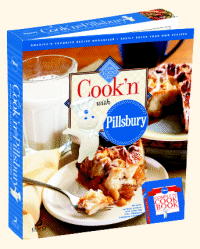
Cook'n with Pillsbury 
Cook'n with a Taste of Home 
Cook'n in Italy 
Cook'n in Mexico |
      |
|
 |
SPREAD THE NEWS |
|
Print this Recipe Butter, margarine or spread - which one is best? Just when it looks as though the dust has settle and experts agree on which fat is "better" for your health, more research comes out to cloud the issue. Fat is fat: too much of any fat, regardless of whether it's from a cow or cornstalk, harms your heart and your health. So what's the difference? Butter is made up of primarily saturated fat. Saturated fat raises blood cholesterol. Butter is sold in sticks, whipped in tubs and as butter flavored granules. When baking, use only sticks; whipped butter will give a different texture due to the air beaten into it. Margarine is made up of primarily polyunsaturated fat. If polyunsaturated fats replace saturated ones, they can help lower blood cholesterol by lowering LDL cholesterol (the artery clogging cholesterol). The problem with margarine is it contains trans fatty acids, which are formed when a vegetable oil is made into a solid form, as it is with margarine. Trans fatty acids may increase blood cholesterol levels. Like butter, margarine is also sold in both sticks and as soft spreads in tubs. A lighter alternative to regular butter or margarine is reduced calorie or low fat butter or margarine. These products have water and air added and contain at least 20 percent less fat than their regular counterparts. Check the label- some brands may even be fat free. Hold of on cooking and baking with these products - they're best used as a spreader or a topper. Vegetable oil spreads are margarine products with less than 20 percent fat. It's a good idea to check the back of the spread container where you'll find a breakout of the different types of fats in the product. Choose a product with at least a 2-to-1 ratio of polyunsaturated fats to saturated fats. Vegetable oil spreads, like margarine, can be used for a number of purposes, from spreading to cooking to baking. Because the percentage of fat is lower than for margarine, the amount of water is increased, which can affect the texture and quality of certain baked items. Generally for baking, you don't want to use spreads with less than 65 percent fat. You'll find vegetable oil spreads sold in sticks, in tubs and as a liquid squeeze spread. From "Betty Crocker's Low-Fat, Low-Cholesterol Cooking Today." Text Copyright 2005 General Mills, Inc. Used with permission of the publisher, Wiley Publishing, Inc. All Rights Reserved. This recipe comes from the Cook'n collection. Try Cook'n for FREE!
Ginger-Topped Pumpkin Bread Raspberry Crumble Muffins Lemon-Berry Brunch Cake Apricot-Oat Scones Fruit-Topped Breakfast Bagels Mocha Mudslide Cooler Tropical Smoothie Stuffed French Toast Cranberry Pancakes with Maple-Orange Syrup Home-Style Scrambled Eggs Hash Brown Frittata Wild Rice Frittata BERRY GOOD NEWS SPREAD THE NEWS EGGS - YEA OR NAY? |
|

|
Affiliate Program | Privacy Policy | Other Resources | Contact Us

© 2008 DVO Enterprises, Inc. All rights reserved. Sales: 1-888-462-6656 |
