|
Never miss another recipe... Sign up for our free monthly newsletter today!
Subscribing will not result in more spam! I guarantee it! NEWSLETTER
• Current Issue• Newsletter Archive • Sign Up Now 
Cook'n with Betty Crocker 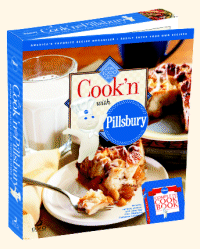
Cook'n with Pillsbury 
Cook'n with a Taste of Home 
Cook'n in Italy 
Cook'n in Mexico |
      |
|
 |
Guidelines for Good Nutrition |
|
Print this Recipe Good nutrition comes from eating a variety of foods. No single food will supply all of the nutrients your body needs; therefore, you should eat from each of the food groups every day. It’s also a good idea to vary the foods you eat within each food group from day to day. For example, eat an apple or orange from time to time instead of always having a banana. Here are some more guidelines to healthy food choices. EAT LESS FAT. To cut back on fat, you can: Eat smaller portions of meat. Eat fish and poultry (without the skin) more often. Choose lean cuts of red meat. Prepare meats by broiling, roasting, or baking instead of frying. Trim off all fat before cooking and remove the skin from poultry before eating it. Avoid adding fat in cooking. Avoid fried foods. Avoid sauces or gravy. Eat fewer high-fat foods, such as cold cuts, bacon, sausage, hot dogs, butter, mayonnaise, nuts, salad dressing, lard, and solid shortening. Drink fat-free or low-fat (1%) milk. Eat less ice cream, cheese, sour cream, cream, whole milk, and other high-fat dairy products. Use low-fat or fat-free yogurt or low-fat cottage cheese instead of sour cream. Use low-fat cheeses. Eat more high-fiber foods. Magic Menus includes lots of high-fiber foods-fruits, vegetables, and whole-grain products-in the meals. In general, Eat more whole-grain breads, cereals, and crackers. Eat more dried beans, peas, and lentils, too. Eat high-fiber foods, such as oat bran, brown rice, wild rice, barley, and bulgur. Eat more vegetables (raw and cooked). You can have large servings of raw, nonstarchy vegetables when called for in a menu, which may include salad greens, carrot or celery sticks, tomatoes, cucumbers, green peppers, radishes, and the like. Eat whole fruit instead of drinking fruit juice. In this book, you may: Use commercial (canned, dried, or frozen) or homemade soups with these menus, but note that they are usually high in sodium, so choose reduced-fat and reduced-sodium varieties. Use no-sugar or low-sugar fruit spreads (jams or jellies). Limit yourself to 1 to 2 teaspoons (less than 20 calories) per serving. Use 1 tablespoon of regular salad dressing or 2 tablespoons of reduced-fat salad dressing interchangeably. Salad dressings that contain less than 6 calories per tablespoon can be used more liberally. Have raw vegetables on some menus, which can include salad greens and moderate servings of carrot or celery sticks, tomatoes, cucumbers, green peppers, radishes, and the like. Use butter-flavored granules, such as Butter Buds or Molly McButter, to season vegetables, potatoes, rice, or noodles. Add your choice of calorie-free beverages, such as coffee, hot or iced tea, mineral water, diet sodas, and sugar-free flavored seltzers. Measure meat portions after cooking. Four ounces of uncooked meat shrinks to about 3 ounces (about the size of a deck of cards) after cooking. Season recipes with your favorite spices. Try basil, dill, lemon pepper, paprika, fresh herbs, and fresh garlic or garlic powder. Be sure to choose low-salt varieties when mixtures are purchased. The recipes in this book use these standard abbreviations: Tbsp = tablespoon tsp = teaspoon oz = ounce lb = pound qt = quart This recipe comes from the Cook'n collection. Try Cook'n for FREE!
Guidelines for Good Nutrition The Six Food Groups |
|


|
Affiliate Program | Privacy Policy | Other Resources | Contact Us

© 2008 DVO Enterprises, Inc. All rights reserved. Sales: 1-888-462-6656 |
